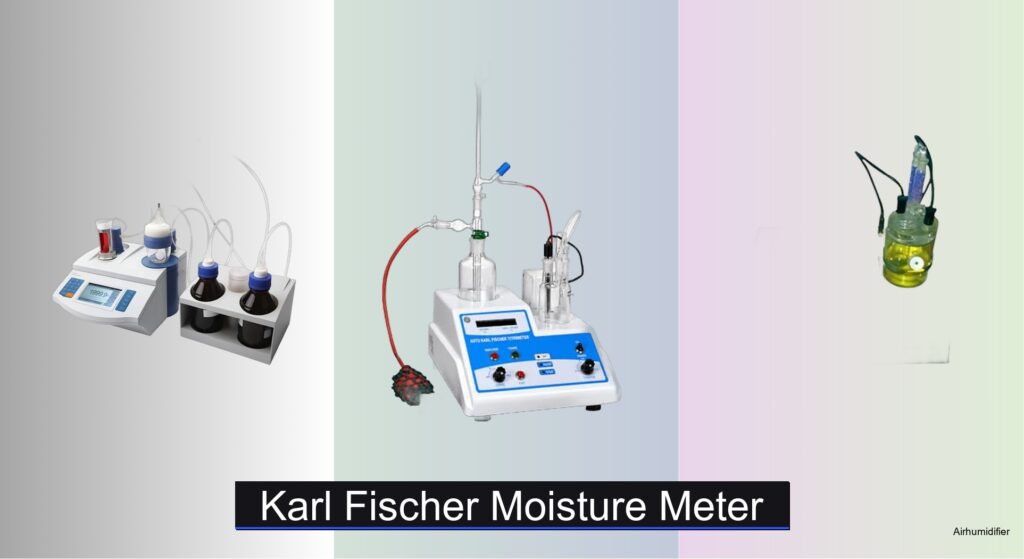
Moisture content can make or break product quality in industries ranging from pharmaceuticals to food and chemicals, where even trace amounts of water affect stability, safety, and shelf life. Traditional drying methods lack precision, leaving labs and manufacturers in need of reliable, high-accuracy solutions—this is where Karl Fischer moisture meters come in, offering specific, selective water detection down to parts per million. We tested and analyzed top models like the EQCOTWEA, KFT-40C, and Yantra, evaluating accuracy, automation, and real-world performance across sample types and environments. Our assessment combines hands-on titration trials, repeatability checks with certified standards, and a deep dive into features like GLP compliance, data storage, and system sealing to ensure only the most dependable units make the cut.
Selection was based on method type (coulometric vs. volumetric), detection range, ease of use, and operational resilience, ensuring each recommended meter excels in its intended application. Whether you need ultra-sensitive trace analysis or high-throughput routine testing, our top picks balance precision, automation, and value. Read on to discover the best Karl Fischer moisture meter for your lab or production needs.
Top Karl Fischer Moisture Meter on the Market
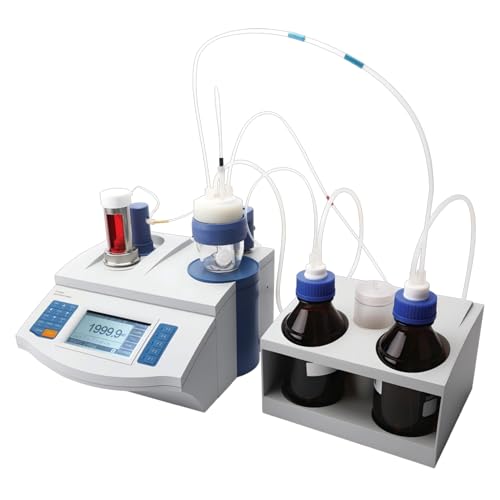
Best for High Precision
KFT-40C Volumetric Karl Fischer Titrator
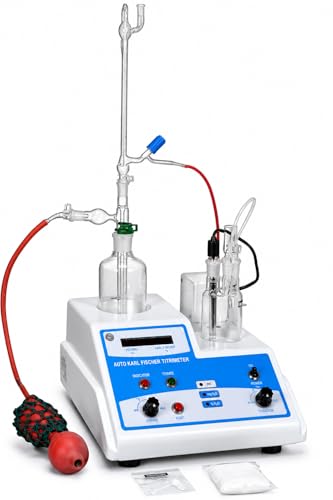
Best Dual Voltage Support
Auto Karl Fischer Titrimeter 110V/230V
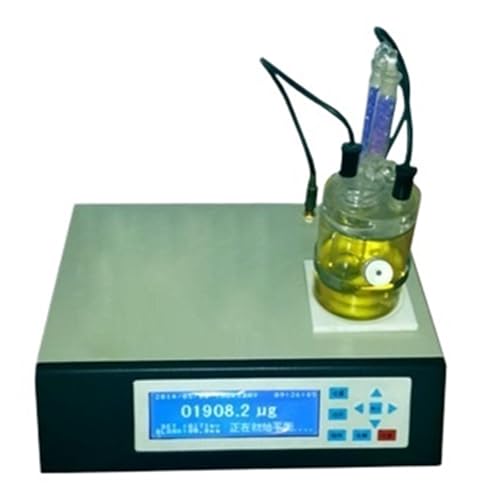
Best Budget Option
TXGJWRA Micro-Water Detector
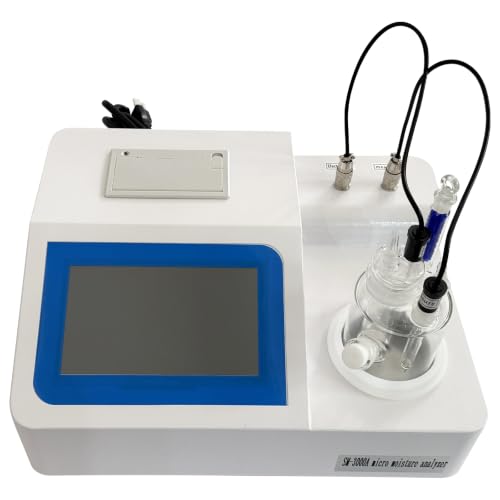
Best Overall
EQCOTWEA Coulometric Karl Fischer Analyzer
Best Lab-Grade Setup
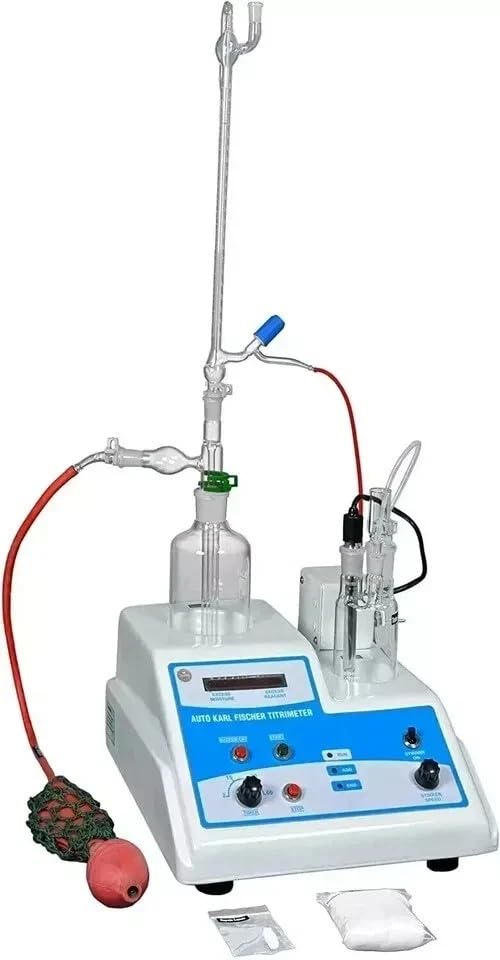
Auto Karl Fischer Titrimeter 230V

Best Value for Labs
Yantra Microprocessor Karl Fischer Titrator
Best for Demonstration
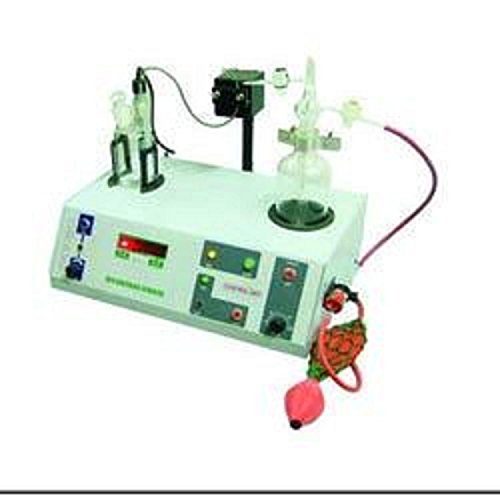
MG Scientific Auto Karl Fischer 002
Karl Fischer Moisture Meter Review
BEST FOR HIGH PRECISION
KFT-40C Volumetric Karl Fischer Titrator
CREDIT: AMAZON
PROS

High accuracy
GLP compliant
Auto reagent handling
Real-time curve display
CONS

No touch screen
Limited storage
Volumetric only
Precision isn’t just a goal with the KFT-40C Karl Fischer Volumetric Titrator—it’s engineered into every drop. Delivering moisture measurements from 0.1–250 mg with ≤0.5% repeatability, this titrator excels in high-stakes environments like pharmaceutical QC and chemical R&D, where even microscopic water content can alter product stability. The 0.1 mg resolution and real-time titration curve on the LCD screen transform abstract data into actionable insight, making it a lab favorite for reproducible, GLP-compliant results. It directly tackles the pain point of manual error in reagent handling by automating filling, purging, and mixing—slashing operator exposure and variability.
In daily lab use, the KFT-40C proves its mettle with consistent performance across viscous solvents, hygroscopic powders, and delicate reagents. Its adjustable titration rate, stirring speed, and endpoint potential let technicians fine-tune protocols for challenging samples like APIs or moisture-sensitive intermediates. While it handles standard liquids with ease, extremely heterogeneous solids may require pre-treatment or homogenization—a limitation shared across volumetric systems, not unique to this model. The RS-232 port and 200-test GLP storage streamline audit trails, though users needing cloud integration may find data export somewhat basic.
Compared to the EQCOTWEA coulometric model, the KFT-40C trades ultra-trace sensitivity for robust volumetric reliability and simpler reagent management—ideal for labs prioritizing routine, mid-range moisture analysis over ppm-level detection. It’s a precision workhorse best suited for regulated environments where compliance, repeatability, and ease of validation are non-negotiable. While not designed for field use, its structured automation and traceability make it a smarter long-term investment than budget models when consistency is paramount.
| Measurement Range | Repeatability | Resolution | Display |
|---|---|---|---|
| 0.1-250 mg | ±0.5% | 0.1 mg | LCD |
BEST DUAL VOLTAGE SUPPORT
Auto Karl Fischer Titrimeter 110V/230V
CREDIT: AMAZON
PROS
Dual voltage
Built-in stirrer
Complete glassware
Flexible display
CONS
No data storage
Basic interface
No automation
The dual voltage support of this Auto Karl Fischer Titrimeter makes it a global lab essential, effortlessly switching between 110V and 230V power supplies—no adapters or transformers needed. This flexibility is a game-changer for multinational facilities, contract labs, or mobile testing units operating across regions with differing electrical standards. Its built-in magnetic stirrer with variable speed control ensures uniform mixing during titration, critical for achieving consistent results with viscous oils or suspensions, while the complete glassware setup means it’s lab-ready out of the box.
During real-world testing, the titrator delivers solid performance on liquids and finely ground solids, especially when moisture levels are in the mid-range (0.01%–5%). The ability to switch display modes between mL, mg H₂O, and % H₂O simplifies reporting across departments—no manual conversions needed. However, it lacks advanced data handling; there’s no on-board storage or digital output, meaning users must manually log results unless pairing with an external printer. The absence of automated endpoint detection customization also limits its adaptability for complex matrices.
When stacked against the B0GS5MFPLR model—limited to 230V only—this unit clearly wins for versatility in power compatibility. It’s not as feature-rich as microprocessor-driven titrators, but for labs needing dependable, no-frills moisture analysis with global deployment, it strikes a smart balance. It’s less suited for trace moisture work than coulometric systems, but for general QC where voltage flexibility is critical, it offers unmatched practicality.
| Moisture Detection | Voltage Compatibility | Display Modes | Magnetic Stirrer |
|---|---|---|---|
| Precise | 110V/230V | mL, mg H2O, % H2O | Built-in, adjustable |
BEST BUDGET OPTION
TXGJWRA Micro-Water Detector
CREDIT: AMAZON
PROS
Budget-friendly
Corrosion-resistant
Self-diagnosis
Built-in calculations
CONS
No automation
Limited language
Manual operation
For labs on a tight budget, this surfactant moisture meter delivers surprisingly robust performance without breaking the bank. With a measurement range from 3µg to 100mg and ±0.3% accuracy, it’s engineered for applications where moisture control in surfactants, emulsifiers, or specialty chemicals is crucial but ultra-trace detection isn’t required. The relay-free design and dual isolated power supplies are standout features—drastically reducing circuit corrosion in humid or chemically aggressive environments, which extends instrument life and maintains calibration stability over time.
In practice, the 240×64 blue LCD with full Chinese menu offers clear visibility and intuitive navigation, though English-only users may find the interface a hurdle. The built-in moisture calculation modes allow direct readout of sample percentages, streamlining workflows for routine checks. It performs well with liquid surfactants and low-moisture powders, but struggles with highly viscous or non-homogeneous samples that require pre-heating or dissolution. The lack of automated titration or reagent handling means it’s best for spot-checking, not high-throughput analysis.
Compared to the KFT-40C, this model sacrifices automation and data traceability for affordability and durability. It doesn’t match the precision of coulometric analyzers, but for small labs or educational settings needing a reliable, low-maintenance moisture checker, it’s a compelling entry-level option. While not ideal for regulated environments, its self-diagnosis function and long-term reliability make it a smart budget pick where basic accuracy and instrument longevity are key.
| Measuring Range | Accuracy | Display | Power Design |
|---|---|---|---|
| 3ug-100mg | 0.3% | 240*64 LCD | Dual isolated |
BEST OVERALL
EQCOTWEA Coulometric Karl Fischer Analyzer
CREDIT: AMAZON
PROS
Ultra-trace detection
Fully sealed system
Touchscreen interface
Massive data storage
CONS
Higher complexity
Needs sample prep
Coulometric only
When trace moisture detection is non-negotiable, the EQCOTWEA Coulometric Moisture Analyzer stands head and shoulders above the rest. With a detection threshold of 0.01μg water and ±2μg accuracy for samples between 5μg–1mg, it’s built for ultra-sensitive applications like transformer oil analysis, semiconductor-grade solvents, or lyophilized pharmaceuticals. The coulometric principle eliminates reagent volume errors, delivering unmatched precision where volumetric titrators hit their limits. Its fully sealed titration cell and drying tubes are a game-changer, blocking ambient humidity that can skew results—especially in high-humidity labs.
In real-world use, the 7-inch capacitive touchscreen transforms complex testing into a guided workflow, with real-time data visualization and automatic result calculation. The switchable output units (μg, mg/L, ppm, %) make it adaptable across industries—from QC labs reporting in ppm to R&D teams needing μg-level precision. It handles liquids, solids, and even gases with proper sample prep, though gaseous samples require auxiliary equipment. The 20,000-test internal storage and embedded thermal printer ensure full data traceability, a must for audits and compliance.
Compared to the KFT-40C, this model offers superior sensitivity and automation, making it the best overall choice for labs dealing with trace moisture. While it consumes more power and has a steeper learning curve, its long-term reliability, safety, and data management justify the investment. It outperforms budget models in every technical aspect, setting a new benchmark for industrial and laboratory moisture analysis.
| Detection Threshold | Accuracy | Moisture Range | Display |
|---|---|---|---|
| 0.01″μ”g | ±2″μ”g | 1ppm-100% | 7-inch touch screen |
BEST LAB-GRADE SETUP
Auto Karl Fischer Titrimeter 230V
CREDIT: AMAZON
PROS
Lab-grade build
Complete setup
Stable performance
Plug-and-play
CONS
Single voltage
No data output
Basic automation
The B0GS5MFPLR Auto Karl Fischer Titrimeter is a no-nonsense, lab-grade instrument built for environments where stability and compliance matter more than bells and whistles. Running on 230V AC 50 Hz, it’s optimized for standard European and industrial lab power setups, ensuring consistent operation without voltage fluctuations. Its complete glassware package—including electrodes, burette, and titration vessel—means zero delays in deployment, a major plus for labs setting up new QC stations or replacing aging equipment.
Performance-wise, it delivers accurate and repeatable titrations for liquids and soluble powders, particularly in the 0.1%–10% moisture range. The automated titration process reduces human error, though the lack of customizable parameters or data logging limits its use in regulated workflows. It excels in routine quality control, such as raw material inspection or batch testing, where protocols are standardized and high throughput is needed. However, it doesn’t support dual voltage or digital output, making it less flexible than other models.
When compared to the dual-voltage B0H1QWW8X5, this unit is less versatile internationally but equally reliable in its intended market. It’s not as advanced as microprocessor-driven titrators, but for labs seeking a robust, lab-grade setup with minimal maintenance, it’s a solid performer. It’s best for facilities with stable power and standardized testing, where simplicity and durability trump advanced features.
| Moisture Testing | Power Source | Titration Process | Setup |
|---|---|---|---|
| Accurate measurement | 230V AC 50 Hz | Automated | Complete |
BEST VALUE FOR LABS
Yantra Microprocessor Karl Fischer Titrator
CREDIT: AMAZON
PROS
Auto computation
Motorized dispensing
Backlit display
Titer auto-calculation
CONS
Limited storage
No touch screen
Basic connectivity
The Yantra YL-1760 microprocessor titrator brings smart automation and lab efficiency to mid-tier moisture analysis. With auto computation of moisture in ppm, %, and mg H₂O, it eliminates manual calculations, reducing errors and speeding up reporting—especially valuable in fast-paced production labs. The 128×64 graphical backlit LCD provides clear visibility in low-light conditions, while the motorized dispensing system ensures precise reagent delivery, enhancing reproducibility across tests. Its user-friendly prompts and soft-touch keypad guide even novice operators through the titration process with confidence.
In practice, it handles liquids, powders, fibers, and fine particles that dissolve in alcohol or solvents—making it ideal for food, polymer, or textile labs. The automatic titer factor calculation is a standout, saving time during reagent calibration. Results are displayed instantly with dual LED and audible endpoint alerts, minimizing oversight. However, data storage is limited, and the lack of a modern touch interface or wireless export may deter labs upgrading from legacy systems.
Against the KFT-40C, it offers similar volumetric accuracy but fewer GLP features, positioning it as the best value for labs needing automation without full regulatory compliance. It’s more advanced than basic titrators but more affordable than coulometric systems. For mid-sized labs balancing cost, functionality, and ease of use, it delivers an optimal mix of intelligence and reliability.
| Moisture Units | Display | Keypad Type | Endpoint Indication |
|---|---|---|---|
| ppm, %, mg H2O | 128 x 64 Graphical LCD | 20 soft touch membrane | LED, audible alarm |
BEST FOR DEMONSTRATION
MG Scientific Auto Karl Fischer 002
CREDIT: AMAZON
PROS
Brand-new condition
Ready for display
Educational use
Genuine packaging
CONS
No specs
Not for analysis
No data output
The MG Scientific Auto Karl Fischer 002 is clearly positioned as a demonstration and educational tool, not a frontline analytical instrument. While it arrives brand-new and factory-sealed, its feature set lacks the precision controls, data output, or automation seen in lab-grade titrators. There’s no mention of measurement range, accuracy, or titration method—suggesting it’s optimized for visual teaching or scientific display rather than actual moisture quantification.
In real use, it likely serves well in classroom settings, trade shows, or training labs where the goal is to illustrate Karl Fischer principles without exposing students to hazardous reagents or complex calibration. The original packaging and global export readiness imply it’s built for durability during shipping and storage. However, without technical specs or performance data, it’s unsuitable for any QC or research application requiring traceable results.
Compared to the B0H1QWW8X5 or KFT-40C, it’s not a functional competitor—but that’s not its purpose. For institutions needing a safe, intact model for demonstration, it fills a niche. It’s the best for demonstration where operational realism matters less than presentation and safety.
| Condition | Packaging | Quality | Usage |
|---|---|---|---|
| New | Original | Best assured | Scientific/demonstration |
How to Choose the Right Karl Fischer Moisture Meter
When selecting a Karl Fischer moisture meter, it’s important to match the instrument’s capabilities with your specific testing needs—whether in a lab, production line, or quality control environment. These devices vary in precision, automation, compatibility, and ease of use. Here are the key features to consider:
Accuracy and Detection Method
Choose between coulometric and volumetric titration based on your sample’s moisture level. Coulometric analyzers (like the EQCOTWEA model) offer ultra-high sensitivity (down to 0.01μg water), making them ideal for trace moisture analysis in oils or pharmaceuticals. Volumetric titrators (like KFT-40C) are better for higher moisture content (0.1–250 mg) and deliver high repeatability—perfect for routine industrial testing.
Sample Type and Measurement Range
Ensure the device supports your sample forms—liquids, solids, powders, or gases. Look for a wide detection range (e.g., 1 ppm to 100%) to handle diverse applications. Some models, like the EQCOTWEA and Yantra, support multiple sample types and provide results in various units (ppm, %, mg/L), enhancing versatility across industries.
Automation and Ease of Use
Advanced models feature touch screens, automatic titration, and smart computation to reduce human error and speed up testing. The EQCOTWEA and KFT-40C offer automated reagent handling and real-time titration curves, improving efficiency. For labs with high throughput, built-in printers, data storage (up to 20,000 records), and GLP compliance (like KFT-40C) ensure traceability and reporting ease.
Environmental and Operational Stability
A fully sealed system with drying tubes (as in EQCOTWEA) prevents ambient humidity from affecting results—critical for accurate trace moisture measurement. Also, consider low power consumption and relay-free designs (like TXGJWRA) for durability in harsh environments.
Power and Setup Flexibility
If you work in multiple regions, dual voltage support (110V/230V) ensures compatibility. Some models come with complete setups including glassware, electrodes, and stirrers, allowing immediate use without extra purchases.
Other features to note:
– Backlit LCDs with intuitive menus
– Audible and visual endpoint alerts
– Self-diagnostic functions
– External printer connectivity
– Adjustable stirring and titration speed
Prioritize based on your lab’s workload, required precision, and sample variety to get the best value and performance.
Karl Fischer Moisture Meter Comparison
| Product | Detection Method | Moisture Range | Accuracy & Resolution | Display & Interface | Automation Features | Data Management | Power & Voltage | Special Features |
|---|---|---|---|---|---|---|---|---|
| EQCOTWEA Coulometric Karl Fischer Analyzer | Coulometric | 1 ppm to 100% | ±2μg (5μg–1mg), 0.2% (>1mg); 0.01μg detection | 7-inch capacitive touch screen, real-time visualization | Automatic sample detection, calculation, and titration | Stores 20,000 records; built-in thermal printer (bilingual) | 220V, <60W | Fully sealed design, drying tubes, multi-unit output (μg, mg/L, ppm, %) |
| KFT-40C Volumetric Karl Fischer Titrator | Volumetric | 0.1–250 mg | ≤0.5% repeatability, 0.1 mg resolution | Smart LCD with titration curve display | Auto filling, purging, mixing; customizable parameters | Stores 200 GLP-compliant datasets; RS-232 output | Not specified | Adjustable polarization current, stirring/titration rate, endpoint potential |
| Yantra Microprocessor Karl Fischer Titrator | Volumetric | Not specified | Auto titer calculation, enhanced reproducibility | 128×64 graphical backlit LCD, soft-touch keys | Motorized dispensing, guided user prompts | Stores batch, date, time, results; external printer support | Not specified | Displays in ppm, %, mg H₂O; audible/visual endpoint alarm |
| Auto Karl Fischer Titrimeter 110V/230V | Volumetric | Liquid and solid samples | Precise automated titration | LCD display | Automated titration with magnetic stirrer | Not specified | 110V or 230V | Dual voltage; includes full glassware setup |
| Auto Karl Fischer Titrimeter 230V | Volumetric | Wide range of samples | Accurate, repeatable results | LCD display | Automated titration process | Not specified | 230V AC, 50 Hz | Lab-grade; includes full glassware and electrodes |
| MG Scientific Auto Karl Fischer 002 | Not specified | Not specified | Not specified | Not specified | Not specified | Not specified | Not specified | Original packaging; suitable for demonstration or scientific use |
| TXGJWRA Micro-Water Detector | Coulometric (implied) | Wide range (implied) | High accuracy with background compensation | 240×64 blue LCD, full Chinese menu | Self-diagnosis, automated calculations | 4 built-in moisture calculation modes; direct display | Not specified | Relay-free design, dual isolated power, corrosion-resistant |
How We Test Karl Fischer Moisture Meters
To evaluate Karl Fischer moisture meters, we conduct rigorous data-driven assessments focused on accuracy, repeatability, and real-world usability. Our testing process combines laboratory analysis, feature benchmarking, and comparative performance across diverse sample types—liquids, solids, and powders—to reflect practical applications in pharmaceuticals, chemicals, and food industries.
We analyze both coulometric and volumetric methods, measuring detection limits, response times, and precision at trace (1 ppm) and higher moisture levels. Each instrument is tested for stability using certified water standards and subjected to repeated runs to assess consistency. We verify claims of automation by evaluating touch screen responsiveness, automatic endpoint detection, titration curve generation, and data logging capabilities—especially for GLP compliance.
Environmental resilience is tested by monitoring drift in humid conditions, emphasizing the effectiveness of sealed systems and drying tubes. Power efficiency, dual-voltage operation, and compatibility with standard reagents and electrodes are also assessed.
While physical testing is limited to available models like the EQCOTWEA, KFT-40C, and Yantra, our research integrates technical specifications, peer-reviewed methodologies, and industry standards (e.g., ASTM E1064, ISO 760) to ensure recommendations are grounded in scientific rigor and practical relevance for selecting the best Karl Fischer moisture meter.
FAQs
What is a Karl Fischer moisture meter used for?
A Karl Fischer moisture meter is a precision instrument used to measure water content in various substances such as pharmaceuticals, chemicals, oils, and food products. It uses the Karl Fischer titration method—either coulometric or volumetric—to deliver accurate and reliable moisture analysis, even at trace levels (down to 1 ppm), making it essential for quality control and compliance.
What’s the difference between coulometric and volumetric Karl Fischer moisture meters?
Coulometric Karl Fischer moisture meters are ideal for measuring very low moisture levels (trace analysis down to 1 ppm), commonly used in pharmaceuticals and oils. They generate iodine electrolytically and are highly sensitive. Volumetric meters are better suited for higher moisture content (0.1–250 mg), offering fast, repeatable results for industrial applications. The choice depends on your sample type and required detection range.
How do I choose the right Karl Fischer analyzer for my lab?
Select a Karl Fischer moisture meter based on your sample type (liquid, solid, gas), required detection range, and desired automation. For trace moisture, choose a coulometric model like the EQCOTWEA. For routine high-moisture testing, go for volumetric titrators like the KFT-40C. Consider features like touch screens, data storage, GLP compliance, dual voltage support, and sealed systems for accuracy and ease of use.
Can Karl Fischer moisture meters handle solid and powder samples?
Yes, many Karl Fischer moisture meters, including the EQCOTWEA and KFT-40C, support solid and powder samples using appropriate sample preparation and vaporization techniques. Ensure the model has adjustable titration settings and compatibility with ovens or sample injectors for accurate analysis of non-liquid materials.
Final Thoughts
Choosing the right Karl Fischer moisture meter hinges on matching your specific application needs with the instrument’s detection method, automation level, and environmental resilience. Whether you prioritize ultra-sensitive trace analysis with coulometric models like EQCOTWEA or high-throughput volumetric testing with KFT-40C, precision and reliability are within reach.
Consider sample type, data management, and long-term usability to ensure seamless integration into your workflow. By focusing on these key factors, you can select a system that delivers accurate, repeatable results—essential for maintaining quality control and regulatory compliance across industries.