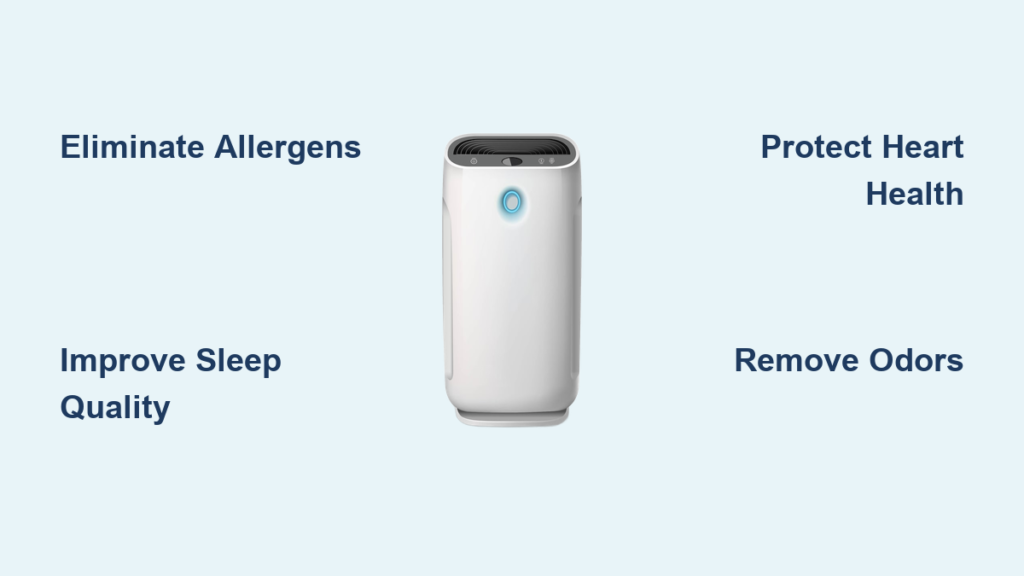
Did you know the air inside your home could be up to five times more polluted than outdoor air? As energy-efficient buildings trap pollutants inside, invisible threats like pollen, dust mites, pet dander, mold spores, and volatile organic compounds accumulate to levels that trigger health warnings. The benefits of air purifier systems extend far beyond simple comfort—they deliver measurable improvements to your respiratory health, sleep quality, and overall well-being. By actively removing harmful particles as small as 0.1 microns, modern air purifiers transform your living space into a true sanctuary from environmental contaminants. This guide reveals exactly how these powerful devices protect your health and enhance daily life through science-backed air cleaning technology.
Stop Allergy Symptoms with Targeted Air Purification
Eliminate Nighttime Allergy Triggers in Your Bedroom
If your allergy symptoms worsen at night or upon waking, indoor allergens are likely the culprit—not just outdoor pollen. Your bedroom harbors dust mites in bedding, pet dander in carpets, and mold spores in humid corners, creating a perfect storm of respiratory irritants. HEPA air purifiers remove at least 99.97% of particles measuring 0.3 microns or larger, including the microscopic allergens that trigger sneezing, congestion, and itchy eyes. Place a unit on your nightstand where air intake remains unobstructed, and run it continuously throughout the night on sleep mode to dramatically reduce allergen concentration while you rest.
Pro Tip: For maximum allergy relief, combine your air purifier with hypoallergenic bedding and weekly hot water washing of sheets to attack allergens from multiple angles.
Target Specific Allergen Sources Throughout Your Home
Different rooms accumulate different allergens based on activity and environment. Pet dander concentrates in living areas where animals spend time, while mold spores thrive in humid bathrooms and kitchens. Rather than a one-size-fits-all approach, strategically position air purifiers where specific allergens dominate:
- Living room: Combat pet dander with HEPA filtration
- Bedroom: Target dust mites with continuous nighttime operation
- Bathroom: Address mold spores with units featuring antimicrobial filters
- Home office: Reduce paper dust and VOCs from office equipment
This targeted approach ensures you’re addressing the specific pollutants affecting your health rather than wasting energy cleaning “clean” air.
Breathe Easier with Asthma-Friendly Air Cleaning

Reduce Asthma Attack Frequency by Removing Triggers
Airborne pollutants directly irritate sensitive airways, triggering inflammation that makes breathing difficult for asthma sufferers. Research confirms that both particulate matter and gaseous pollutants worsen symptoms and increase medication needs. By maintaining consistently lower pollution levels, air purifiers provide proactive respiratory protection that reduces both the frequency and severity of asthma attacks. For children especially, early intervention with air purification may lower the risk of developing asthma later in life.
Warning: Avoid ozone-generating “air purifiers” that claim to clean the air but actually produce lung irritants that can trigger asthma attacks.
Identify Your Specific Asthma Triggers for Maximum Relief
Not all asthma sufferers react to the same pollutants. Keep a symptom journal for two weeks noting when attacks occur and what you were exposed to. Common triggers include:
- Pet dander (especially cat allergens)
- Dust mite debris
- Mold spores
- Tobacco smoke
- Strong chemical odors
Once you’ve identified your primary triggers, select an air purifier with the appropriate filtration technology. HEPA filters excel at capturing particulate triggers, while activated carbon filters neutralize gaseous irritants and chemical odors.
Slash Your Sleep Disruption with Bedroom Air Purifiers

Experience Clinically Proven Sleep Improvements in Just Days
Poor indoor air quality sabotages your sleep through multiple mechanisms. Particulate matter irritates airways causing nighttime coughing, while pollutants reduce oxygen saturation, preventing deep, restorative sleep. The evidence is compelling: a peer-reviewed SleepScore Labs study found that 93% of participants reported sleeping better and waking feeling fresher after adding HEPA air purifiers to their bedrooms. Another study published in the journal SLEEP demonstrated measurable improvements in both sleep quality and allergy symptoms for seasonal allergy sufferers.
Pro Tip: Position your air purifier at least 3 feet from your bed to ensure optimal airflow without direct drafts disturbing your sleep.
Optimize Your Bedroom Setup for Maximum Sleep Benefits
For the best results, follow these evidence-based placement guidelines:
- Place the unit on a nightstand or dresser where air intake remains unobstructed
- Keep at least 12 inches of clearance from walls and furniture
- Run continuously throughout the night on the quietest effective setting
- Choose models with sleep modes that reduce noise while maintaining filtration
Unlike air fresheners that merely mask odors, air purifiers eliminate the actual pollutants causing sleep disruption, addressing the root cause rather than the symptoms.
Protect Your Heart with Daily Air Purifier Use
Reduce Cardiovascular Risks from Invisible Airborne Particles
Fine particles penetrate deep into your lungs and enter your bloodstream, traveling to your heart and increasing risks of high blood pressure, stroke, heart attack, and heart failure. Even short-term exposure correlates with measurable physiological changes. The good news? A 2018 double-blind study found measurable heart health benefits appearing in as little as three days of air purifier use among senior facility residents. This rapid improvement demonstrates how quickly your cardiovascular system responds to cleaner indoor air.
Warning: Don’t wait for symptoms to appear—particle pollution causes damage even when you feel fine.
Understand Your Personal Risk Factors for Maximum Protection
Certain individuals face elevated cardiovascular risks from air pollution exposure:
- People with existing heart conditions
- Older adults with reduced respiratory efficiency
- Individuals living in urban areas with high outdoor pollution
- Those with metabolic conditions like obesity or diabetes
If any of these apply to you or your family members, prioritize air purification in bedrooms and main living areas where you spend the most time. Consistent use provides continuous protection against this modifiable risk factor.
Eliminate Stubborn Odors Without Masking Scents
Neutralize Cooking Smells That Linger for Hours
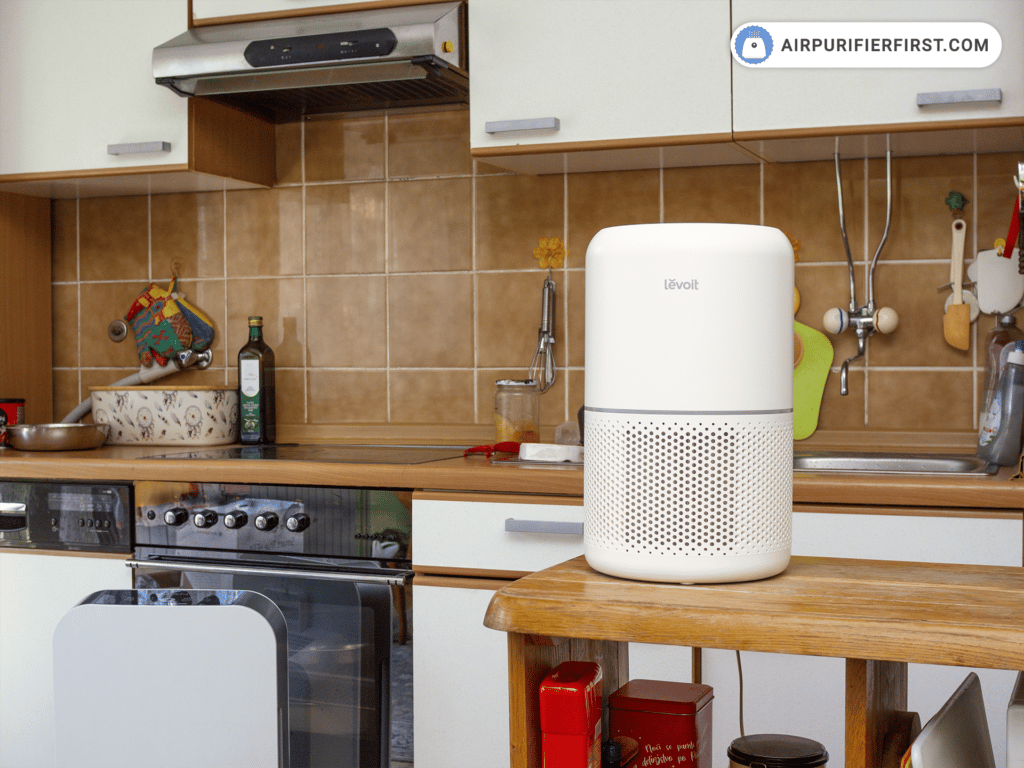
Standard air fresheners merely cover odors with stronger fragrances rather than removing the source. Activated carbon filters in quality air purifiers actually capture odor-causing molecules through adsorption, where VOCs stick to the carbon surface as air passes through. This technology effectively eliminates persistent cooking smells from fish, fried foods, and strong spices without introducing additional chemicals into your breathing space.
Pro Tip: For kitchen odors, position your air purifier near the cooking area but away from direct steam and grease that could damage the unit.
Destroy Pet Odors at the Molecular Level
Pet owners know the struggle with lingering odors that standard cleaning can’t eliminate. Advanced air purifiers with Photo Electrochemical Oxidation (PECO) technology go beyond simple capture—they destroy organic pollutants at the molecular level, permanently removing pet odors rather than temporarily masking them. This is particularly valuable for homes with multiple pets or those sensitive to animal smells.
Unlike ozone generators that create harmful byproducts, PECO technology safely breaks down odor molecules without producing additional pollutants.
Reduce Household Dusting Time by 50% or More
:strip_icc()/GettyImages-1433073197-4eef22c5b0be4a528d87e5f6091ad5dc.jpg)
Capture Dust Before It Settles on Surfaces
Household dust contains a disturbing mix of dead skin cells, mold spores, bacteria, pollen, pet dander, and even heavy metals. Without intervention, this particulate matter circulates through your home before settling on every surface. Air purifiers equipped with HEPA filters capture these particles while they’re still airborne, significantly reducing visible dust accumulation and the time required for cleaning.
Pro Tip: Run air purifiers continuously for maximum dust reduction—intermittent operation allows dust to settle between cycles.
Protect Your Home Infrastructure from Pollutant Buildup
Airborne particles don’t just settle on visible surfaces—they infiltrate your home systems too. HVAC components accumulate thin films of pollutants that reduce efficiency and accelerate wear. Kitchen range hoods become coated with greasy particulates. Furniture and electronics experience accelerated deterioration from accumulated deposits. By capturing these particles before they settle, air purifiers protect your investments and extend the lifespan of important home systems.
Shield Children from Harmful Indoor Air Pollutants
Defend Developing Respiratory Systems Against Toxins
Children’s smaller lungs and airways make them particularly vulnerable to airborne toxins. Their respiratory systems are less capable of filtering harmful particles, increasing risks of asthma attacks, respiratory infections, and long-term health conditions. Air purifiers remove harmful pollutants before they can damage developing lungs, providing parents peace of mind about the air their children breathe at home.
Pro Tip: Prioritize air purification in children’s bedrooms and play areas where they spend the most time.
Create a Healthier Learning Environment at Home
Poor indoor air quality directly impacts cognitive performance. A 2021 Harvard study found that when airborne particle levels increased, office workers took longer to answer questions and provided more incorrect responses. For children studying at home, clean air supports mental clarity, focus, and academic performance. Position air purifiers in home learning areas to create optimal conditions for concentration and information retention.
Investing in an air purifier delivers measurable, science-backed benefits that impact nearly every aspect of your health and home environment. From eliminating allergy triggers and improving sleep quality to protecting cardiovascular health and reducing household dust, these devices provide comprehensive protection against invisible indoor pollutants. The most significant improvements appear when you select the right technology for your specific needs and operate your air purifier consistently in key living areas. By transforming the very air you breathe, air purifiers offer one of the most accessible and effective interventions for enhancing daily health and well-being in our increasingly polluted world. Start experiencing cleaner air and its many benefits tonight by strategically placing an air purifier in your bedroom—your respiratory system, heart, and sleep quality will thank you.