
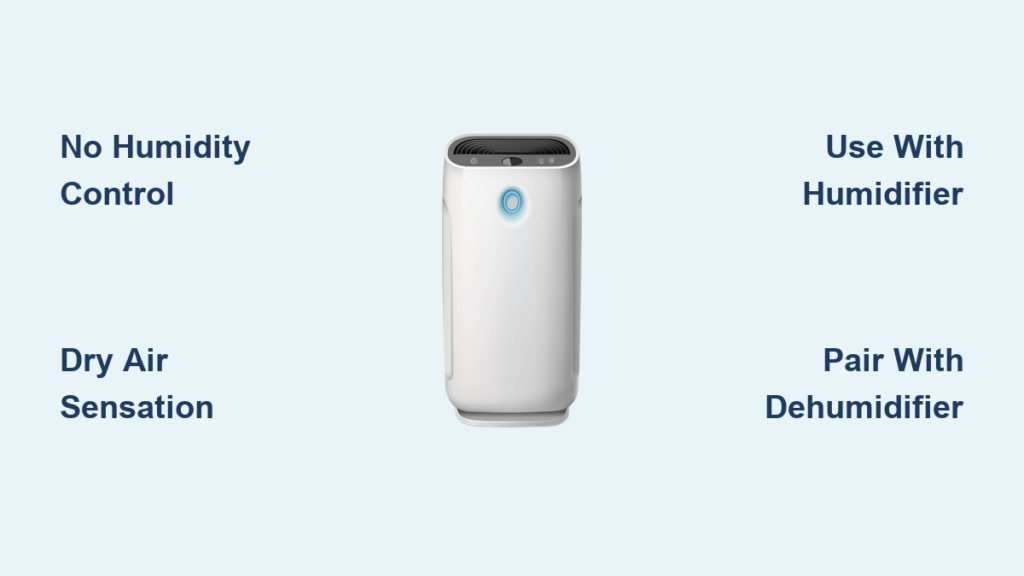
If you’ve noticed your skin feeling drier or your throat getting scratchy since turning on your air purifier, you might be wondering: does an air purifier help with humidity? The direct answer is no—air purifiers don’t meaningfully affect indoor humidity levels at all. These devices are engineered specifically to capture airborne particles and pollutants, not to remove or add moisture to your indoor environment. Understanding this critical distinction prevents you from making costly mistakes when trying to solve humidity problems in your home.
This confusion happens frequently because many homeowners mistakenly believe air purifiers function like dehumidifiers. When you notice dry air symptoms while running your purifier, it’s natural to assume the device is causing the issue. However, the reality is quite different. In this guide, you’ll discover exactly how air purifiers interact with humidity, why they might make air feel drier without actually changing moisture levels, and what equipment you really need to manage humidity effectively.
Air Purifiers Don’t Reduce Humidity—Here’s Why
Running an air purifier won’t lower your indoor humidity measurements by even a fraction of a percent. The core technology—fan-driven air circulation through specialized filters—is designed exclusively for particle and gas removal, not moisture control. When scientists tested HEPA air purifiers in sealed environments, they observed complete elimination of airborne particles within 20 minutes while humidity sensors showed absolutely no change in moisture levels.
The misconception often comes from activated carbon filters, which have a tiny capacity to adsorb water vapor. Laboratory testing reveals that even a substantial 1.1-kilogram carbon filter (found in high-end purifiers) produces at most a 2% humidity reduction—far too minimal to notice or benefit from in real-world conditions. This microscopic change occurs because water molecules weakly adhere to the carbon’s surface, but it’s completely insignificant for managing indoor comfort. If you’re dealing with damp walls, condensation, or mold growth from high humidity, an air purifier alone won’t solve these problems.
HEPA Filters and Moisture: Zero Impact
HEPA filters capture 99.9% of particles as small as 0.1 microns through physical filtration—dust, pollen, mold spores, and pet dander get trapped in the filter’s fiber matrix. Crucially, these filters don’t interact with water vapor at all. Water molecules are significantly smaller than the particles HEPA filters target, so they pass through unaffected. During controlled testing where HEPA purifiers reduced particulate pollution from 200 micrograms to zero, humidity meters registered no change whatsoever. Your HEPA air purifier works tirelessly to clean the air while leaving moisture content completely untouched.
Activated Carbon Filters: Negligible Moisture Effect
Activated carbon filters excel at capturing gases, odors, and VOCs through adsorption—molecules stick to the carbon’s enormous surface area. While carbon does adsorb a minuscule amount of water vapor due to trace oxygen content in its structure, this effect is practically irrelevant. Even with maximum airflow through a large carbon filter:
- The humidity reduction remains under 2% in optimal lab conditions
- Real-world room size and air exchange rates make this change undetectable
- Any moisture adsorption is temporary—carbon releases it back as conditions change
Pro Tip: If you’re using an air purifier primarily for wildfire smoke or cooking odors, don’t expect any meaningful humidity reduction—focus instead on pairing it with proper humidity control equipment.
Why Your Air Feels Drier With an Air Purifier Running
Understanding the Evaporation Effect
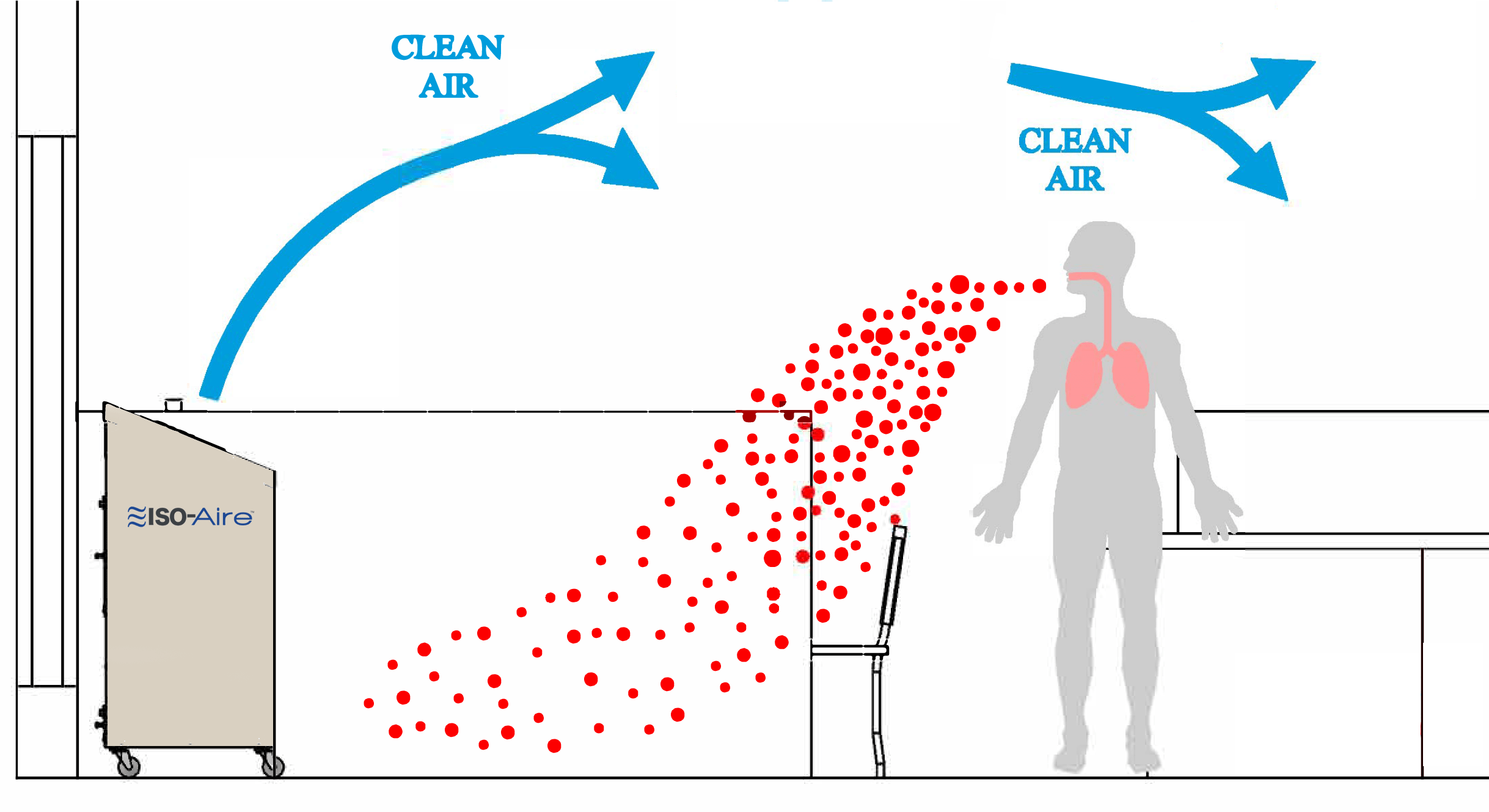
That dry sensation you experience isn’t caused by actual moisture removal—it’s increased evaporation from your skin and mucous membranes due to continuous airflow. When air moves across moist surfaces (like your skin or nasal passages), it accelerates evaporation, creating a cooling effect that feels like drier air. This same principle explains why a fan feels cooling even in a humid room. Your air purifier’s fan creates this airflow, making you feel cooler and drier without changing the actual humidity percentage.
The physics works like this: moving air carries away water molecules from your skin faster than still air, requiring your body to use more energy to maintain moisture. This process cools your skin but creates the perception of dryness. Setting your air purifier to a lower fan speed reduces this effect significantly while still providing adequate air cleaning—try running it on medium instead of high if dryness bothers you.
When Dry Air Sensation Becomes a Problem
For most people, this perceived dryness is merely a comfort issue. However, if you have respiratory conditions like asthma or chronic bronchitis, the sensation might trigger discomfort or worsen symptoms. You might notice:
- Increased throat irritation during extended purifier use
- More frequent need for moisturizer on dry skin
- Temporary worsening of allergy symptoms in very dry conditions
The solution isn’t to stop using your air purifier—it’s to address the actual humidity levels separately. Pairing your purifier with a humidifier creates the ideal balance: clean air with comfortable moisture levels. This combination proves especially valuable during winter months when heating systems dramatically dry indoor air.
Solving Real Humidity Problems Alongside Air Purification

Combating Mold in Humid Environments
High humidity (above 50%) creates perfect conditions for mold growth, but your air purifier addresses a different aspect of the problem. While it won’t reduce moisture levels that allow mold to thrive, a HEPA-equipped purifier captures airborne mold spores—preventing them from spreading and colonizing new areas. This is particularly valuable in humid climates or during rainy seasons when spore counts surge. For comprehensive mold prevention:
- Run a dehumidifier to maintain humidity below 50%
- Use your air purifier to capture existing spores
- Fix any water intrusion sources causing excessive moisture
Managing Dust Mites in Humid Conditions
Dust mite populations explode when humidity exceeds 50%, and their waste products trigger allergies for millions of people. Your air purifier traps both mites and their allergenic waste, reducing your exposure even though it doesn’t affect the humidity they thrive in. For maximum effectiveness against dust mites:
- Place purifiers in bedrooms where you spend most time
- Use models with true HEPA filters (not “HEPA-type”)
- Vacuum regularly with a HEPA-filtered vacuum cleaner
- Wash bedding weekly in hot water (130°F/54°C)
Neutralizing Humidity-Amplified Odors
High humidity makes odors more noticeable because moisture carries scent molecules more effectively. Musty basement smells or cooking odors become more persistent when air is saturated with moisture. Air purifiers with substantial activated carbon filters (at least 2 pounds) adsorb these odor molecules, creating fresher air regardless of humidity levels. For stubborn humidity-related odors:
- Choose purifiers with thick carbon filters (thin mesh filters won’t cut it)
- Replace carbon filters regularly as they become saturated
- Combine with a dehumidifier to address the root moisture cause
Choosing the Right Equipment for Your Humidity Needs
Air Purifier + Humidifier Combo for Dry Conditions
If winter dryness or arid climates leave your skin cracked and nasal passages irritated, pair your air purifier with a humidifier. This combination delivers both clean air and comfortable moisture levels. For best results:
- Place the humidifier and air purifier at opposite ends of the room
- Maintain humidity between 30-50% using a digital hygrometer
- Clean your humidifier weekly to prevent mold growth in the tank
- Use distilled water in ultrasonic humidifiers to avoid white dust
Air Purifier + Dehumidifier Combo for Damp Spaces
In basements, bathrooms, or humid climates, pair your air purifier with a dehumidifier. The dehumidifier extracts moisture to prevent mold growth, while the purifier captures airborne spores and allergens. Key considerations:
- Choose a dehumidifier with adequate capacity for your space (check pint/day rating)
- Empty the dehumidifier reservoir regularly or use continuous drainage
- Position both units for optimal airflow—don’t place them back-to-back
- Monitor humidity with a hygrometer to maintain the ideal 30-50% range
When to Consider Combination Units
Some manufacturers offer air purifiers with built-in humidification or dehumidification functions. These hybrids work well for single rooms but have limitations:
- Built-in humidifiers typically lack the output of standalone units
- Integrated dehumidifiers often have smaller moisture removal capacity
- Maintenance becomes more complex with combined systems
- Filter replacement costs may be higher for combination units
For whole-home humidity management, separate dedicated devices usually outperform combination units. Evaluate your specific needs—room size, climate, and severity of humidity issues—before deciding.
Essential Maintenance Tips for Optimal Performance
Filter Replacement Schedule
Clogged filters force your air purifier to work harder, potentially creating stronger airflow that increases the perception of dry air. Follow these guidelines:
- HEPA filters: Replace every 6-12 months (check monthly for visible dust)
- Carbon filters: Replace every 3-6 months (they lose adsorption capacity)
- Pre-filters: Vacuum monthly and replace annually
- Washable pre-filters: Clean every 2-4 weeks
Strategic Placement Matters
Where you position your air purifier affects both its cleaning efficiency and how airflow impacts your comfort:
- Elevate units 3-5 feet off the ground for optimal particle capture
- Maintain at least 18 inches of clearance on all sides
- Avoid corners or behind furniture where airflow gets restricted
- Keep away from direct sunlight which can degrade filters faster
Warning: Placing your air purifier too close to seating areas intensifies the airflow sensation that creates perceived dryness—position it where it cleans effectively without blowing directly on you.
Key Takeaways for Your Home Environment
Air purifiers significantly improve indoor air quality by removing allergens, mold spores, dust, and odors, but they don’t help with humidity control. HEPA filters have zero impact on moisture levels, while activated carbon filters might reduce humidity by 2% at most—a change too small to notice. The dry sensation you experience comes from increased airflow evaporating moisture from your skin, not actual humidity reduction.
If high humidity causes mold or musty odors, pair your air purifier with a dedicated dehumidifier. For uncomfortably dry air, combine it with a humidifier. Use a $10 hygrometer to monitor your indoor humidity and maintain it between 30-50% year-round—the ideal range for health and comfort. By understanding what air purifiers can and cannot do for humidity, you’ll make smarter decisions about creating a truly healthy indoor environment.