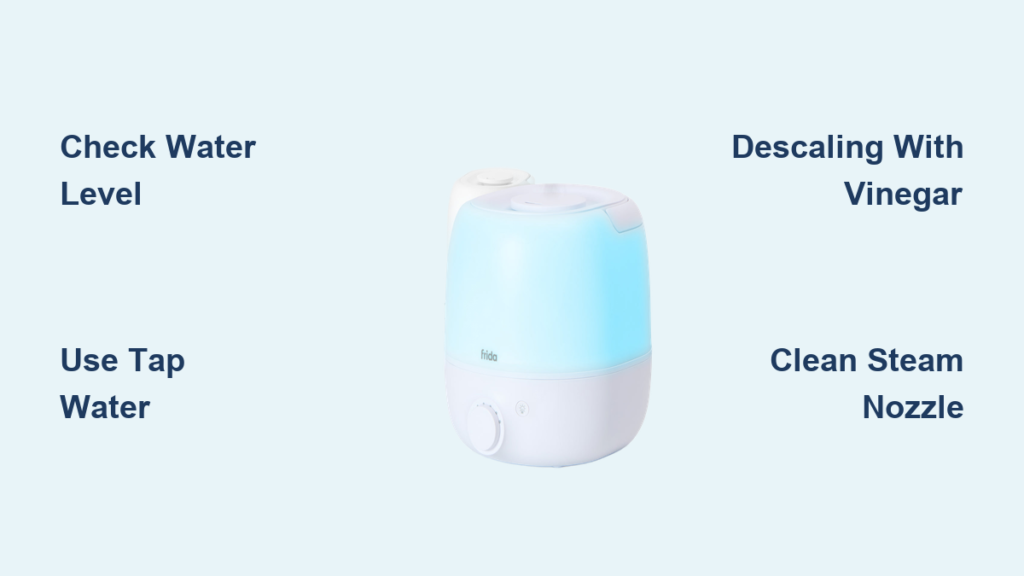
Your Frida humidifier sits silent on the nightstand—lights on, fan humming, but no comforting mist rising into the air. This frustrating scenario affects thousands of parents and homeowners daily, often striking during cold season when humidification matters most. Whether you’re dealing with a newborn’s congestion or dry winter skin, a non-steaming humidifier feels like a betrayal when you need it most.
The good news? Most steam failures stem from simple, fixable issues that require no special tools or technical expertise. From mineral buildup blocking steam pathways to water type problems disrupting the ultrasonic mechanism, we’ll walk through every possible cause and solution. By the end of this guide, you’ll not only restore your Frida’s steam production but understand exactly how to prevent future failures.
Quick Steam Failure Diagnosis
No Visible Mist? Check These First
Before diving into complex repairs, run through these rapid-fire diagnostics that solve 80% of steam failures:
Water Level Reality Check – Remove the tank and verify actual water presence. Float sensors can stick, showing “full” when empty. Fill to the max line with fresh tap water, not distilled. Many users mistakenly trust the indicator light when the tank is actually empty or nearly empty.
Power Indicator Test – Confirm your unit’s power light displays steady illumination. Flickering or dim lights suggest electrical supply issues requiring outlet testing or cord inspection. A solid light indicates power is reaching the unit, while blinking patterns often signal specific error codes.
Sound Signature Analysis – Place your ear near the base. Working ultrasonic models produce a high-pitched humming (often inaudible to kids). Complete silence indicates electrical or component failure. If you hear normal operation sounds but see no mist, you’re likely dealing with a blockage issue rather than power failure.
Steam Path Visual – Shine a flashlight into the mist outlet. White crusty deposits or visible mold growth guarantees blockage issues that cleaning will resolve. The flashlight test often reveals hidden mineral buildup that’s invisible under normal lighting conditions.
Room Environment Factors
Sometimes your Frida works fine—environmental conditions just hide the evidence. Cold rooms under 65°F cause immediate steam condensation, making mist invisible. Similarly, rooms already at 60% humidity absorb additional moisture without visible vapor. Test in a warmer, dry room (40-50% humidity) before assuming mechanical failure. For accurate testing, run the unit in a bathroom after a hot shower—this creates ideal conditions to verify proper operation.
Water Problems Blocking Steam
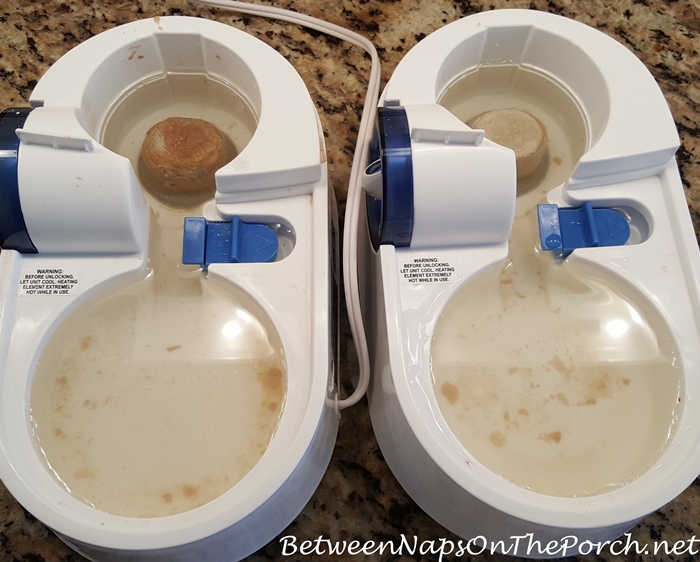
Wrong Water Type Kills Function
Your Frida needs minerals to create steam. Using exclusively distilled water starves the ultrasonic mechanism of conductive properties required for vibration. Switch to filtered tap water (50-180 ppm mineral content) for immediate improvement. Hard water areas should alternate between filtered and distilled to balance mineral needs with scale prevention. Think of it like a battery—minerals act as the electrolyte that allows the electrical current to flow through the water.
Scale Buildup Elimination
Mineral deposits from hard water create the most common steam blockage. Here’s the proven descaling method:
- Empty completely – Remove all water, including base reservoir
- Create cleaning solution – Mix equal parts white vinegar and warm water
- Fill and soak – Add solution to tank, let sit 30 minutes minimum
- Scrub accessible areas – Use soft brush on interior surfaces
- Run cleaning cycle – Operate unit with vinegar solution for 10 minutes
- Triple rinse – Flush three times with fresh water until vinegar smell disappears
Pro tip: For severe scaling, use commercial humidifier descaling solution following exact dilution ratios. Never exceed recommended concentrations—stronger isn’t better and can damage components. The ideal water temperature for maximum steam generation is between 60-80°F, so avoid using cold water straight from the refrigerator.
Float Sensor Malfunction Fix
Stuck water level sensors prevent operation even with full tanks. Locate the small plastic float (usually in tank corner) and gently move it up and down. If stuck, clean the guide channel with cotton swab and warm water. Persistent sticking requires sensor replacement. Float sensors typically fail when mineral deposits accumulate in the guide channel, preventing the float from moving freely to trigger the water level switch.
Electrical Issues Preventing Operation
Power Supply Verification
Unstable voltage prevents ultrasonic discs from vibrating properly. Test your outlet with another device—a phone charger works perfectly. If other devices work intermittently, try a different outlet or add a surge protector to stabilize current flow. Frida humidifiers require stable 120V AC power at 60Hz; voltage fluctuations as small as 5% can disrupt proper operation.
Power Cord Inspection Guide
Damaged cords create intermittent failures that mimic component issues. Run fingers along the entire cable feeling for nicks, cuts, or exposed wires. Pay special attention to areas near the plug and where the cord enters the unit. Any damage requires immediate cord replacement for safety. Frayed cords near the plug often result from repeated bending—consider using a cord strain relief to prevent future damage.
Reset Procedure That Works
Many Frida models hide a small reset button on the unit’s bottom. Unplug the humidifier, wait 10 minutes for capacitors to discharge, then press the recessed button with a paperclip. This resets safety circuits tripped by overheating or electrical irregularities. The 10-minute wait period is crucial—capacitors can hold dangerous electrical charges even when unplugged.
Component Failure Solutions
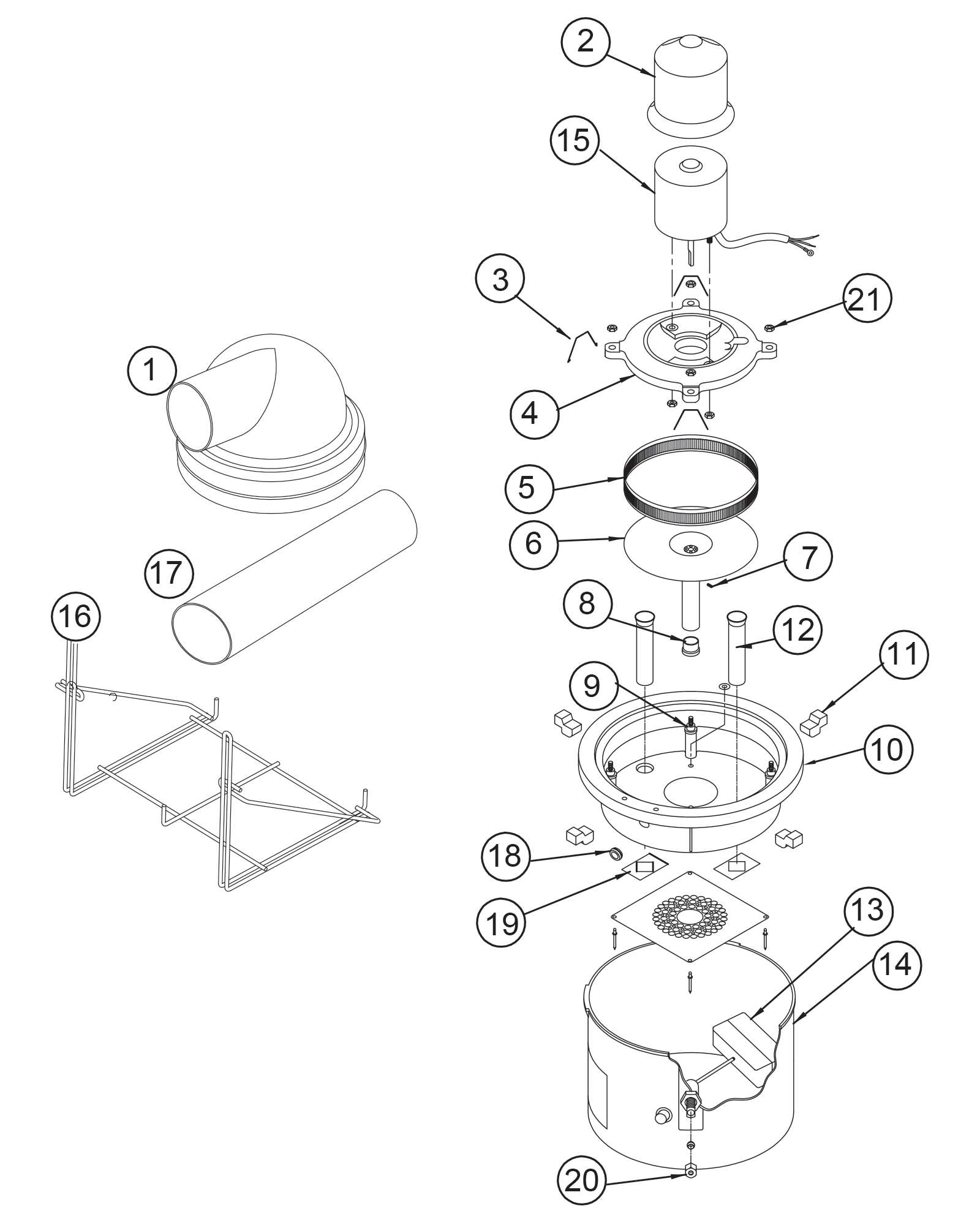
Ultrasonic Disc Replacement

The ceramic disc sits at the heart of steam production. Signs of failure include:
– Visible cracks or chips on disc surface
– Heavy mineral scaling that won’t clean off
– Unit runs but produces no mist with proper water
Replacement process:
1. Unplug and empty unit completely
2. Remove base screws (usually 4-6 small Phillips head)
3. Locate white ceramic disc (quarter-sized component)
4. Unplug electrical connector carefully
5. Install new disc in exact orientation
6. Reassemble and test with fresh water
Cost: $15-35 for manufacturer-specific replacement discs. Generic versions often fail quickly—invest in OEM parts. Ultrasonic discs typically last 6-12 months with proper maintenance in average water conditions.
Steam Nozzle Deep Clean
Mineral deposits frequently clog the narrow mist outlet. Remove the nozzle (twists or snaps off depending on model) and soak in vinegar solution overnight. Use pipe cleaners or cotton swabs to remove stubborn deposits from interior channels. Rinse thoroughly before reinstalling. Blocked nozzles often cause uneven mist distribution or complete steam failure even when internal components function properly.
Cleaning Protocol That Restores Performance
Weekly Maintenance Schedule
Prevent steam failures with consistent cleaning habits:
Daily: Empty tank completely, wipe interior with clean cloth
Weekly: Disassemble removable parts, soak in vinegar solution 30 minutes
Monthly: Deep clean including ultrasonic disc inspection and filter replacement
Following this schedule can extend your unit’s life by 2-3 years. New units should produce visible steam within 2-3 minutes of activation, while units needing maintenance may take 5-10 minutes or fail completely.
Filter Care Essentials
Dirty filters restrict water flow to steaming mechanisms. Remove and inspect—replace if discolored or odorous. Clean permanent filters with warm, soapy water, ensuring complete air drying before reinstallation. Never operate without filters as this accelerates internal contamination. Filters should be replaced every 1-3 months depending on water hardness and usage frequency.
Prevention Strategies That Work
Water Quality Management
Install an inexpensive TDS (Total Dissolved Solids) meter to monitor your tap water. Ideal range: 50-180 ppm for Frida units. Higher readings indicate need for filtered water or more frequent descaling. Each 10°F increase in room temperature improves steam visibility, so maintaining proper room conditions enhances performance.
Optimal Operating Conditions
- Maintain room temperature 65-80°F for visible steam
- Position unit 2-3 feet from walls for proper air circulation
- Use fresh water daily—never let water stagnate
- Run medium setting instead of maximum to reduce mineral buildup
Final Steam Restoration Checklist
Before declaring your Frida hopeless, verify:
– [ ] Tank filled with fresh tap water to max line
– [ ] Unit unplugged for 10 minutes, then reset button pressed
– [ ] All visible mineral deposits removed from steam pathways
– [ ] New or thoroughly cleaned filter installed
– [ ] Tested in warm, dry room environment
Your Frida humidifier should produce visible steam within 2-3 minutes of following these steps. Persistent failure after complete cleaning and component inspection typically indicates electrical issues requiring professional service or warranty replacement. The investment in proper maintenance—using correct water, regular cleaning, and component monitoring—not only restores current function but prevents future steam failures when you need humidification most. Remember that proper steam output should be 200-400 ml/hour for standard room models—anything significantly less indicates maintenance needs.