Your humidifier sits quietly on the nightstand, but no mist rises from the top. The tank holds water, the fan hums softly, yet the air remains dry. Before you panic or toss the unit, understand that “no mist” doesn’t always equal “broken unit.” The phrase “humidifier not misting” sends many users into a troubleshooting frenzy, but the solution might be simpler than you think.
Many modern humidifiers operate invisibly by design. This guide walks you through exactly what to check, when to worry, and how to restore proper function when your humidifier stops misting—even when it should. You’ll learn why your unit might be working perfectly despite the lack of visible vapor and when the absence of mist actually signals a genuine problem requiring intervention.
Evaporative Humidifiers: No Mist Is Normal
Technology Behind Invisible Vapor
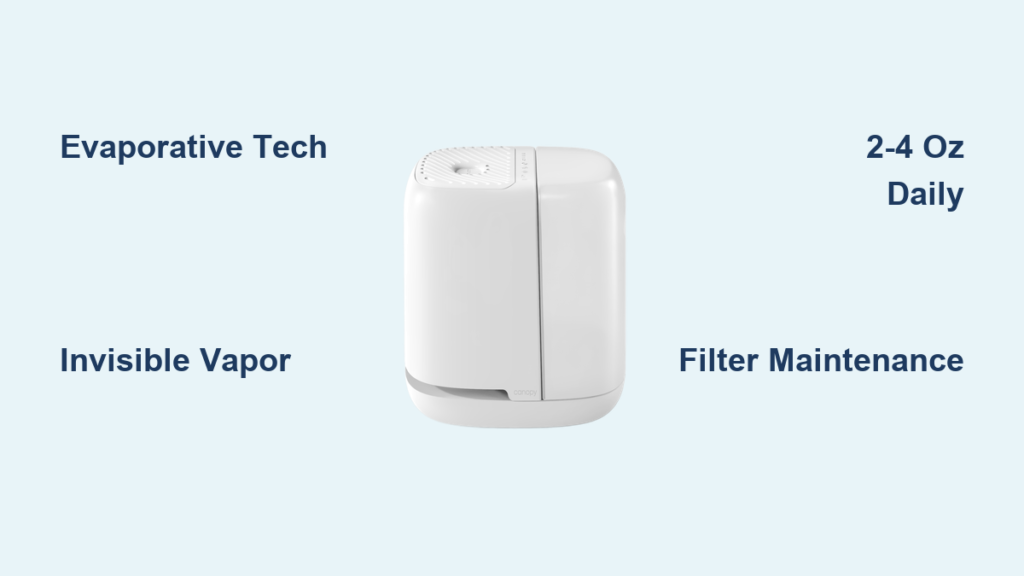
Evaporative humidifiers transform filtered water into vapor that seamlessly integrates with ambient air, creating a subtle humidity increase without visible mist. This process works through specialized filters that absorb water from the tank and release it as invisible vapor when the fan blows air through them.
Key indicators your evaporative unit works correctly:
– Fan runs continuously or cycles normally
– Water level drops over 24-48 hours
– Room feels less dry to the touch
– No water pooling around the base of your unit
Unlike traditional models, these units intentionally produce invisible vapor, protecting against white dust and preventing moisture accumulation on walls. The absence of visible mist doesn’t indicate malfunction—it’s an intentional design characteristic rather than a technical failure.
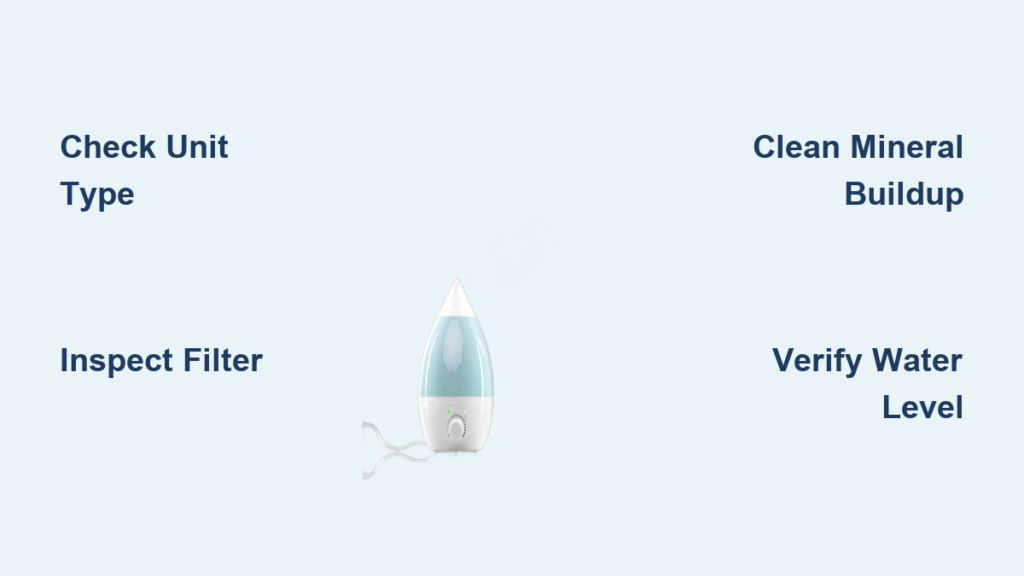
Check Your Unit Type Before Panicking
Before troubleshooting, identify whether you own an evaporative model. Look for these telltale signs:
- Wick filters inside the unit that need regular replacement
- “Cool mist” label without visible vapor emission
- Evaporative technology mentioned in product description
- No steam or warm mist capability (completely cool operation)
These units provide cleaner air quality during operation while preventing unwanted particles from landing on skin or being inhaled. If your humidifier matches these characteristics, the lack of visible mist is completely normal functionality—not a sign that your humidifier is not misting due to malfunction.
When No Mist Actually Signals Trouble
Signs Your Humidifier Truly Failed
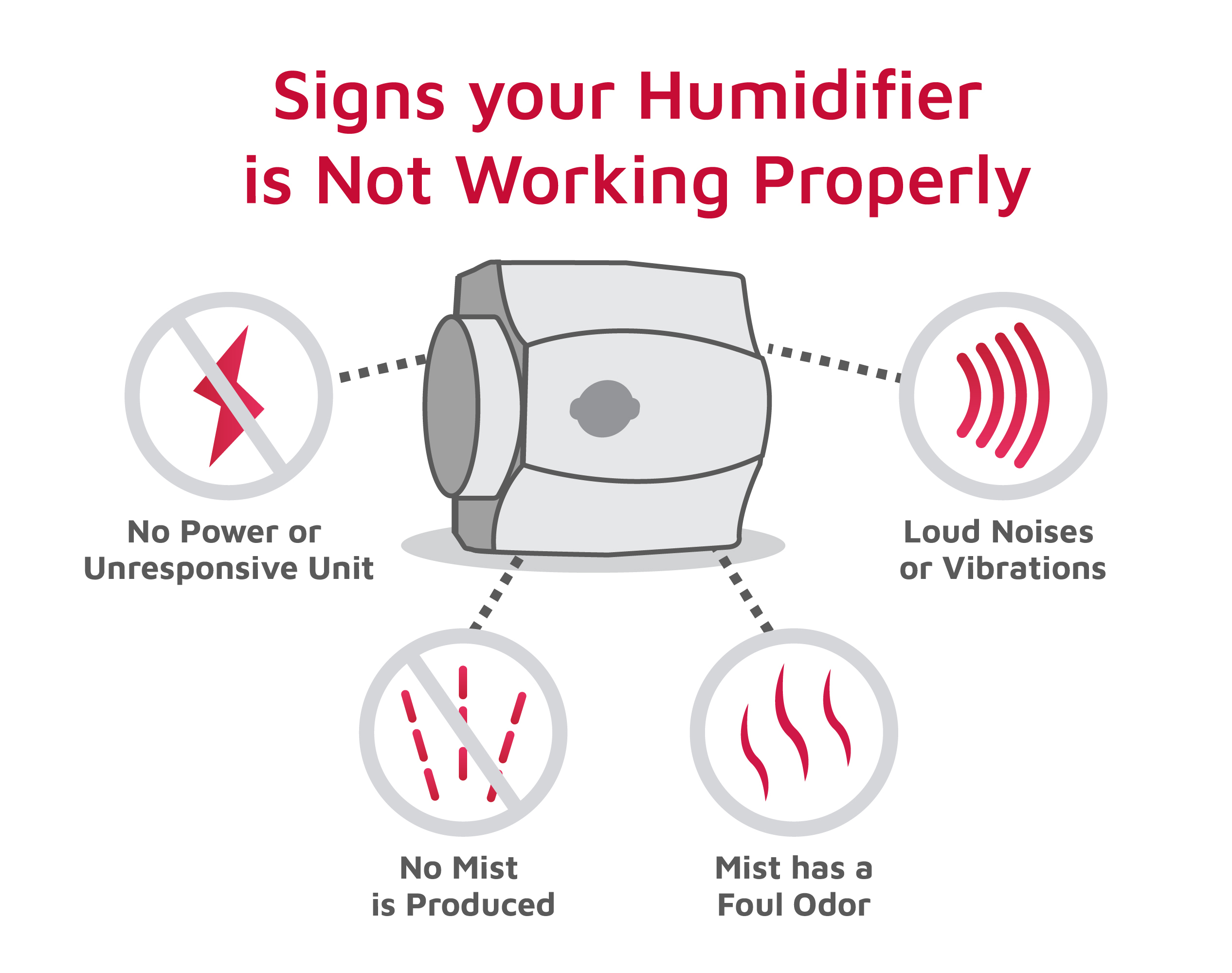
While evaporative models operate invisibly, complete absence of function shows through other critical symptoms:
Immediate red flags that require attention:
– Water level remains unchanged after 24 hours
– Room humidity drops or stays static (use hygrometer to verify)
– Unit runs but air remains uncomfortably dry
– Fan operates yet no air movement felt near output vents
If your unit shows these symptoms, your humidifier not misting indicates a genuine problem rather than normal operation. This distinction is crucial—many users waste time troubleshooting when their unit functions exactly as designed.
Quick Diagnostic Test for Real Problems
Perform this 2-minute check to confirm if your humidifier actually needs repair:
- Fill tank to maximum line with fresh water
- Run unit on highest setting for 10 minutes
- Check filter – should feel damp but not saturated
- Feel airflow – strong breeze should exit output vents
- Monitor humidity – should rise 2-5% in small room within 30 minutes
If your unit fails this test despite proper water levels, you’ve confirmed a genuine issue requiring troubleshooting—your humidifier not misting isn’t by design but due to an actual malfunction.
Common Causes for Stopped Mist Output
Empty or Improperly Seated Water Tank
Most frequent issue: Tank not making proper contact with base, disrupting water flow.
Fix in 30 seconds:
– Remove tank completely from base unit
– Check for cracks or damage along seams
– Re-seat firmly until you hear distinct click
– Ensure tank cap is tight but not over-tightened
Pro tip: Fill tank while attached to base, then flip both together to prevent air locks that stop water flow. This simple technique solves many “humidifier not misting” complaints caused by improper tank seating.
Clogged or Dirty Filter Problems
Evaporative filters trap minerals and debris, eventually blocking airflow when saturated beyond capacity.
Filter inspection steps:
1. Power off and unplug unit completely
2. Remove filter housing (usually top or side panel)
3. Check filter color – white = clean, gray/brown = dirty
4. Assess stiffness – should feel spongy, not rock-hard
Filter replacement schedule:
– Every 30-60 days with regular daily use
– Every 2-4 weeks with hard water conditions
– Immediately if moldy, crumbling, or emitting odors
A clogged filter is the #1 reason evaporative humidifiers stop functioning properly while appearing operational—a classic case of humidifier not misting due to preventable maintenance issues.
Mineral Buildup Blocking Vapor Path
Hard water deposits create invisible barriers inside your unit, restricting water flow to critical components.
Cleaning process (15 minutes):
1. Empty all water from base and tank completely
2. Mix solution – 1 part white vinegar to 3 parts water
3. Soak removable parts for 30 minutes
4. Scrub gently with soft brush or cloth (never metal)
5. Rinse thoroughly until vinegar smell disappears
6. Air dry completely before reassembly
This simple maintenance step resolves most cases where your humidifier not misting stems from mineral accumulation rather than component failure.
Ultrasonic Models: Different Troubleshooting Approach
Ultrasonic vs Evaporative Mist Visibility
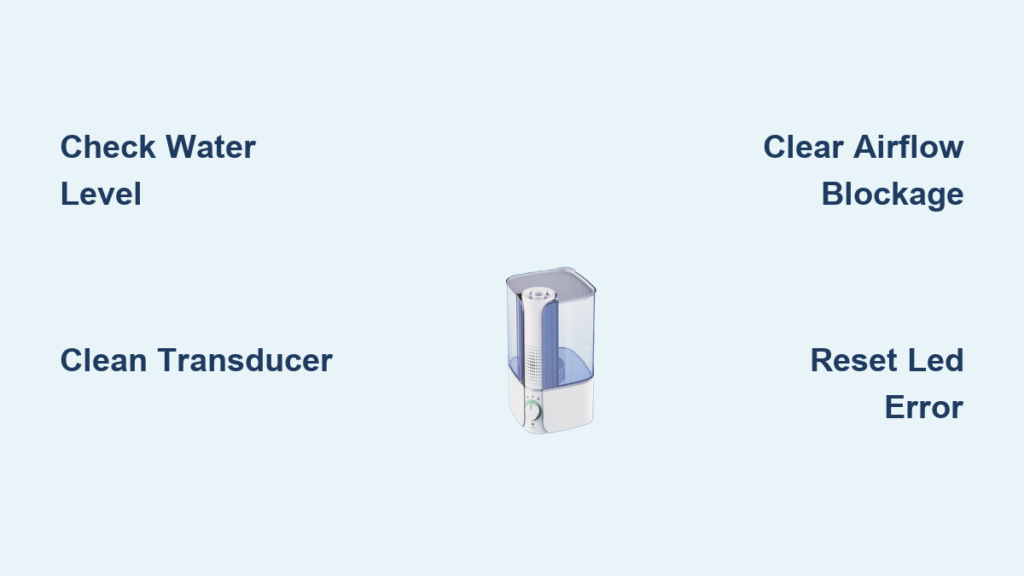
Ultrasonic humidifiers should produce visible mist. If yours doesn’t, check these specific issues immediately:
Critical checks for ultrasonic units:
– Water level must be above minimum line
– Mist outlet not blocked by nearby objects
– Tank properly seated with no gaps
– Power light illuminated and functioning
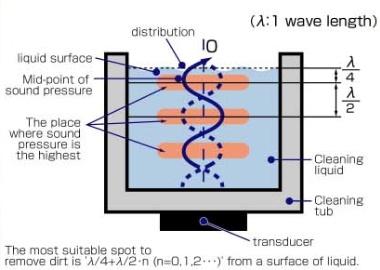
Unlike evaporative models, ultrasonic units rely on high-frequency vibrations to create visible mist—so when your humidifier not misting occurs with this type, it always indicates a problem requiring attention.
Diagnosing Ultrasonic-Specific Problems
No visible mist troubleshooting:
1. Check water sensor – clean with cotton swab and distilled water
2. Inspect transducer – remove mineral deposits gently with vinegar
3. Test with distilled water – eliminates mineral interference
4. Verify fan operation – must blow mist upward effectively
Warning: Never run ultrasonic units without water—this damages the transducer permanently and creates an expensive repair situation. This is one of the most common causes when ultrasonic humidifier not misting occurs.
When to Replace vs Repair Your Unit

Replacement Indicators You Can’t Ignore
Buy new unit when:
– Filter housing cracked or broken beyond repair
– Fan motor grinding or completely seized
– Water tank leaks after multiple repair attempts
– Unit older than 5 years with recurring issues
For these scenarios, continuing to troubleshoot your humidifier not misting problem becomes cost-ineffective compared to replacement.
Cost Comparison Guide for Smart Decisions
Average repair costs:
– New filter: $10-25 (solves most evaporative issues)
– Cleaning supplies: $5-10 (vinegar, brushes)
– Professional service: $75-150 (often not cost-effective)
New unit prices:
– Basic evaporative: $30-60 (solves most “humidifier not misting” issues)
– Ultrasonic models: $40-100 (with visible mist)
– Smart features: $100-300 (with humidity sensors)
Rule of thumb: Repair if total cost under 50% of new unit price. For most “humidifier not misting” cases, replacement filters or basic cleaning solves the problem for minimal cost.
Final Troubleshooting Checklist Before Replacement
Before giving up on your non-misting humidifier, complete this verification process:
- Confirm unit type – is it supposed to produce visible mist?
- Check water level and tank placement (reseat if needed)
- Replace filter (evaporative) or clean transducer (ultrasonic)
- Deep clean all components with vinegar solution
- Test in smaller room to verify function (better humidity buildup)
- Compare humidity levels before and after operation with hygrometer
Your humidifier likely works fine—evaporative technology simply operates invisibly by design. When real problems occur, these steps restore mist output quickly and prevent future issues through proper maintenance routines. Remember that “humidifier not misting” often reflects normal operation rather than malfunction, saving you unnecessary repairs or premature replacement of a perfectly functioning unit.