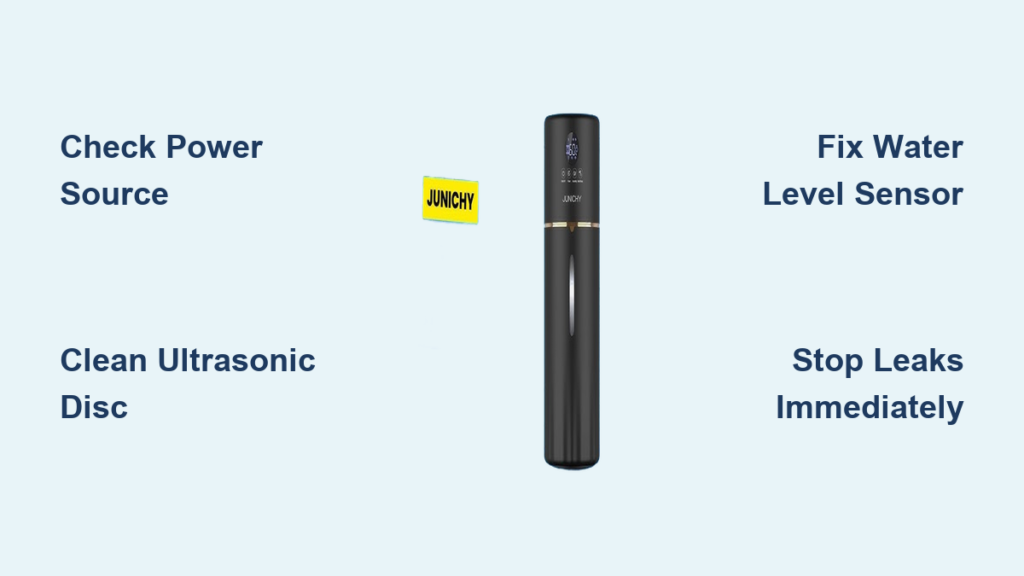
Your Junichy humidifier suddenly stopped producing mist, won’t power on, or leaks water—leaving you frustrated in dry air with no clear solution. Unlike major brands with extensive support resources, Junichy humidifier owners often struggle to find specific troubleshooting information when problems arise. This guide delivers practical solutions based on general ultrasonic humidifier principles since official Junichy documentation remains scarce.
When your compact Junichy unit fails, the immediate challenge is identifying whether the issue stems from simple user error, routine maintenance needs, or actual component failure. With limited manufacturer support available online, most owners waste hours searching for answers that don’t exist. You’ll discover systematic troubleshooting approaches that work for most ultrasonic humidifiers, even when Junichy-specific instructions are unavailable.
Power Connection Failures Preventing Operation

Verify Electrical Source Before Blaming Humidifier
Many “broken” humidifiers simply lack proper power delivery. Begin by testing your electrical source with another device—your phone charger or a lamp works perfectly. If neither powers up, check for tripped circuit breakers or GFCI outlets that require resetting, especially in bathroom or kitchen circuits where humidity triggers safety cutoffs.
Critical power verification steps:
1. Plug the humidifier into a different room’s outlet
2. Test multiple wall sockets to rule out localized circuit issues
3. Inspect your home’s electrical panel for any tripped switches
4. Press the reset button on bathroom or kitchen outlets showing no power
Examine Power Adapter and Cord Integrity
Junichy units typically use external power adapters vulnerable to damage. Without official specifications, assume your model uses a standard DC adapter. Look for visible wear at connection points where the cord meets the adapter brick and where it inserts into the humidifier base. A damaged adapter might feel excessively hot, show discoloration, or lack an indicator light when plugged in.
Safety note: If you notice fraying, exposed wires, or melting signs, stop using the adapter immediately. Replacement units for generic ultrasonic humidifiers cost $8-15 and should match voltage/amperage requirements (commonly 24V DC, 500mA). Never attempt to repair damaged electrical components yourself.
Perform Manual Reset Procedure
Most ultrasonic humidifiers contain resettable components that require specific sequences when malfunctioning. With your Junichy unit unplugged:
- Remove the water tank completely
- Press and hold the power button for 15-20 seconds
- Allow the unit to sit without power for 2-3 minutes
- Reconnect power and test operation with the tank removed
This process resets internal electronics and bypasses water level sensors that might falsely indicate an empty tank.
Insufficient or No Mist Production Despite Power
Address Water Level Sensor Malfunctions
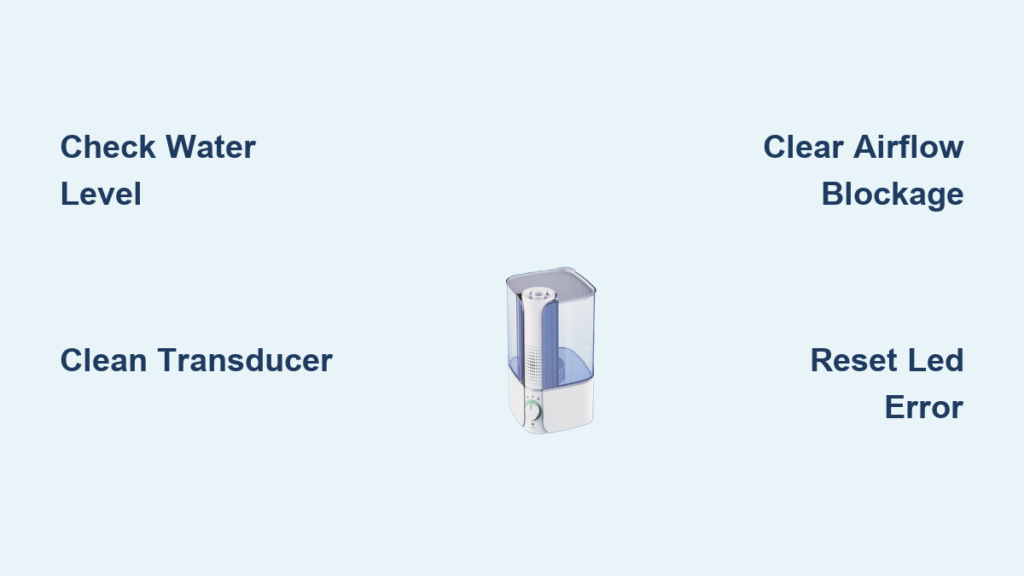
When your humidifier powers on but produces little or no mist, water level sensors often cause the problem. These components prevent operation when water falls below minimum levels but can malfunction due to mineral buildup or improper tank placement. Symptoms include continuous “empty tank” indicators despite adequate water and intermittent operation.
General ultrasonic humidifier sensor cleaning:
– Empty the tank and base completely
– Use white vinegar to dissolve mineral deposits on sensor components
– Gently move any floating sensors to ensure free movement
– Rinse thoroughly before refilling with fresh water
Clean Ultrasonic Disc to Restore Mist Output
The metal disc at the base creates mist through high-frequency vibrations. Mineral deposits from hard water gradually reduce its effectiveness, leading to weak mist output and white dust accumulation. Without Junichy-specific disassembly instructions, proceed cautiously:
- Fill the base (not the tank) with equal parts white vinegar and water
- Let the solution sit for 20-30 minutes to dissolve deposits
- Use a soft toothbrush to gently clean the disc surface—never metal tools
- Rinse repeatedly until vinegar odor disappears completely
Adjust Water Temperature for Better Performance
Ultrasonic humidifiers perform poorly with cold water. If your unit works in summer but struggles during colder months:
- Use room-temperature water instead of cold tap water
- Allow filled tanks to sit 20-30 minutes before operation
- Avoid overfilling—most units require space between water surface and tank lid
Unusual Noises During Operation

Resolve Fan-Related Sounds
Grinding, rattling, or clicking noises typically indicate airflow obstruction. Without model-specific disassembly instructions, focus on accessible areas:
- Unplug and empty all water
- Inspect air intake vents for visible dust or debris
- Use compressed air to clear vents from multiple angles
- Check for loose components by gently shaking the base
Important: If your model has visible screws on the bottom, take photographs before removal to ensure proper reassembly. Never force components that resist gentle movement.
Eliminate Water Tank Vibration Noises
Hollow knocking or sloshing sounds often originate from the water tank:
- Ensure the tank seats properly on the base with no gaps
- Check for worn or missing rubber seals between tank and base
- Fill only to the manufacturer’s indicated line—overfilling causes noise
- Clean tank contact points where mineral buildup creates instability
Water Leakage Troubleshooting

Immediate Response to Leaks
Water leakage presents electrical hazards requiring urgent action:
- Unplug the unit immediately
- Remove all water from tank and base
- Dry all components thoroughly with absorbent towels
- Inspect rubber gaskets for cracks, warping, or displacement
Without Junichy-specific parts diagrams, examine all contact points between the water tank and base unit for seal integrity.
Prevent Overfilling-Related Leaks
Many leaks stem from simple overfilling. Most humidifiers have maximum fill lines that are easy to miss:
- Fill only to the indicated line, not to the tank’s physical top
- Leave adequate airspace for water expansion during operation
- Empty and clean daily to prevent bacterial growth and mineral buildup
Essential Maintenance Practices
Establish Daily Cleaning Routine
Prevent most common failures with these simple daily habits:
- Empty and rinse the water tank after each use
- Wipe down exterior surfaces with a dry cloth
- Check for unusual sounds or smells before operation
- Store with all components thoroughly dried when not in use
Implement Weekly Deep Cleaning
Combat mineral buildup with regular maintenance:
- Fill the base with white vinegar solution
- Let sit 20-30 minutes to dissolve deposits
- Clean all accessible surfaces with soft brushes
- Rinse thoroughly until vinegar smell disappears
- Allow complete air drying before next use
Finding Reliable Information Sources
Locate Model-Specific Documentation
Since general troubleshooting has limitations, seek Junichy-specific resources:
- Check original packaging for model number and documentation
- Search Amazon product pages using your exact model number
- Contact Junichy support directly via any available channels
- Look for QR codes on the unit that might link to digital manuals
When to Consider Replacement
Without warranty information or repair parts availability:
- Replace units showing electrical damage or burned components
- Consider new purchase if original cost was under $50 and multiple issues exist
- Research newer models with better support documentation
- Prioritize units with accessible customer service channels
Final Diagnostic Approach
When your Junichy humidifier fails, follow this streamlined process:
- Power verification – Confirm electricity reaches the unit
- Water check – Ensure proper fill level and tank placement
- Simple cleaning – Address likely mineral buildup issues
- Noise assessment – Identify sound origin before disassembly
- Leak containment – Immediately address any water contact with electronics
Remember that consistent maintenance prevents most humidifier failures. Without Junichy-specific guidance, establish a weekly cleaning routine using vinegar solutions and always use distilled water to minimize mineral deposits. When problems persist despite basic troubleshooting, replacement often proves more practical than hunting for scarce repair information. For future purchases, consider brands with readily available documentation and customer support to avoid these frustrating troubleshooting dead ends.