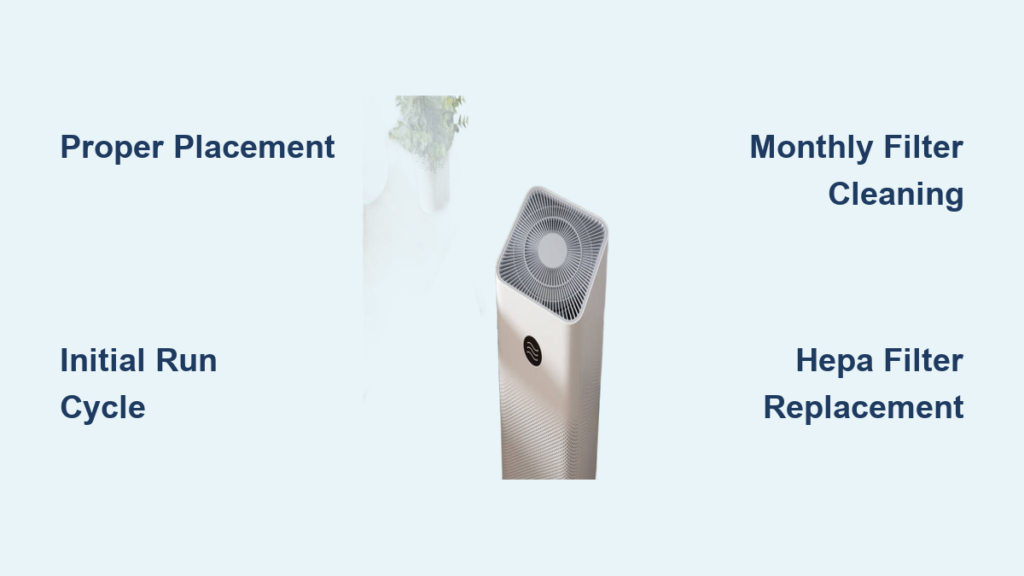
You’ve invested in a HEPA air purifier to improve your indoor air quality, but simply plugging it in won’t maximize its benefits. Many homeowners make critical mistakes that reduce effectiveness by up to 50%, like placing the unit in a corner or ignoring filter replacement schedules. When your air purifier runs continuously but you still notice dust accumulation or allergy symptoms persisting, you’re not getting the clean air you paid for. This guide reveals the exact steps to properly use your HEPA air purifier, from initial setup to daily operation and maintenance—ensuring you actually breathe cleaner air and protect your investment.
Correct Placement for Maximum Air Purification
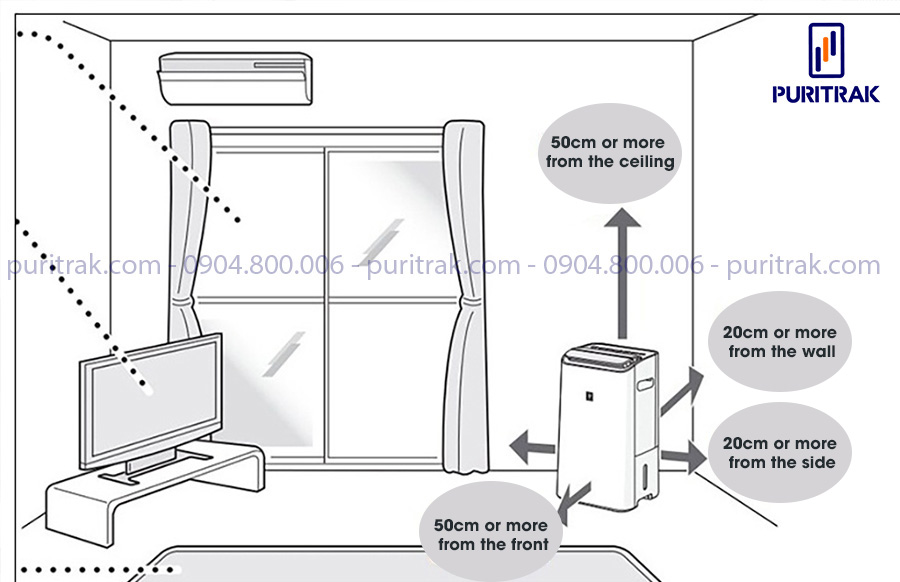
Your HEPA air purifier’s location determines whether it cleans your entire room or just creates a small pocket of clean air. Proper placement follows specific airflow principles that most users overlook.
Optimal Room Positioning Guidelines
Place your unit at least 1-2 feet away from walls and furniture to allow unrestricted airflow. The back and sides of most models contain intake vents that require space to pull in contaminated air effectively. Position the purifier near potential pollution sources like kitchens (for cooking fumes) or pet areas, but not so close that large particles immediately clog the pre-filter. For multi-story homes, prioritize bedrooms where you spend 30-40% of your time breathing, especially if occupants have respiratory conditions.
Avoiding Common Placement Mistakes
Never tuck your HEPA air purifier behind curtains or inside cabinets—that single mistake can reduce efficiency by 60% or more. Steer clear of humid areas like bathrooms unless your model is specifically designed for moisture exposure. Don’t place directly under ceiling fans or HVAC vents, as competing air currents disrupt the purifier’s carefully engineered airflow pattern. If using in a bedroom, position it near the bed but not pointed directly at your face while sleeping, as constant airflow can cause dryness.
Initial Setup and First-Time Operation

Getting your HEPA air purifier ready for use involves more than just removing it from the box and plugging it in. Critical setup steps ensure optimal performance from day one.
Unboxing and Component Verification
Before connecting power, verify all components are present: main unit, HEPA filter, pre-filter, and any carbon filters. Most manufacturers ship units with protective plastic covering the filters—remove ALL packaging materials to prevent burning smells or reduced airflow. Check filter orientation markings; installing the HEPA filter backward creates immediate performance issues. For units with multiple filters, follow the specific installation sequence in your manual (typically pre-filter first, then HEPA, then carbon).
Powering Up and Initial Run Cycle
After proper filter installation, plug the unit directly into a wall outlet (avoid extension cords that may cause voltage issues). Run your HEPA air purifier continuously on the highest setting for 24-48 hours before normal use—this establishes baseline air quality in your space. During this initial period, expect to hear normal operational sounds like gentle fan noise, but investigate any clicking, grinding, or burning odors immediately. Most units feature indicator lights that confirm proper operation; consult your manual to interpret these signals correctly.
Daily Operation for Optimal Air Cleaning
How you operate your HEPA air purifier daily significantly impacts both air quality results and unit longevity. Smart usage patterns maximize benefits while minimizing energy consumption.
Selecting the Right Operating Mode
Use automatic mode when available, as built-in sensors adjust fan speed based on real-time air quality. For allergy sufferers, maintain medium to high settings during peak pollen seasons rather than running constantly on low. Night mode reduces noise by 20-30 dB while maintaining adequate filtration—ideal for bedrooms. Never run your HEPA air purifier on the lowest setting in spaces with active pollution sources like smoking or cooking, as this creates ineffective “air sweeping” without proper particle capture.
Runtime Best Practices
Run your HEPA air purifier continuously for consistent air quality—turning it on only when you notice problems means breathing contaminated air for hours before purification occurs. Close windows and doors in the treated room to prevent constant recontamination. During high-pollution events (wildfire smoke, heavy dust), operate continuously on high for 4-6 hours before returning to normal settings. For homes with pets, run the unit an additional 2 hours after shedding seasons peak to capture loose dander effectively.
Essential Maintenance Schedule
Neglecting maintenance turns your expensive HEPA air purifier into an inefficient fan that circulates dust. Proper upkeep extends filter life and maintains 99.97% particle capture efficiency.
Monthly Pre-Filter Cleaning Procedure
Remove and vacuum the pre-filter every 30 days to prevent clogging that strains the main HEPA filter. For washable pre-filters, rinse under lukewarm water and air dry COMPLETELY for 24-48 hours before reinstalling—moisture damages HEPA media. Never use cleaning chemicals on filters, as residues become airborne pollutants. Reinstall pre-filters only when completely dry to avoid mold growth inside the unit.
HEPA Filter Replacement Timing
Replace true HEPA filters every 12-18 months under normal conditions, or every 6-8 months in high-pollution environments. Check manufacturer specifications for your exact model, as some medical-grade units require more frequent changes. When replacement time approaches, you’ll notice reduced airflow, increased operational noise, or persistent indicator lights. Never attempt to clean or vacuum HEPA filters—this damages the delicate microscopic fibers that capture particles. Set calendar reminders 30 days before expected replacement to avoid performance drops.
Troubleshooting Common HEPA Air Purifier Issues

Even properly maintained HEPA air purifiers encounter operational problems. Knowing how to diagnose issues saves money on unnecessary service calls.
Addressing Reduced Airflow Problems
If airflow decreases significantly, first check for pre-filter clogs and clean if necessary. Verify no objects block intake or exhaust vents—this causes 70% of perceived performance issues. Inspect the fan housing for visible dust accumulation requiring gentle vacuuming. If problems persist after these checks, your HEPA filter may be prematurely saturated due to excessive pet dander or construction dust in your environment, requiring earlier replacement.
Resolving Unusual Noises and Error Codes
Clicking sounds often indicate loose internal components—turn off immediately and contact support. Continuous humming is normal, but sudden changes in pitch suggest motor issues. Consult your manual’s error code chart for specific meanings; a flashing red light typically indicates filter replacement is overdue. Never ignore persistent error messages, as continued operation can damage internal components beyond repair.
Maximizing Long-Term Performance and Efficiency
Extend your HEPA air purifier’s lifespan and maintain peak performance with these professional usage techniques that most owners never consider.
Strategic Seasonal Adjustments
During pollen season, position your unit near windows you occasionally open for ventilation. In winter, run slightly higher settings to compensate for reduced natural ventilation when windows stay closed. During wildfire events, seal room gaps with temporary weather stripping to prevent smoke infiltration that overwhelms the filtration system. Adjust settings based on seasonal humidity levels, as moisture affects particle behavior and filter efficiency.
Energy Efficiency Optimization
Use timer functions to run your unit during peak pollution periods rather than 24/7 at high settings. Pair with smart home systems that activate the purifier only when occupants are present. Clean pre-filters monthly to maintain optimal airflow without increasing energy consumption. Position away from heat sources that cause the unit to work harder to maintain internal temperatures.
Final Considerations for HEPA Air Purifier Success
Your HEPA air purifier delivers cleaner air only when used correctly throughout its lifecycle. Remember to maintain consistent operation rather than intermittent use, as air quality degrades rapidly when purification stops. Keep replacement filters on hand before your current ones expire to avoid performance gaps. Document filter changes and maintenance in a dedicated log to track usage patterns specific to your environment. For households with severe allergies or respiratory conditions, consider pairing your HEPA air purifier with regular vacuuming using HEPA-filtered vacuums to create a comprehensive air quality strategy. Most importantly, consult your specific model’s manual for manufacturer-recommended usage patterns, as features and requirements vary between brands and models. Properly maintained HEPA air purifiers can operate effectively for 5-7 years, providing continuous protection against airborne contaminants when used according to these guidelines.