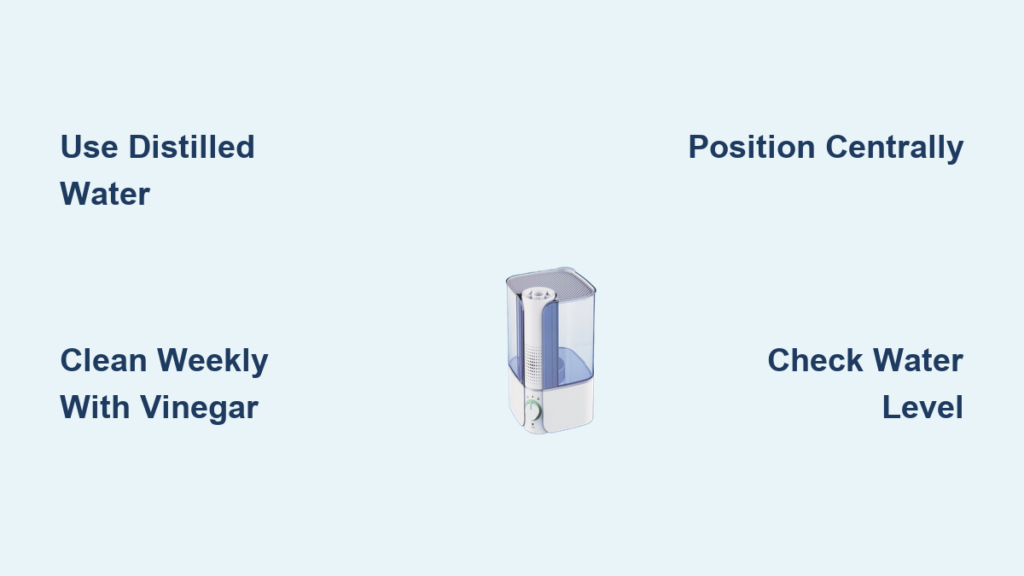
Waking up with scratchy throats, bloody noses, or static shocks zapping your fingertips? Dry indoor air could be the culprit—and your Equate humidifier holds the solution. But like 68% of new humidifier owners, you might be struggling with white dust clouds, mysterious leaks, or disappointing performance simply because the setup wasn’t done right. Most problems vanish when you learn how to use Equate humidifier models according to their specific engineering.
This isn’t just about filling a tank and flipping a switch. Proper operation transforms your unit from a frustrating appliance into a silent guardian against dry-air misery. You’ll discover why water quality makes or breaks your results, how to position it for maximum coverage, and the critical daily habit that prevents 90% of common failures. Let’s fix what most manuals gloss over.
Equate Model Types Explained
Ultrasonic Models
These whisper-quiet units vibrate water at ultrasonic frequencies to create cool mist without heating elements. Their secret weapon? A blue LED night light on newer versions that doubles as a low-distraction nightlight. Since they never heat water, they’re ideal for children’s rooms where hot surfaces pose risks. But skip distilled water, and you’ll battle white mineral dust coating your furniture within days.
Evaporative Models
Self-regulating humidity is the superpower here. A built-in fan pushes air through a wet wick filter, automatically slowing output as room humidity rises. While the gentle fan hum soothes some sleepers, others find it disruptive—especially in small bedrooms. This model demands strict filter discipline: replace the wick every 30-60 days without fail, or face mold spores circulating through your air.
Warm Mist Models
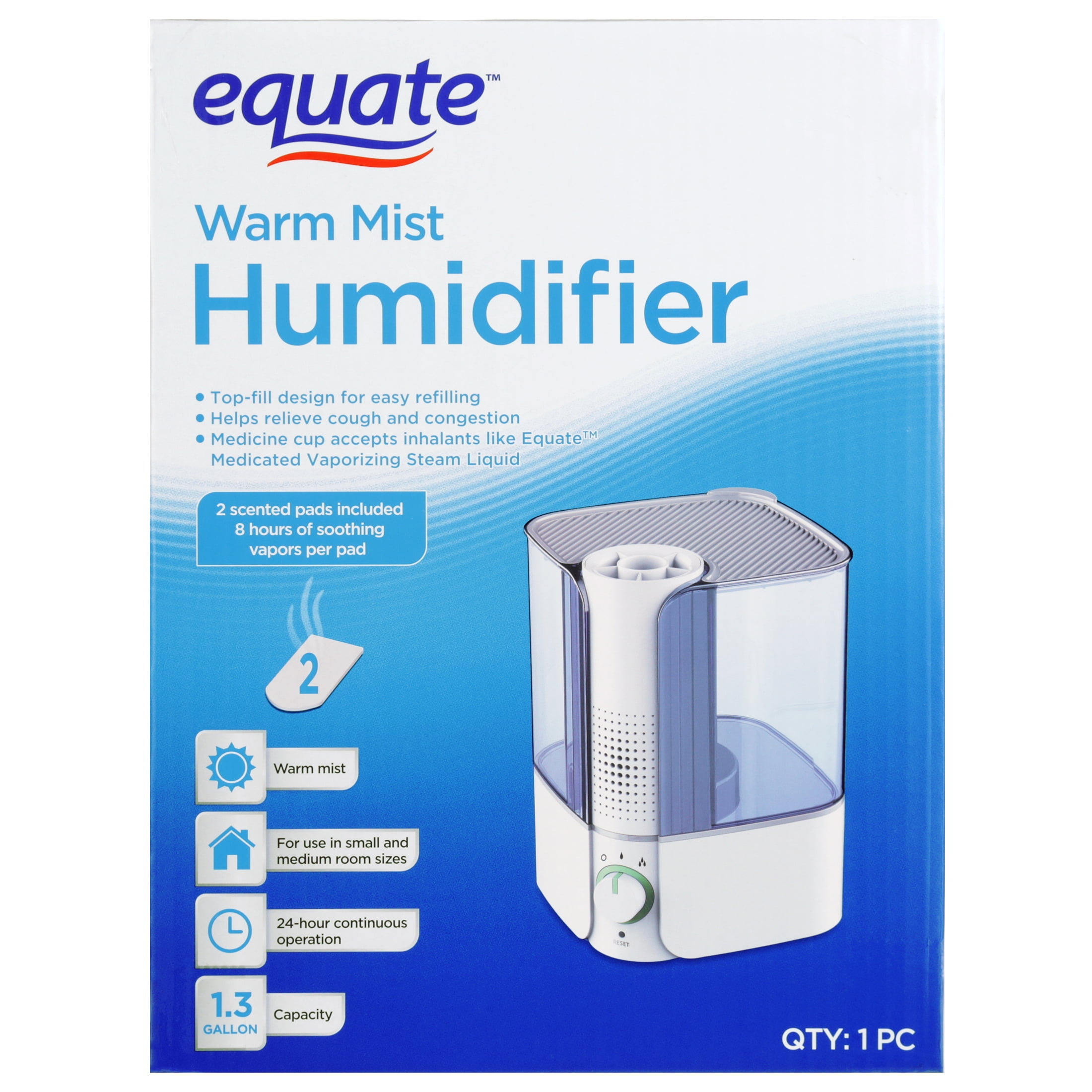
By boiling water to create pure steam, these models add subtle warmth alongside moisture—perfect for freezing winter bedrooms. The trade-off? Higher electricity use than cool-mist alternatives. Crucially, they eliminate white dust issues since minerals stay trapped in the tank. Never add essential oils unless your specific model has a dedicated oil tray, or you’ll risk damaging internal components.
First Setup Steps

Unbox and Inspect Components
Tear off all plastic packaging slowly—many users crack tanks by yanking protective films too aggressively. Verify your box contains: the base unit, water tank with cap, filter or demineralization cartridge, and cleaning brush (included with select models). Missing parts? Stop immediately; running without the filter in evaporative models voids your warranty.
Position Your Unit Correctly
Place the humidifier on a flat, waterproof surface 12+ inches from walls and electronics. Never set it directly on wood furniture—condensation will warp surfaces within weeks. If your unit arrived in cold weather, let it acclimate for 30 minutes before plugging in; starting a chilled motor strains internal components. Pro tip: Position it centrally in the room, not tucked in corners, for even mist distribution.
Water Management Basics
Choose Your Water Wisely
Distilled water is the gold standard—it prevents white dust and mineral buildup completely. Filtered tap water works acceptably for most users, but hard water regions will see residue within days. Never use hot water (risks scalding and warping plastic) or essential oils in non-compatible models (causes permanent damage).
Fill Without Spills
- Unplug the unit and lift the tank straight up—twisting breaks seals
- Flip tank upside-down and unscrew cap counterclockwise
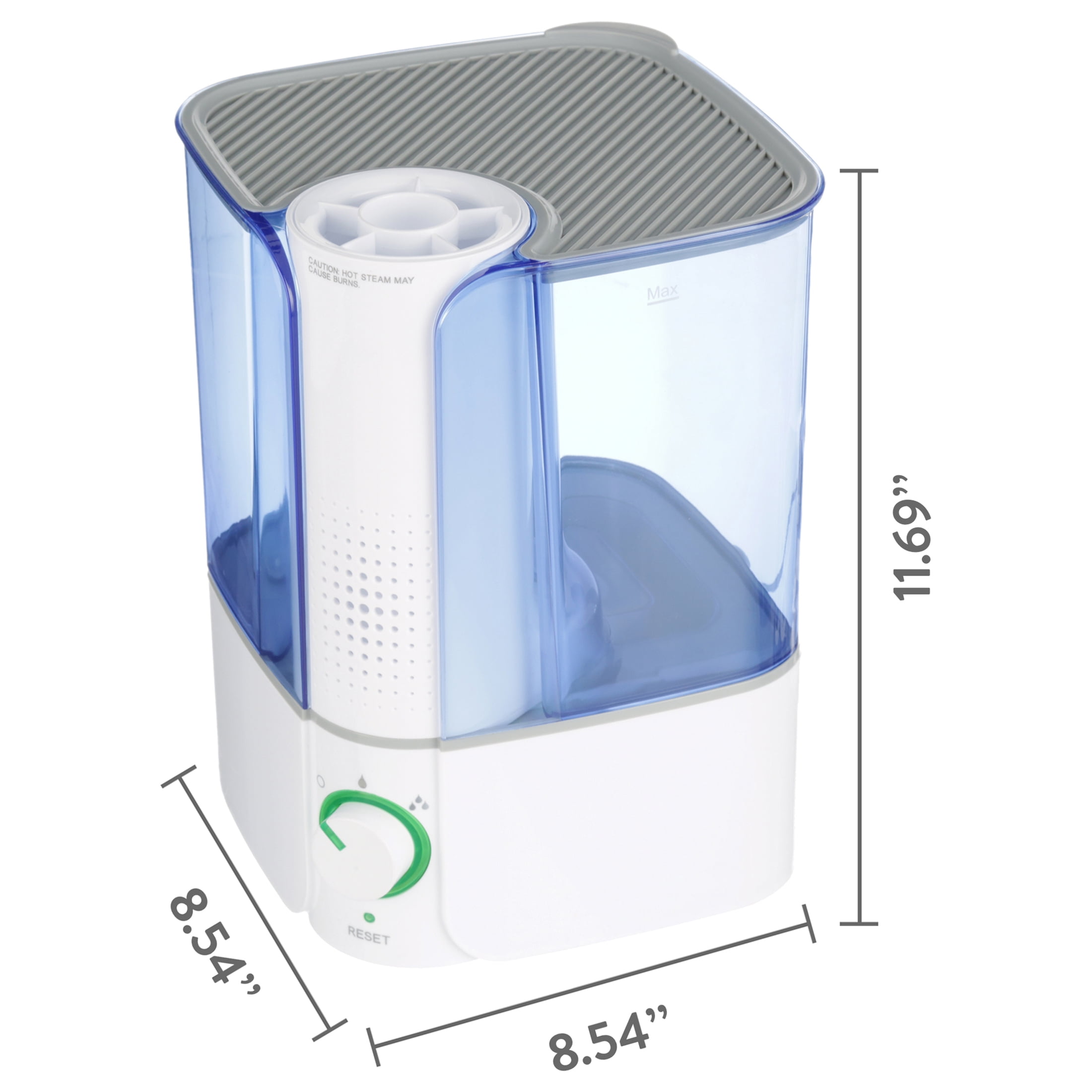
- Fill only to the MAX line (overfilling causes leaks)
- Hand-tighten cap firmly—loose caps are the #1 leak source
- Re-seat tank until you hear a distinct click
Runtime varies by tank size:
– 0.5-1 gallon tanks last 8-12 hours
– 1-1.5 gallon models run 12-24 hours
– 1.5+ gallon units provide 24-48 hours of moisture
Operation Instructions
Start Your Humidifier
Confirm the tank clicks securely into the base—this triggers the water sensor. Plug only into grounded outlets, then press the power button until the blue LED glows. Select mist levels based on room size: low for bedrooms under 200 sq ft, medium for living rooms (200-400 sq ft), and high for large spaces. Allow 5-10 minutes for mist production to stabilize; initial output appears weaker.
Adjust Direction and Output
Rotate the directional nozzle away from walls and electronics—point it toward the room’s center. If mist seems weak after 15 minutes, check for:
– Tank vent blockages (clear with a toothpick)
– Mineral buildup in the nozzle (soak in vinegar)
– Low water levels (refill immediately)
Daily Maintenance Routine
Quick Daily Care
Empty and rinse the tank every 24 hours—even if water remains. Stagnant water breeds bacteria within hours. Wipe the exterior with a damp cloth to remove dust, and verify consistent mist output. Critical: If you detect musty odors, stop using immediately—this signals mold growth requiring deep cleaning.
Weekly Deep Cleaning Process
1. Unplug and disassemble all components
2. Wash the tank with mild soap and a soft brush (never abrasive pads)
3. Soak the base reservoir in equal parts white vinegar and water for 30 minutes
4. Scrub mineral deposits with the included brush
5. Rinse every part thoroughly—soap residue creates mist suds
6. Air-dry all components for 4+ hours before reassembly
Fix Common Problems Fast
No Mist Output
Check these immediately:
– Water level below minimum line
– Tank not fully seated (listen for the click)
– Power outlet functionality (test with another device)
– Cap tightened completely
White Dust Everywhere
This means hard water minerals are aerosolizing. Switch to distilled water tonight, and install a demineralization cartridge if your model supports it. For existing residue, wipe surfaces with a microfiber cloth dampened with vinegar solution.
Water Leaks
Most leaks stem from:
– Overfilling above the MAX line (drain excess immediately)
– Cracked tanks from accidental drops (replace the tank)
– Damaged rubber gaskets (order replacements)
– Uneven surfaces causing tank misalignment
Safety Guidelines
Electrical Safety
Always unplug before moving or cleaning—water near electrical components causes short circuits. Never operate with frayed cords, and keep the unit away from bathtubs or sinks. Critical: If water enters the base motor, unplug immediately and contact support; attempting DIY repairs voids your warranty.
Placement Safety
Keep 3+ feet from children’s beds to prevent curious fingers near vents. Never place on carpeted floors—the base must sit on hard, waterproof surfaces. If using on wood furniture, add a plastic tray underneath; Equate won’t cover water damage claims.
Optimize Performance
Target Humidity Levels
Use a $10 hygrometer to monitor levels. Maintain 30-50% relative humidity—below 30% causes dry-skin misery, while above 60% encourages mold growth. In winter, heating systems drop indoor humidity to desert-like 10-20%; crank up the mist level accordingly.
Energy Efficiency Tips
Run your humidifier only when occupying the room—continuous operation wastes electricity. Clean units use 15% less power than mineral-clogged models. For bedrooms, use the lowest effective setting overnight; you’ll save $20+ annually on energy bills.
Store Between Seasons
Long-term Storage (Months)
- Deep-clean all components with vinegar solution
- Air-dry for 48+ hours in a well-ventilated area
- Remove and discard filters (mold grows in damp filters)
- Store in the original box with silica gel desiccant packs
- Keep in a climate-controlled space (avoid garages/attics)
Never store with residual water—this guarantees mold colonization. Before reactivating, inspect for musty smells and run a vinegar cycle to kill dormant bacteria.
Replacement Parts Guide
What You’ll Need Regularly
- Evaporative wick filters: Replace every 30-60 days
- Demineralization cartridges: Swap every 2-3 months
- Cleaning brushes: Replace when bristles fray (typically yearly)
Pro tip: Order filters in bulk during Walmart sales—they’re 30% cheaper than emergency replacements. Always verify your model number first; Equate parts aren’t universal across humidifier lines.
Warranty and Support
Most Equate humidifiers include a 1-2 year limited warranty covering manufacturing defects—but hard water damage voids coverage. Register online within 30 days for extended support options. When contacting support, have your model number (stamped on the base) and receipt ready; they’ll troubleshoot issues before approving replacements.
Mastering how to use Equate humidifier systems transforms them from frustrating gadgets into silent health allies. Remember: daily tank rinsing and weekly vinegar soaks prevent 90% of failures. Set phone reminders for maintenance, stick to distilled water, and you’ll breathe easier within hours. For persistent issues, consult Equate’s online troubleshooting library—it solves 80% of problems without technician visits. Your relief from dry-air misery starts today.