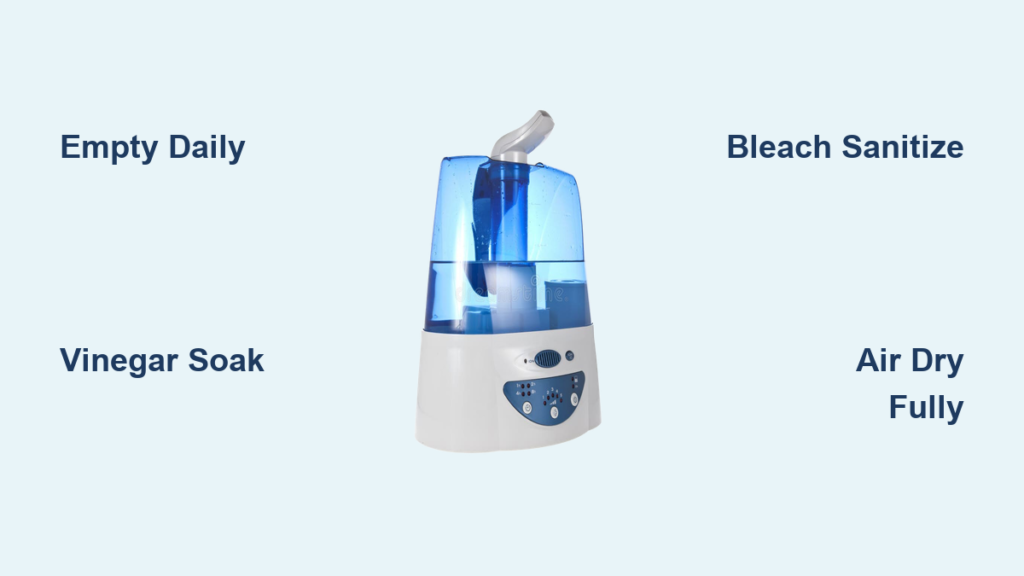
That white, chalky crust lining your humidifier’s tank isn’t just an eyesore—it’s actively spraying mold spores and bacteria into your breathing space. When neglected, humidifiers transform from health allies into respiratory hazard zones, pumping contaminated mist that triggers allergies, asthma attacks, and infections. The EPA confirms dirty units release harmful microbes within hours of use, yet most people only clean when performance drops. Here’s the fix: You can completely clean and sanitize any humidifier type in 15 minutes using household items, protecting your family’s health while extending your appliance’s life. This guide delivers exact steps for warm mist, cool mist, and ultrasonic models—no guesswork required.
Skipping regular cleaning causes triple threats: Mineral scale clogs heating elements and filters within days, slimy biofilm harbors dangerous pathogens like Aspergillus mold, and stagnant water becomes a breeding ground for bacteria that thrive in room-temperature moisture. Worst of all? You won’t smell or see most contaminants until health issues strike. By following this humidifier cleaning and sanitizing protocol weekly, you’ll eliminate these risks while ensuring optimal moisture output.
Why Your Humidifier Becomes a Health Hazard
Mineral scale destroys critical components in days. Hard water deposits coat heating elements in warm mist units, blocking steam production until your unit runs dry. In ultrasonic models, scale chokes the nebulizer disc—the tiny round component that vibrates to create mist—turning your humidifier into a silent paperweight. Visible crust around waterlines signals advanced damage needing immediate descaling.
Hidden microbial colonies release toxins with every mist cycle. That greasy film inside reservoirs? It’s biofilm—a fortress for mold and bacteria like Legionella that survives standard cleaning. When your humidifier runs, these pathogens aerosolize directly into your bedroom or nursery. The CDC links contaminated humidifiers to “humidifier fever,” causing flu-like symptoms that vanish only when the unit is discarded.
Daily neglect guarantees emergency cleaning. Waiting beyond the EPA’s 3-day cleaning window lets minor scale harden into rock-like deposits requiring hours of soaking. Early-stage bacteria blooms into thick mold colonies resistant to vinegar alone. Your 15-minute weekly investment prevents all-night scrubbing sessions and doctor visits.
Essential Supplies for Effective Humidifier Sanitizing
For scale removal: Pure white vinegar (undiluted)—its acetic acid dissolves minerals without damaging plastic
For disinfection: Bleach solution (½ teaspoon household bleach per ½ gallon water)—only method proven to kill mold spores
Tools: Soft-bristle toothbrush, cotton swabs, microfiber cloths, paper towels
Rinsing supplies: Clean water in spray bottle for hard-to-reach areas
Critical note: Skip “natural” sanitizers like lemon juice or hydrogen peroxide—they lack EPA validation for killing airborne pathogens. Vinegar removes scale but won’t eliminate mold. Bleach is non-negotiable for true sanitizing.
60-Second Daily Routine to Prevent Buildup
Empty and rinse the tank immediately after each use. Stagnant water breeds bacteria within 12 hours—never “top off” existing water. This single habit cuts deep-cleaning time by 70%.
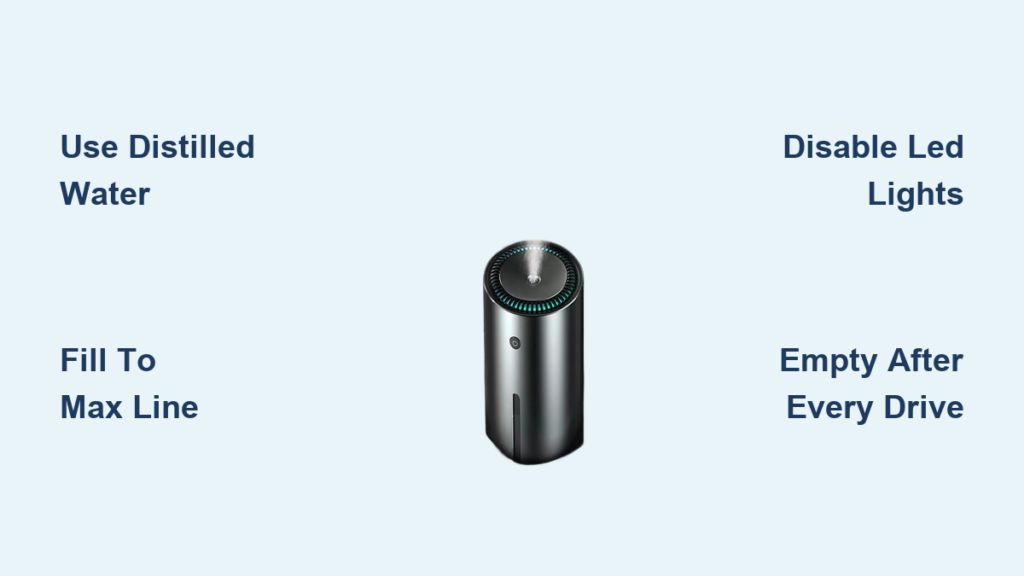
Refill with distilled water. Tap water’s minerals accelerate scale; distilled water extends time between cleanings. For filtered models, flip the filter upside-down during refill to redistribute moisture and prevent uneven saturation.
Wipe visible surfaces dry. Use a microfiber cloth on the tank interior and base rim to remove water spots before mineral deposits set. This takes 20 seconds but prevents crusty buildup.
Warm Mist Humidifier Deep Cleaning Protocol

Remove Scale from Heating Element in 5 Minutes
Step 1: Unplug and disassemble completely—remove water tank, cooling chamber, and trays. Never skip this: Water + electricity = electrocution risk.
Step 2: Pour undiluted vinegar into the base until the heating element is submerged (typically ½ cup). Do not submerge the entire base—only the element area needs coverage.
Step 3: Soak 20 minutes minimum. Heavy buildup? Extend to 4 hours. Watch fizzing as vinegar dissolves scale—never run the unit during soaking.
Step 4: Scrub the heating element gently with a soft-bristle brush. Scale should wipe away easily; force indicates insufficient soaking time.
Step 5: Rinse thoroughly until water runs clear. Vinegar residue creates odorous steam during operation.
Complete Sanitization Without Damaging Components
Step 1: Prepare bleach solution (½ tsp bleach per ½ gallon water)—exact measurements prevent corrosion.
Step 2: Fill the tank with solution, cap it, and swish to coat all interior surfaces. Place tank on base to drain solution into the water tray.
Step 3: Soak 20 minutes exactly—set a timer. Longer exposure degrades plastic seals.
Step 4: Remove the mist chimney by sliding its latch forward. This hidden component traps mold that standard rinsing misses.
Step 5: Lift out the heating element cover and rinse until bleach odor vanishes (3-4 rinses). Wipe dry to prevent new bacterial growth.
Ultrasonic Cool Mist Cleaning Without Damaging the Nebulizer
Safely Remove Scale from the Nebulizer Disc
Step 1: Unplug and empty both tank and base—any residual water dilutes vinegar.
Step 2: Pour vinegar into the base just covering the nebulizer disc (about ¼ cup). Overfilling wastes solution without improving results.
Step 3: Soak 20 minutes, then wipe the disc gently with a cotton swab. Never scrub—ultrasonic discs scratch easily, ruining mist production.
Step 4: Rinse base until vinegar smell disappears. Critical warning: Running vinegar through the unit destroys the nebulizer permanently.
Disinfect Hidden Mold in Mist Pathways
Step 1: Place the mist nozzle inside the bleach solution-filled tank—this small part harbors 90% of airborne mold.
Step 2: Position tank on base to flood the water tray. Soak 20 minutes (no more—bleach degrades plastic).
Step 3: Remove and rinse the float paddle (the wing-shaped component that regulates water flow). Stiff movement indicates scale buildup requiring extra soaking.
Step 4: Wipe the VapoPad door and medicine cup with a bleach-soaked cloth—common contamination zones manufacturers omit in manuals.
Universal Deep Clean for Any Humidifier Model
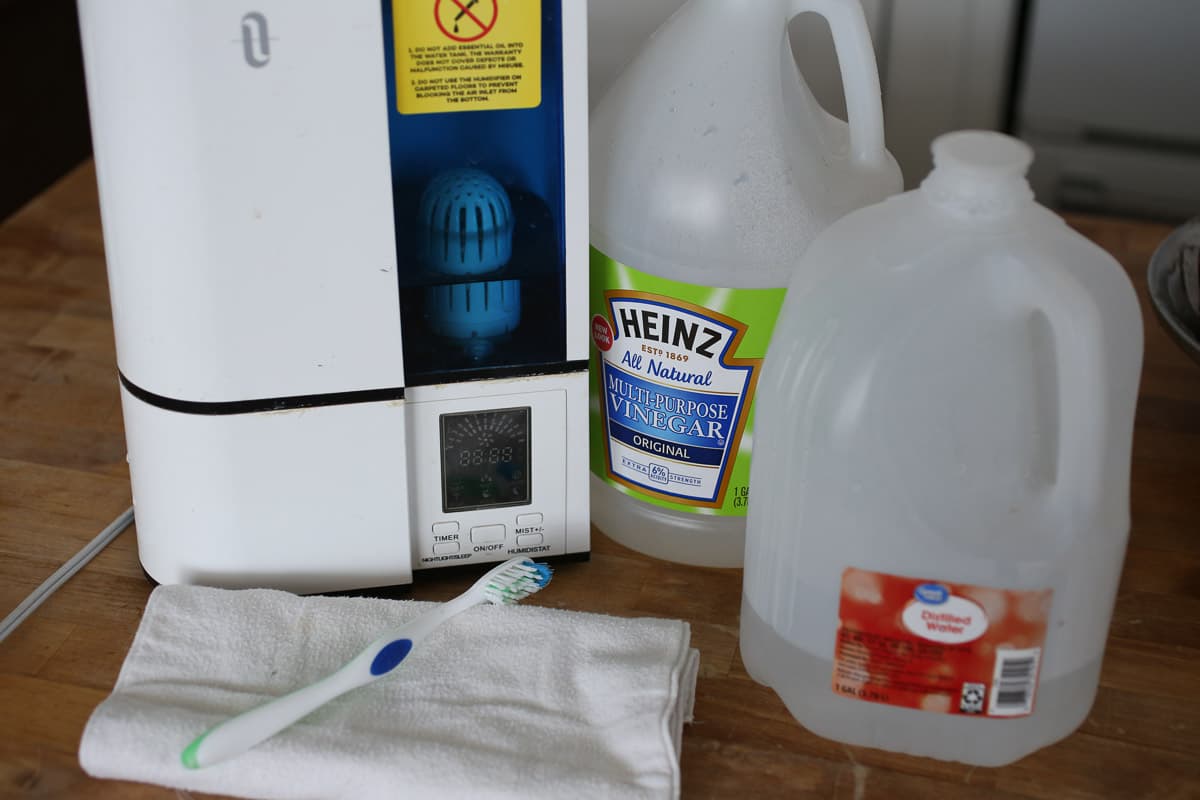
Full System Flush in 10 Minutes
Step 1: Fill the base with 1 cup water + 1 cup vinegar. Let sit 1 hour for stubborn deposits—do not skip drainage steps in your manual.
Step 2: Shake the tank vigorously after filling with pure vinegar. Hold it upside-down and press the nozzle to force solution through internal channels—cloudy discharge confirms mineral removal.
Step 3: Rinse 3 times with plain water until no odor remains. Residual bleach or vinegar becomes airborne during use.
Step 4: Air-dry all components separately on a clean towel. Trapped moisture in stacked parts reignites mold growth within hours.
Filter Maintenance Schedule That Prevents Respiratory Issues

Replace filters every 30 days during heavy use—mark your calendar. Clogged filters strain motors and release unfiltered minerals into your air.
Check filter seating daily. Improperly positioned filters allow water bypass, accelerating scale buildup in critical components.
Never reuse disposable filters—washing tears their micro-pores, reducing effectiveness by 80%. Paper filters lose structural integrity after first use.
Seasonal Storage Protocol to Avoid Mold Outbreaks
Before storage: Complete full descaling and sanitizing. Storing a “clean” humidifier with residual moisture guarantees mold growth.
During storage: Keep all parts disassembled in a breathable cotton bag—not plastic, which traps humidity. Store upright in a climate-controlled space (not basements or garages).
Before reuse: Repeat the entire cleaning process. Dust and airborne spores colonize stored units within weeks.
Critical Mistakes That Damage Your Humidifier
Using undiluted bleach—corrodes metal components within minutes. Always dilute to ½ tsp per ½ gallon.
Skipping the 20-minute bleach soak—under-sanitizing leaves live mold spores that regrow exponentially.
Submerging electrical bases—water intrusion causes permanent motor failure. Only immerse water-contact parts.
Incomplete rinsing—chemical residues aerosolize during use, irritating lungs more than dry air. Rinse until your nose detects zero odor.
Non-Negotiable Safety Practices for Safe Operation
Always unplug before cleaning—electrocution risks are highest when handling wet bases near outlets.
Never mix vinegar and bleach—this creates toxic chlorine gas. Complete descaling before sanitizing with a full rinse cycle in between.
Consult your manual first—Dyson models require different nebulizer access than Honeywell units. Manufacturer PDFs are free online.
Work at a sink—prevents water damage to floors and ensures immediate access to rinse water.
Final Tip: Set phone reminders for “Empty Daily” and “Deep Clean Every 7 Days.” A properly maintained humidifier reduces sinus infections by 30% according to Mayo Clinic data—while a dirty one causes them. Your 15-minute weekly commitment delivers cleaner air, quieter operation, and years of reliable service. Start tonight: Unplug, disassemble, and reclaim your health from hidden contaminants.