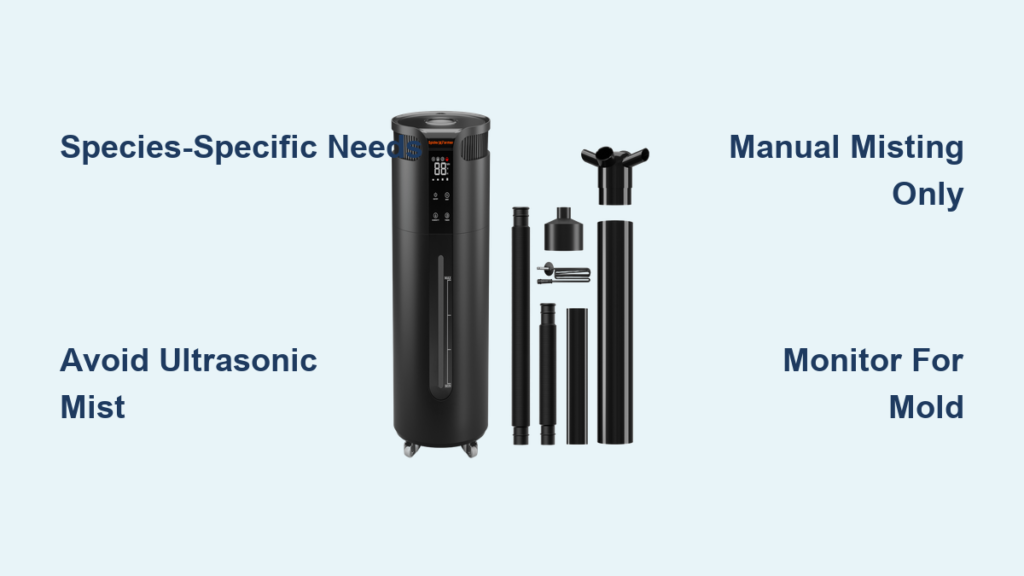
Many tarantula keepers make a critical mistake when trying to maintain proper humidity—they reach for a household humidifier without understanding the risks. While these spiders require specific moisture levels to thrive, especially during molting, improper humidity management can quickly become life-threatening. Your tarantula’s health hangs in the balance when humidity isn’t controlled correctly, and using the wrong equipment can transform a well-intentioned setup into a dangerous environment overnight.
The question “are humidifiers safe for tarantulas” requires more than a simple yes or no answer—it demands species-specific understanding and careful implementation. This guide reveals exactly how to manage humidity safely, highlighting which humidifier types pose serious risks and which methods actually work for your eight-legged companion.
Tarantula Humidity Requirements by Species
Your tarantula’s natural habitat dictates its humidity needs, making species identification the first critical step in proper care. Applying universal humidity standards risks serious health consequences for your spider, as different species evolved to thrive in dramatically different moisture environments.
Desert Species: 30-50% Humidity
Chilean rose hair and Mexican redknee tarantulas naturally inhabit arid regions where excessive moisture causes respiratory distress. These species develop fungal infections and bacterial growth when exposed to humidity levels above 50% for extended periods. Their exoskeletons absorb moisture too readily in humid conditions, leading to potentially fatal complications that often appear suddenly with little warning.
Tropical Species: 60-80% Humidity
Pink toe tarantulas and Poecilotheria species require higher humidity levels matching their rainforest origins, but crucially need excellent ventilation to prevent stagnant air. Even these moisture-dependent species suffer when humidity becomes too consistent—natural environments feature humidity fluctuations that household humidifiers typically can’t replicate. Without proper airflow, the enclosure transforms from a comfortable habitat to a breeding ground for harmful pathogens.
Molting Considerations
All tarantulas need slightly elevated humidity during molting—typically 10-15% above their normal range—but continuous humidifier operation creates dangerous conditions. This critical period lasts just 2-6 hours for adults, making targeted misting a far safer approach than mechanical humidity systems. Over-humidifying during molting can cause the old exoskeleton to stick, trapping your tarantula in a life-threatening situation where it cannot complete the process.
Humidifier Type Safety Analysis

Understanding the specific dangers of each humidifier type prevents well-intentioned keepers from accidentally endangering their tarantulas. Each technology presents unique risks that can quickly compromise your spider’s health when used improperly near enclosures.
Ultrasonic Humidifiers: Particle Size Dangers
These popular units create microscopic water droplets that easily penetrate enclosure ventilation holes, rapidly creating overly wet conditions. The fine mist carries mineral dust from tap water directly onto your tarantula’s book lungs, causing respiratory distress that may not show symptoms until significant damage has occurred. Even distilled water doesn’t eliminate the risk of excessive moisture buildup from continuous operation.
Steam Vaporizers: Temperature Shock Risks
While effective at adding moisture, steam vaporizers create hot, moist air that can quickly overheat small enclosures. The temperature differential between the humidifier output and enclosure environment stresses your tarantula, potentially triggering defensive behaviors or premature molting. The sudden temperature changes disrupt your spider’s natural thermoregulation process, making it difficult to maintain stable internal conditions.
Evaporative Models: Mold Growth Potential
These units work by blowing air through a wet wick or filter, creating more natural humidity increases but carrying significant risks. Continuous operation leads to substrate oversaturation that encourages mold colonies within the enclosure, which can harm your tarantula or its food sources. The constant airflow can also dry out certain areas while over-saturating others, creating uneven humidity gradients that confuse your spider’s natural moisture-seeking behaviors.
Safe Distance Guidelines

Physical placement of humidifiers relative to tarantula enclosures determines whether they become helpful tools or dangerous hazards. Strategic positioning creates ambient humidity without exposing your tarantula to direct moisture streams that could trigger health emergencies.
Minimum Safe Distance: 6-10 Feet
Position humidifiers at least six feet from any tarantula enclosure with absolutely no direct airflow toward ventilation holes. This distance allows humidity to disperse naturally while preventing concentrated moisture streams from entering the habitat. Humidifiers placed too close create microclimates that rapidly elevate enclosure humidity beyond safe levels, often before keepers notice the problem.
Room Size Considerations
In rooms smaller than 100 square feet, use humidistat-controlled units that cycle on and off to maintain 50-60% ambient humidity. Larger rooms may require multiple smaller units rather than one powerful humidifier to prevent localized humidity spikes. The goal is consistent ambient humidity throughout the room, not concentrated moisture pockets that create dangerous conditions for your tarantula.
Health Warning Signs to Monitor
Recognizing early indicators of humidity stress provides your best chance to save your tarantula from serious health consequences. These specific behaviors and physical changes signal immediate intervention is needed before irreversible damage occurs.
High Humidity Distress Signals
Constant climbing behavior where your tarantula stays on enclosure walls avoiding the substrate indicates dangerous moisture levels below. Darkened abdomen color changes often signal developing fungal issues, while lethargic movement and unusual stillness represent severe physiological stress. Visible mold on the substrate within 24-48 hours confirms dangerously high humidity conditions requiring immediate action.
Critical Emergency Actions
If you observe any warning signs, immediately remove your tarantula from the problematic environment. Place it in a temporary, properly ventilated container with appropriate substrate moisture while you adjust your humidity management system. This emergency relocation can mean the difference between recovery and fatality when humidity levels have become life-threatening.
Safer Humidity Alternatives

Targeted humidity methods provide better control with significantly reduced risk compared to room humidifiers. These approaches allow precise adjustments without affecting your entire tarantula collection or creating dangerous microclimates.
Manual Misting Techniques
Use a fine spray bottle to mist enclosure walls 2-3 times daily for tropical species, avoiding direct contact with your tarantula. This method provides immediate humidity increases while allowing natural evaporation between applications, closely mimicking natural environmental fluctuations. The controlled application prevents sudden humidity spikes that mechanical humidifiers often cause.
Substrate Moisture Management
Different substrates retain moisture at varying rates, allowing you to create natural humidity gradients within the enclosure. Coconut fiber holds moisture well for tropical species, vermiculite provides excellent water retention for humidity boxes, while play sand mix drains quickly for desert dwellers. Strategic substrate selection creates microclimates that let your tarantula self-regulate its moisture exposure.
Monitoring and Control Systems
Accurate humidity measurement prevents dangerous fluctuations that often occur with mechanical humidifiers. Digital hygrometers placed inside each enclosure at substrate level provide the precise readings needed for proper humidity management.
Humidity Gradient Creation
Use partial enclosure covering to create moisture variations—cover one-third of the ventilation with plastic wrap to retain humidity in specific areas while maintaining overall air circulation. This technique allows your tarantula to move between humidity zones as needed, mimicking natural environmental conditions without relying on mechanical humidification.
Emergency Backup Plans
Prepare a humidity box using a small plastic container with damp paper towels and air holes for immediate humidity control during molting. This provides targeted moisture without risking the entire enclosure, and can serve as emergency housing if your main enclosure’s humidity becomes dangerously high. Replace paper towels daily to prevent bacterial growth that could harm your tarantula.
Species-Specific Guidelines
Tailor your humidity approach based on your tarantula’s specific needs rather than using one-size-fits-all solutions. Beginner-friendly species like Chilean Rose Hairs require only 40-50% humidity with minimal supplementation, while advanced care species like Pink Toe Tarantulas need 65-75% humidity with daily misting.
Equipment Failure Prevention
Implement daily visual checks for condensation on walls, substrate saturation, and unusual tarantula behavior to catch humidity problems early. Maintain manual misting supplies as backup for humidifier failures, and establish power outage protocols that include removing water dishes from desert species enclosures to prevent dangerous humidity spikes.
Humidifiers can work for tarantula keeping only with careful monitoring and species-specific adjustments, but most experienced keepers find manual methods more reliable and safer. Start with proper substrate selection and targeted misting before considering mechanical humidification. Remember that your tarantula’s behavior provides the most accurate humidity gauge available—when in doubt, prioritize ventilation and natural humidity control over mechanical supplementation.