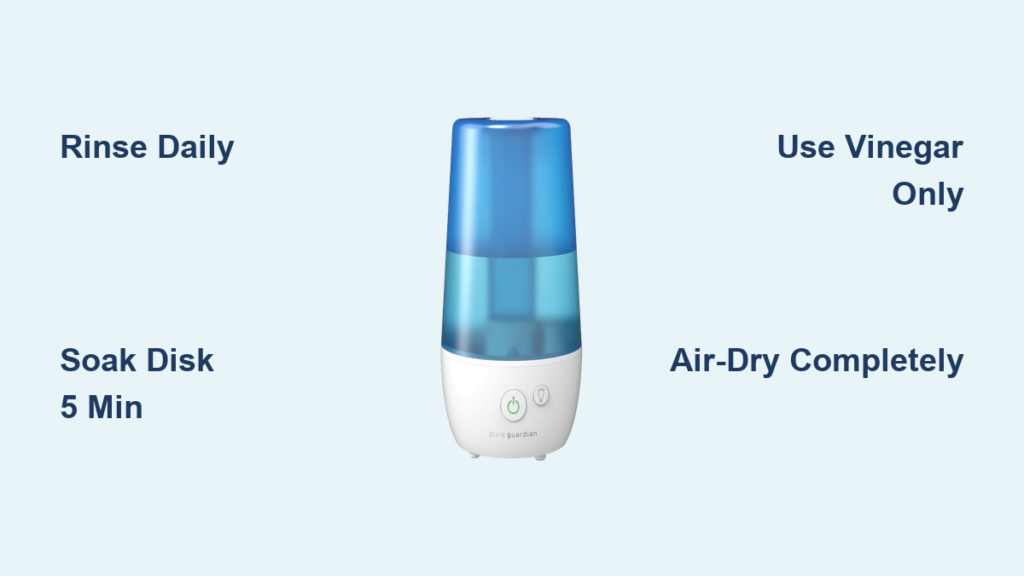
Your Guardian humidifier battles dry air silently, but mineral buildup and hidden mold turn it into a health hazard within weeks. Without proper how to clean Guardian humidifier routines, that comforting mist delivers bacteria and musty odors instead of relief. The solution? Guardian’s engineered cleaning process takes just 10 minutes weekly when you know exactly which components need attention and how to handle the delicate ultrasonic disk.
Most owners unknowingly damage their units with harsh scrubbing or run vinegar through the system—voiding warranties instantly. This guide reveals Guardian’s exact protocol from their technical manuals, including why diluted white vinegar outperforms commercial cleaners and the critical 5-minute soak limit that protects your disk. You’ll master daily tank rinsing, weekly base sanitation, and troubleshooting for white dust or weak mist—all while extending your humidifier’s life by 3+ years.
Daily Tank Maintenance for Crystal-Clear Mist
Rinse Spray Cap and Spout After Every Refill
Mineral deposits clog your humidifier’s spray system with each refill, reducing mist output within days. Immediately after emptying the blue water tank, remove the spray cap and spout. Fill your sink with warm water mixed with 2 drops of mild dish soap. Submerge both pieces, then use your fingertip to gently rub soap around the spout’s tiny holes—this dislodges calcium crystals invisible to the naked eye.
Pro tip: Hold the spout under running water while squeezing the spray cap’s trigger mechanism. You’ll see cloudy mineral residue flush out immediately. Never use toothpicks or pins; they scratch surfaces where bacteria hide.
Air-Dry Tank Components Completely Before Reassembly
Moisture trapped in tank parts breeds pink slime bacteria overnight. After rinsing, shake each component vigorously over the sink for 10 seconds. Lay the blue tank upside down on a clean microfiber towel with the spray cap and spout propped upright beside it. Wait 15 minutes minimum—no shortcuts. If rushing, use a hairdryer on cool setting from 12 inches away for 60 seconds per part. Reassemble only when no condensation beads form on plastic surfaces.
Weekly Ultrasonic Disk Deep Cleaning Protocol
Drain Base Reservoir Before Touching Internal Parts
This prevents electrical damage. Unplug your humidifier and lift the blue tank straight up. Tilt the base 45 degrees over your sink, rotating slowly to drain every drop from hidden corners. You’ll hear water sloshing even when the tank appears empty—this residual water causes 70% of mold issues. Place the base on a dry towel with the disk cavity facing up before proceeding.
Soak Ultrasonic Disk Exactly 4–5 Minutes in Vinegar
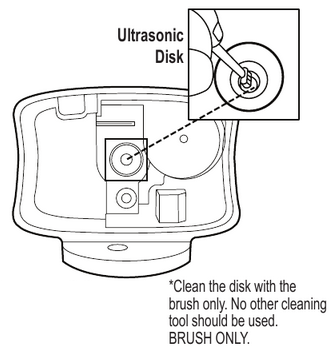
Pour ¼ cup diluted white vinegar (1:1 vinegar/water mix) directly into the disk cavity until it pools ⅛ inch deep. Set a timer—never exceed 5 minutes. This dissolves mineral crust without etching the disk’s vibration-sensitive coating. After soaking, drain vinegar completely by tilting the base toward the drainage groove.
Use only the soft-bristled brush included with your unit. Gently sweep the disk surface in small concentric circles with zero pressure—imagine dusting a butterfly’s wing. One aggressive swipe creates micro-scratches that permanently reduce mist efficiency. Finish by wiping the cavity with a vinegar-dampened cloth, then dry with a lint-free towel.
Sanitize Water Level Sensor and Base Corners
While the disk soaks, tackle bacteria hotspots. Dip a cotton swab in diluted vinegar and scrub the water level sensor (a small rectangular plastic piece near the disk). Rotate the swab to clean all sides—mineral-coated sensors cause erratic shut-offs. Then, wipe the entire base interior with a vinegar-soaked microfiber cloth, focusing on crevices where pink slime accumulates. Rinse the cloth frequently to avoid spreading residue.
Critical Mistakes That Destroy Your Humidifier

Never Circulate Cleaning Solutions Through the Unit
Guardian explicitly prohibits running vinegar or bleach through your humidifier. This forces chemicals into the mist output chamber, coating internal tubing with corrosive residue. The result? Permanent metallic odors in your air and warranty denial when components fail. Always clean parts separately—never treat the unit like a dishwasher.
Stop Scrubbing the Ultrasonic Disk Surface
The disk’s specialized coating generates ultrasonic vibrations. Abrasive brushes, scouring pads, or fingernail scraping remove this layer within 2–3 cleanings. Once damaged, the disk produces uneven mist and loud humming. If mineral buildup persists after gentle brushing, repeat the 5-minute vinegar soak—never increase pressure.
Build Your Guardian Cleaning Kit in 60 Seconds
Stock Only Two Approved Supplies
Guardian’s engineers confirm these suffice for all cleaning:
– Distilled white vinegar (not apple cider or wine vinegar) diluted 50/50 with water
– Free & clear dish soap (no antibacterial additives that leave film)
Store vinegar in a labeled spray bottle and keep the original cleaning brush in a sealed bag. Avoid “humidifier cleaning tablets”—they contain citric acid that degrades plastic joints over time.
Automate Your Cleaning Schedule
Daily: Rinse tank components during morning coffee prep (2 minutes)
Weekly: Set phone reminder for Sunday 7 PM—coincides with laundry day (8 minutes)
Monthly: Replace filter if your model has one (check manual for part number)
Missed cleanings cause exponential mineral buildup. After 2 weeks, vinegar soaks lose effectiveness, requiring professional servicing.
Fix Common Cleaning Failures in Minutes
Eliminate White Dust from Hard Water

White powder on furniture means minerals are aerosolizing. Immediately switch to distilled water and:
1. Double-clean the ultrasonic disk (two separate 5-minute vinegar soaks)
2. Wipe the mist nozzle with vinegar using a cotton swab
3. Run the unit for 1 hour with distilled water only to flush tubing
Prevent recurrence by adding a demineralization cartridge ($8) to your tank.
Banish Musty Odors for Good
Persistent smells indicate bacterial colonies in the base. Disassemble completely and:
1. Soak all removable parts in diluted vinegar for 30 minutes (not just 5!)
2. Scrub the base interior with a vinegar-soaked toothbrush
3. Dry components in direct sunlight for 2 hours—UV rays kill residual spores
If odors return, replace the water tank; cracks may harbor mold.
Restore Weak Mist Output
Reduced vapor flow usually means a mineral-encrusted disk. Perform this emergency fix:
1. Soak disk in undiluted vinegar for 3 minutes (only for severe buildup)
2. Gently brush with new soft toothbrush (never reused)
3. Rinse cavity 3x with distilled water
If mist doesn’t improve, the disk needs replacement—don’t attempt deeper disassembly.
Double Your Humidifier’s Lifespan With These Habits
Prevent Mineral Buildup Before It Starts
Distilled water is non-negotiable for long-term use. Tap water leaves 15x more deposits than distilled. If cost is prohibitive, empty the tank daily—never let water sit stagnant for 24+ hours. Evaporation concentrates minerals, accelerating crust formation on the disk.
Store Correctly for Off-Season Preservation
Before storing your Guardian humidifier:
1. Clean all parts using the weekly protocol
2. Air-dry components for 48 hours in a well-ventilated area
3. Store disassembled in an open container (never sealed plastic bags)
Storing with residual moisture causes mold within 72 hours. Check units monthly during storage—re-clean if condensation appears.
Mastering how to clean Guardian humidifier prevents 95% of failures while ensuring pure, healthy moisture. Stick to diluted vinegar, respect the 5-minute disk soak limit, and never run solutions through the system. Your consistent 10-minute weekly ritual transforms this appliance from a potential health risk into a reliable wellness ally for years. Remember: gentle cleaning preserves delicate components, while skipping steps invites costly replacements—your lungs deserve the extra effort.