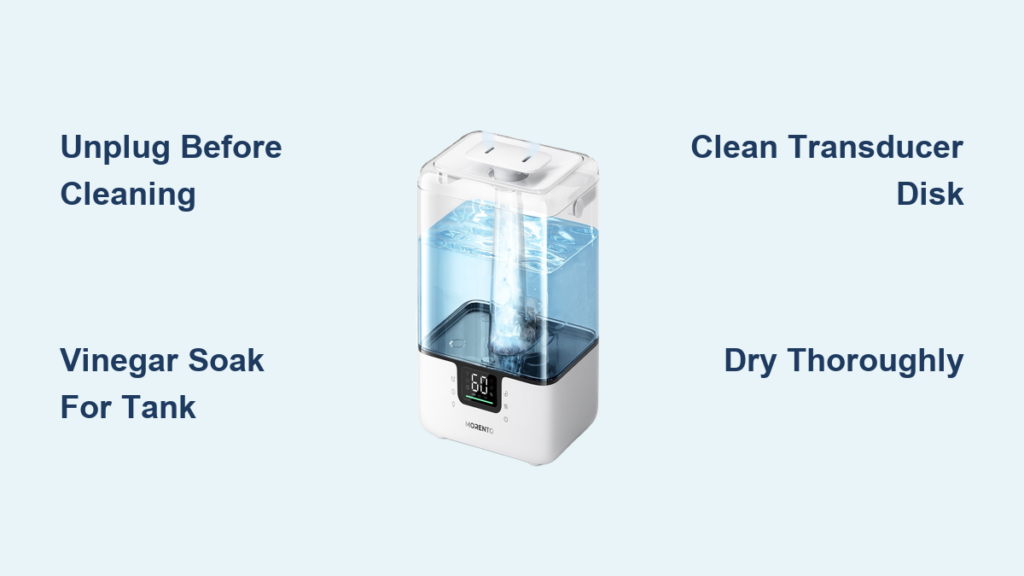
That faint musty odor creeping from your Morento humidifier or the white dust coating your furniture isn’t just annoying—it’s a warning sign your unit needs immediate cleaning. When mineral deposits and mold accumulate inside your ultrasonic humidifier, it stops delivering pure moisture and starts circulating harmful contaminants into your breathing space. This step-by-step guide reveals exactly how to clean your Morento humidifier safely and effectively, restoring crisp, healthy humidity without harsh chemicals or guesswork. You’ll learn professional techniques that target hidden trouble spots like the transducer disk and mist nozzle while preventing future buildup.
Disconnect Power Safely Before Touching Components
Unplug the power adapter directly from the wall outlet—never just from the humidifier base—to eliminate electrical hazards. Wait 30 minutes for the ultrasonic transducer to cool completely; cleaning a warm unit risks damaging sensitive internal components. Skipping this step could cause permanent electrical failure or void your warranty.
Prepare your cleaning station near a sink with warm running water and lay down thick towels to absorb spills. Gather these essentials: white vinegar, baking soda, soft-bristled toothbrush, cotton swabs, rubber gloves, and clean microfiber cloths. Working in a well-ventilated area prevents inhaling cleaning solution fumes during the process.
Disassemble Components Correctly in Sequence
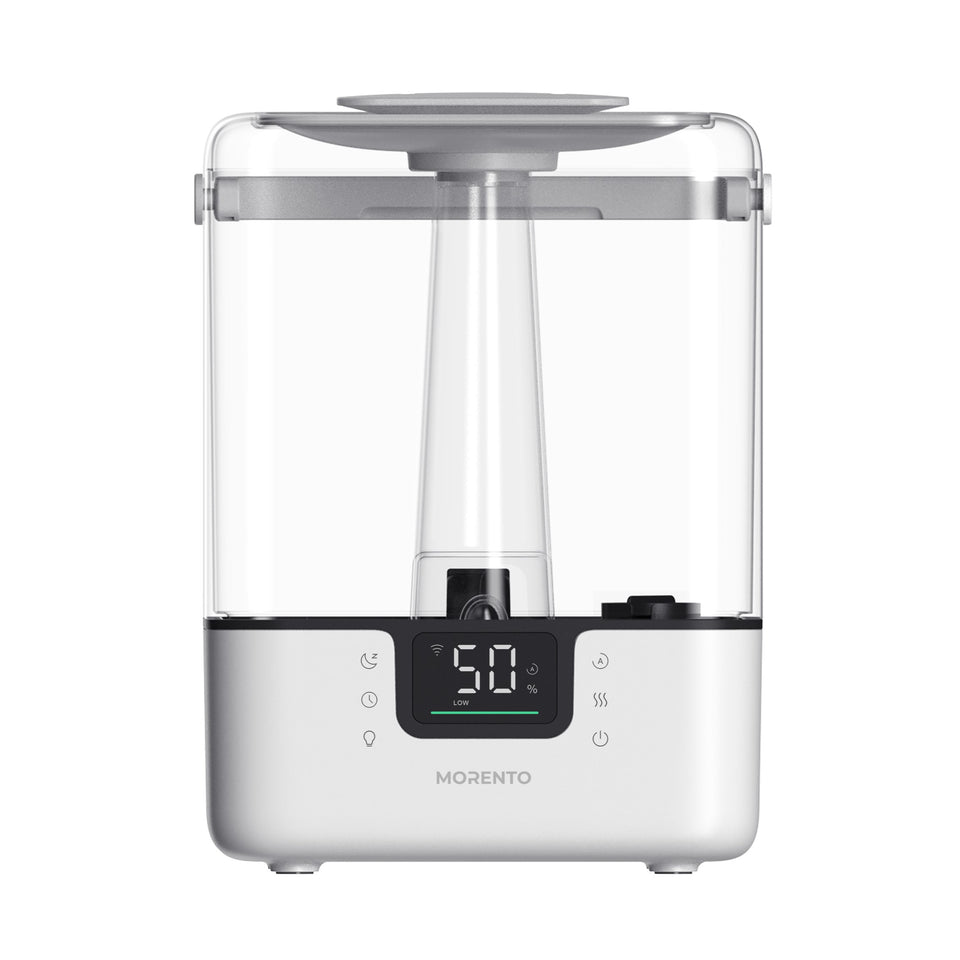
Your Morento model separates into four key parts requiring individualized cleaning: water tank, base unit, mist nozzle, and filter cartridge. Forcing components during disassembly can crack plastic housings, so follow this precise sequence.
Remove Water Tank Without Damaging Seals
Grasp the tank handle firmly and rotate counterclockwise exactly 30 degrees until you hear a soft click. Lift straight upward—no wiggling or twisting—until the tank releases cleanly from the base. Forcing it sideways strains the O-ring seals, causing future leaks. If resistance occurs, double-check rotation angle before applying more pressure.
Detach Mist Nozzle and Access Filter
Press both side release tabs simultaneously while pulling the mist nozzle upward; it should detach smoothly. Store it separately to prevent losing small parts. For filter access, locate the cartridge housing inside the tank and twist it counterclockwise until unlocked. Pull straight out—if your model lacks a filter, skip to base cleaning but inspect for hidden cartridge slots.
Deep Clean Water Tank With Vinegar Solution
Fill the empty tank with a solution of 1 cup white vinegar to 1 gallon warm water (never hot), ensuring all interior surfaces are submerged. Let it soak 20-30 minutes while swirling gently every 5 minutes to dislodge mineral deposits clinging to corners. Vinegar’s acetic acid safely dissolves limescale without scratching plastic.
Eliminate Stubborn White Residue
For crusty mineral buildup near the waterline, mix 2 tablespoons baking soda with 1 teaspoon water into a thick paste. Dip your soft brush into the paste and scrub affected areas using small circular motions—avoid vigorous scrubbing that could create micro-scratches where bacteria hide. Rinse repeatedly under warm running water until droplets sheet off smoothly and vinegar odor disappears completely.
Pro tip: Overnight soaking tackles severe scaling. Pour undiluted vinegar into the tank, cover loosely, and let it work while you sleep. The extended contact time breaks down rock-hard deposits that resist standard cleaning.
Clean Base Unit Without Damaging Transducer

Pour the same vinegar solution into the base until the ultrasonic transducer disk (the small metal circle at the bottom) is fully submerged. Soak for 20 minutes to soften mineral crust on this critical component. Never submerge the entire base unit—that floods electrical components.
Gently Scrub Transducer Surface
After soaking, dip a cotton swab in vinegar and gently wipe the transducer disk in straight lines—never circular motions that could misalign its precision surface. If deposits persist, use a soft brush with feather-light pressure. Abrasive tools like steel wool will permanently damage the disk, causing weak mist output. Rinse the base by filling and emptying it 3-4 times with clean water until runoff is clear.
Filter Maintenance That Prevents Musty Smells
Dispose of discolored or brittle filters immediately—never attempt to “refresh” them. For reusable filters showing minor buildup, hold under cool running water while squeezing the foam gently to expel trapped particles. Never twist or wring filters, as this collapses their filtration structure. Air-dry filters upright on a clean towel for 24 hours before reuse.
Identify When Filters Must Be Replaced
Replace filters immediately if you notice any of these danger signs: reduced water flow through the cartridge, persistent musty odors after cleaning, or visible black spots indicating mold colonization. Using compromised filters reintroduces contaminants into your mist stream. Most models require new filters every 30-45 days with daily use.
Disinfect Against Mold With Precise Bleach Protocol

Prepare a disinfecting solution of exactly 1 teaspoon household bleach per gallon of cool water—exceeding this ratio damages plastic components. Fill both the tank and base with this solution, ensuring all surfaces contact the liquid. Set a timer for precisely 10 minutes; longer exposure weakens plastic integrity.
Eliminate All Bleach Residue
Rinse every component under running water for at least 2 minutes while swishing the solution inside hollow parts. Smell each piece carefully—any lingering bleach odor means continued rinsing is needed. Residual bleach vaporizes into your breathing air during operation, causing throat irritation and respiratory issues. When in doubt, repeat rinsing.
Dry Components Thoroughly to Prevent Regrowth
Place all disassembled parts upside-down on fresh towels in a well-ventilated area, spacing them for maximum airflow. Position the tank inverted on its rim to drain the neck completely—this narrow area traps moisture where mold thrives. Never reassemble damp components; even slight dampness causes rapid microbial regrowth.
Accelerate Drying Without Damage
Point a fan across (not directly at) components to circulate air without blowing parts around. For faster results, place near—but not on—a heating vent set to low. Avoid direct sunlight or hair dryers, as heat warps plastic housings. Minimum drying time is 2 hours, but overnight drying prevents 99% of regrowth issues according to manufacturer testing.
Weekly Quick Maintenance That Takes 5 Minutes
Empty remaining water from tank and base daily to prevent stagnant water breeding bacteria overnight. Your weekly routine should include: emptying all water, rinsing tank/base with warm water, wiping exterior with damp cloth, refilling with distilled water, and inspecting for early mineral deposits.
Why Distilled Water Saves Cleaning Time
Tap water’s dissolved minerals create white dust and scale that demand cleaning every 3-4 days. Switching to distilled water reduces mineral buildup by 90%, letting you maintain with weekly rinses instead of constant deep cleaning. If using tap water is unavoidable, increase cleaning frequency immediately—your humidifier’s performance degrades within days.
Monthly Deep Clean Process With Inspection Checklist
Perform this comprehensive maintenance every 30 days: check all seals and gaskets for cracks, examine the power cord for frays, test auto shut-off by running the unit dry, replace filters, and clear nozzle clogs with a straightened paperclip. These steps catch developing problems before they cause failures.
Critical Demineralization Cartridge Care
If your model includes a demineralization cartridge (common in hard water areas), replace it monthly regardless of appearance. These cartridges absorb minerals that would otherwise form scale inside your humidifier. Ignoring replacement causes white dust output and accelerates internal damage.
Troubleshoot Common Problems Immediately
Stop White Dust at Its Source
White dust on surfaces means tap water minerals are vaporizing through your unit. Switch to distilled water today, wipe affected surfaces with a damp microfiber cloth, and install a demineralization cartridge if your model supports it. Continuing with tap water after dust appears requires cleaning every 72 hours.
Fix Weak Mist Output in 3 Steps
First, clean the transducer disk with vinegar solution as described earlier. Second, clear nozzle obstructions by inserting a thin wire through the mist outlet. Third, verify room humidity hasn’t exceeded 65%—your humidifier automatically reduces output when ambient moisture is sufficient. If problems persist after these steps, check for filter blockages.
Store Properly Between Seasons With Mold Prevention
Complete this shutdown sequence before storing: perform a full vinegar-bleach cleaning cycle, dry all parts for 24+ hours, place silica gel packets inside the storage container, and keep in a cool, dark closet away from humidity sources. Never store components while damp—even invisible moisture causes mold during storage.
Pre-Season Safety Check
Before first seasonal use, inspect every part for musty odors or fuzzy growth (common in stored filters). Replace any filter stored over 6 months, even if unused. Run a full cleaning cycle before operation—residual mold spores reactivate instantly when water returns. Skipping this risks circulating mold into your home air.
Optimize Performance Daily With Placement Science
Position your humidifier 2-4 feet above floor level on a stable, waterproof surface like a plastic tray. Maintain 12-inch clearance from walls and furniture to ensure proper mist dispersion. Avoid placing near heat vents, windows, or direct sunlight—these create microclimates that disrupt accurate humidity sensing.
Monitor Humidity Like a Pro
Use a separate hygrometer to track actual room humidity; your humidifier’s built-in sensor can drift over time. Maintain 30-50% relative humidity—below 30% causes dry skin and respiratory irritation, while above 50% encourages mold growth. If windows sweat or surfaces feel damp, reduce mist output immediately. Never operate above 65% humidity.
Critical safety reminder: Never immerse the base unit in water during cleaning. Always unplug before maintenance, and wear gloves when handling vinegar or bleach solutions. Keep cleaning supplies away from children—accidental mixing of bleach and vinegar creates toxic chlorine gas.
A meticulously cleaned Morento humidifier delivers pure, healthy moisture for years. By following this precise routine—especially the vinegar transducer cleaning and 24-hour drying—you’ll eliminate musty odors and white dust while protecting your family’s respiratory health. Set a recurring calendar alert for your next deep clean; your lungs will feel the difference within days.