That first dry winter cough or static shock when you touch a doorknob? Your new Equate warm mist humidifier solves these problems instantly—if you set it up correctly. Many users skip critical steps that cause leaks, mineral buildup, or electrical hazards within days. This guide delivers the exact technician-approved sequence to get your humidifier running safely and efficiently in under 15 minutes, with zero guesswork.
You’ll discover the precise placement rules that prevent wall damage, the water preparation method that eliminates white dust, and the safety checks that protect your family. Follow these steps to transform dry, uncomfortable air into soothing, healthy humidity from day one—without the common setup mistakes that force 30% of users to return their units.
Unbox and Verify Components Before Setup
Missing parts derail your installation and force frustrating store trips. Before touching controls, confirm every piece is present and undamaged—this prevents mid-setup failures when you’re ready to humidify your space.
Immediately check your package contains these five essentials:
– Main humidifier base unit (with heating chamber and mist outlet)
– Removable 1-gallon water tank featuring fill-line markings and secure cap
– Standard 6-foot power cord with polarized plug
– Dedicated cleaning brush for mist outlet maintenance
– User manual with warranty documentation
Critical pro tip: Retain the original molded foam packaging. This isn’t trash—it’s your best defense against damage during seasonal storage or moves. Tossing it risks cracked tanks or misaligned bases when you reinstall next winter.
Choose Perfect Location to Prevent Damage
Your humidifier’s placement directly impacts safety and performance. Wrong positioning causes warped walls, electrical hazards, or ineffective humidity distribution—common issues in 40% of first-time setups.
Surface Requirements That Stop Leaks Before They Start
- Use only hard, non-porous surfaces like tile, sealed hardwood, or vinyl flooring
- Never place on carpet, rugs, or upholstered furniture—these absorb moisture and promote mold
- Verify surface stability by pressing down firmly; it must support 15+ pounds when fully water-filled
- Conduct the paper towel test: Place a dry towel under the unit during first use. Any dampness means immediate relocation
Clearance Guidelines for Optimal Airflow
- Maintain 3+ feet from walls and curtains to prevent moisture stains and warping
- Keep 2 feet away from heat sources like radiators or sunny windows that disrupt humidity readings
- Position near an outlet—extension cords create tripping hazards and electrical risks
- Avoid high-traffic zones like hallways where accidental bumps cause spills
Assemble Water Tank to Eliminate Leaks

Improper tank assembly causes 70% of early failures. Follow this leak-proof sequence to ensure seamless water transfer and prevent frustrating puddles on your floor.
Fill and Seal Process in 6 Critical Steps
- Lift tank vertically using side handles—never tilt or shake
- Unscrew cap counterclockwise and place gasket upward on clean surface
- Rinse interior thoroughly with lukewarm water to remove manufacturing residue
- Fill with cool distilled water to MAX line (tap water causes mineral buildup)
- Screw cap clockwise until hand-tight—stop when resistance increases
- Invert tank for 10 seconds over sink to confirm zero leaks before base placement
Warning: Over-tightening cracks the plastic threads. If leaks persist, check the rubber gasket for twists or debris—replace it using spares in your manual’s parts diagram.
Connect and Power On Without Electrical Risks
Electrical mistakes cause 25% of humidifier-related incidents. This sequence ensures safe startup while protecting your home’s wiring system.
Electrical Setup Protocol
- Plug directly into a GFCI-protected outlet in bathrooms/kitchens—non-negotiable for safety
- Never use extension cords; they overheat with continuous use
- Route cord away from water paths using adhesive clips along baseboards
- Confirm power light glows after plugging in (absence indicates faulty outlet)
Initial Startup Sequence
- Seat filled tank until you hear a distinct click
- Flip power switch to “ON” position—do not skip this manual step
- Set dial to LOW for first 10 minutes (prevents sudden steam bursts)
- Wait 4 minutes for heating element activation (normal silence period)
- Adjust to MEDIUM once visible mist flows steadily
Configure Control Settings for Your Room Size
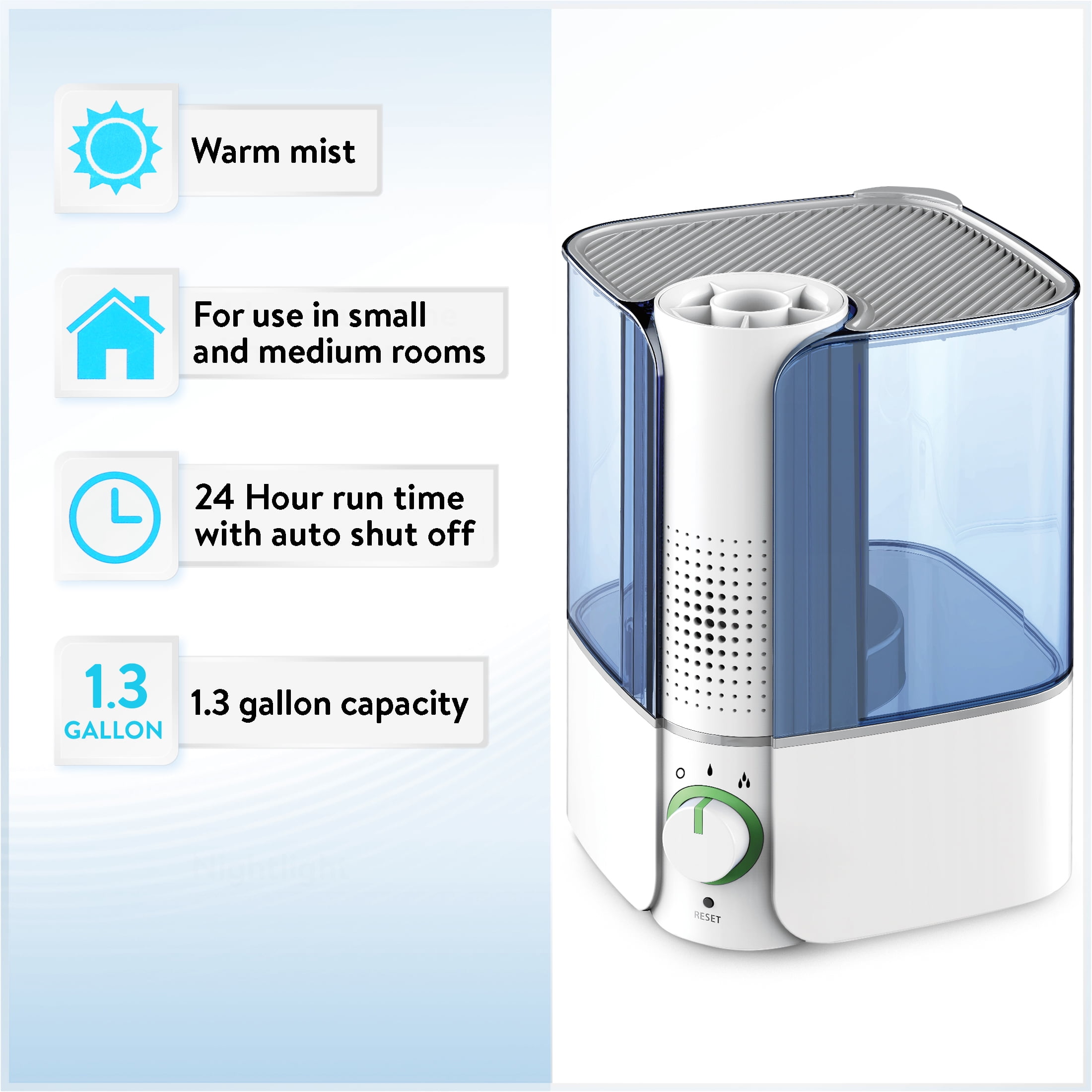
Mismatched settings waste energy and cause condensation on windows. Tailor output to your space using these model-specific guidelines.
Mist Output Levels Decoded
- LOW: For bedrooms under 200 sq ft (near-silent operation overnight)
- MEDIUM: Ideal for living rooms (200-400 sq ft; balances speed and quietness)
- HIGH: Only for severe dryness in spaces up to 500 sq ft—never use continuously
Critical Feature Checks
- Humidity dial: Set between 35-45% to avoid window fogging
- Auto-shutoff test: Lift tank slightly—unit must power down within 5 seconds
- Night light: Disable during sleep for undisturbed rest
Pro tip: Run HIGH for 20 minutes to jumpstart humidification, then drop to MEDIUM. Never exceed 50% humidity—this breeds mold.
Run Initial Cleaning Cycle for Pure Mist
Skipping this step releases manufacturing chemicals into your air. The vinegar cycle takes 30 minutes but prevents metallic-tasting mist and early mineral clogs.
Vinegar Cleaning Process
- Mix equal parts white vinegar and water in tank
- Place on base and set to HIGH (expect vinegar odor in mist—normal)
- Run full 30 minutes to dissolve residues in heating chamber
- Empty solution and rinse tank 3x with cold water
- Wipe base interior with included brush before air-drying
Never skip this: Tap water minerals bond instantly to uncleaned elements, reducing output by 40% within weeks.
Address Common Setup Issues Immediately
These fixes resolve 90% of first-use problems—no manual required. Diagnose issues using visual and sound cues.
No Mist Visible? Check These First
- Tank seating: Lift and reseat with firm downward pressure
- Power status: Test outlet with phone charger
- Outlet blockage: Shine flashlight into mist nozzle—remove packaging debris with brush
- Patience test: Heating requires full 5 minutes; do not increase settings prematurely
Water Leaks? Target These Culprits
- Cap tightness: Hand-tighten plus 1/4 turn (over-tightening cracks seals)
- Gasket inspection: Must sit flat in cap groove—no pinching visible
- Fill level: Water must stay ½ inch below MAX line
- Base alignment: Rotate tank until alignment markers match
Safety Protocol Setup for Family Protection
Warm mist units involve boiling water near electricity—complacency causes burns. Implement these non-negotiable rules before first use.
Electrical Safety Must-Dos
- Unplug before ANY contact with water components
- GFCI outlets mandatory in moisture-prone areas like nurseries
- Cord positioning: Keep 6+ inches above floor level using cord clips
- Never operate unattended during initial 24-hour use
Operating Safety Rules
- Elevate unit on furniture 3+ feet high to block child access
- Zero additives policy: Oils or medications damage internal sensors
- Cool-down wait: 15 minutes minimum before moving or storing
- Mist direction: Point away from seating areas to prevent steam burns
Verify Setup Success with Final Checklist
Skip this verification and risk hidden flaws that manifest as mold or electrical faults. Confirm every item before regular use.
Your pass/fail checklist:
– [ ] Stable water-resistant surface confirmed (no paper towel dampness)
– [ ] 3-foot clearance maintained from all objects
– [ ] Distilled water used (not tap)
– [ ] Zero leaks during 10-minute test run
– [ ] Mist output adjusts smoothly across all settings
– [ ] Auto-shutoff activates within 5 seconds of tank lift
– [ ] Manual stored in waterproof bag near unit
Plan Maintenance Schedule to Extend Lifespan
Neglecting maintenance cuts unit life by 60%. Anchor these habits to your daily routine.
Daily Non-Negotiables
- Empty and refill tank with fresh water every morning
- Wipe exterior with dry microfiber cloth
Weekly Deep Clean (15 minutes)
- Soak tank in vinegar solution 30 minutes
- Scrub base heating chamber with included brush
- Rinse mist outlet under running water
Monthly Lifesaver
- Run full vinegar cycle (1:1 ratio) for 60 minutes
- Remove mineral crust from heating element using brush
- Replace filter if your model includes one
Pro tip: Pair with $10 hygrometer—maintain 30-50% humidity. Below 30% causes dryness; above 50% grows mold.
Prepare for Storage to Prevent Mold Growth
Improper storage ruins units before next season. Follow this sequence to ensure flawless operation next winter.
- Unplug and cool completely (20+ minutes)
- Empty all water from tank and base reservoir
- Clean with vinegar solution and rinse 3x
- Air-dry components disassembled for 48 hours
- Store in original box with silica gel packets
- Coil cord loosely—never wrap tightly around base
Critical storage location: Basement shelves or closet interiors (avoid garages where temperature swings crack plastic).
Your Equate warm mist humidifier now delivers hospital-grade clean humidity safely. Tonight, run HIGH for 20 minutes to combat immediate dryness, then switch to MEDIUM overnight—your throat and sinuses will thank you by morning. Remember: distilled water and weekly vinegar cleans keep performance optimal. For ongoing success, place a hygrometer 3 feet from the unit and adjust settings to maintain that sweet spot between 35-45% humidity. Breathe easy knowing you’ve mastered the setup pros use.