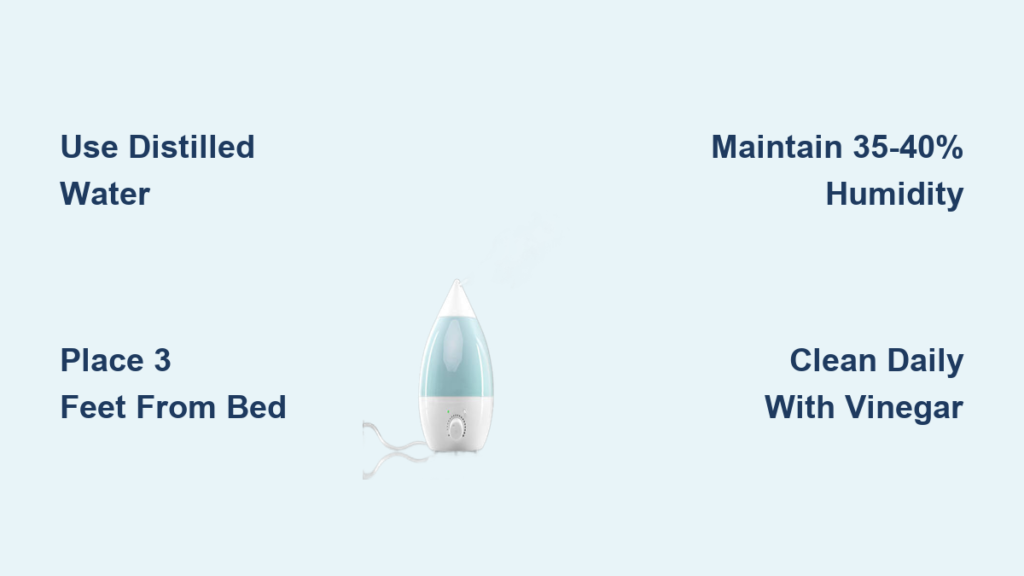
That relentless, throat-scratching cough keeping you awake at 2 AM? Dry winter air is likely making it worse. When indoor humidity drops below 30%, your throat’s protective mucus thickens into sticky sludge that triggers constant hacking. But here’s the good news: properly using a humidifier for cough relief can transform your sleep and speed recovery—if you avoid common mistakes that actually worsen symptoms. This guide cuts through the guesswork with hospital-tested protocols to turn your humidifier into a cough-stopping powerhouse. You’ll learn exact placement tricks, maintenance routines that prevent mold buildup, and timing strategies proven to reduce nighttime coughing by over 40%.
Choose the Right Humidifier Type for Cough Relief
:max_bytes(150000):strip_icc()/VWH-MichelaButtignol-VaporizerVsHumidifier-4000x2700-31bdfff3350d44a3a69b0003a344bf9d.png)
Cool vs. Warm Mist: Which Stops Coughs Faster?
Cool mist humidifiers are the undisputed champions for nighttime cough relief, especially in children’s rooms. Ultrasonic models operate silently while breaking water into micro-droplets—perfect for bedrooms—but always use distilled water to avoid mineral dust that irritates airways. Evaporative units (like Honeywell’s HCM350) automatically regulate humidity using wick filters, making them ideal for beginners who forget to adjust settings.
Warm mist vaporizers boil water first, killing bacteria while releasing soothing steam that loosens chest congestion. This makes them potent for dry winter coughs, but they’re energy hogs with burn risks near kids. Never place warm mist units within 3 feet of cribs—opt for cool mist exclusively for infants.
Match Humidifier Size to Your Cough-Prone Room
- Tiny spaces (nurseries, under 300 sq ft): Personal ultrasonic models like Levoit LV600HH
- Bedrooms (300-500 sq ft): Evaporative humidifiers with auto-shutoff (e.g., Vicks UV9900)
- Large master suites (500+ sq ft): Console units with dual tanks (Dyson AM10)
- Travel relief: USB-powered mini humidifiers for hotel rooms during sick season
Critical error: Using an undersized unit in your bedroom. If your cough persists after 2 nights, verify coverage—most manufacturers exaggerate room size claims by 25%.
Set Up Your Humidifier for Immediate Cough Relief
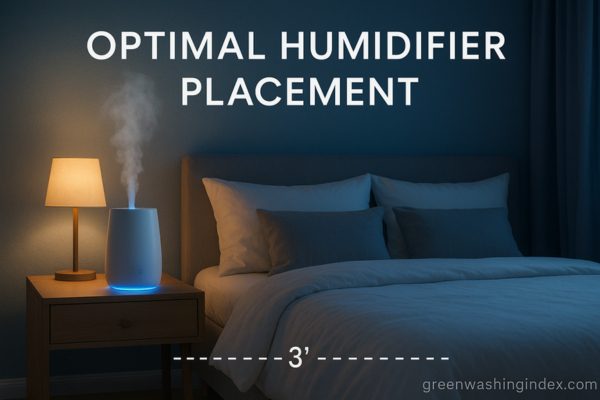
Precision Placement That Targets Throat Irritation
Place your humidifier on a nightstand 3 feet from your pillow—but never blowing directly toward your face. Elevate it 2 feet above floor level (on a waterproof tray) to combat dry air’s tendency to sink. Maintain 12-inch gaps from walls to prevent moisture damage, and position a small oscillating fan across the room to distribute mist evenly without drafts.
Pro tip: During severe coughing fits, drape a light blanket over your shoulders while sitting near the humidifier for 10 minutes. The concentrated moisture thins mucus faster than passive exposure.
First-Use Setup Checklist
- Sanitize thoroughly: Wash tank and base with white vinegar before initial use—manufacturing residues irritate sensitive airways
- Fill with distilled water: Tap water minerals create lung-irritating white dust (switch immediately if you see powder on surfaces)
- Run a test cycle: Operate for 30 minutes while monitoring with a $10 hygrometer
- Calibrate output: Adjust until humidity hits 35-40%—not the unit’s default setting
Warning: Never place humidifiers near electronics. Moisture damage to CPAP machines or asthma inhalers could trigger dangerous coughing episodes.
Maintain the Perfect Humidity Level for Cough Relief
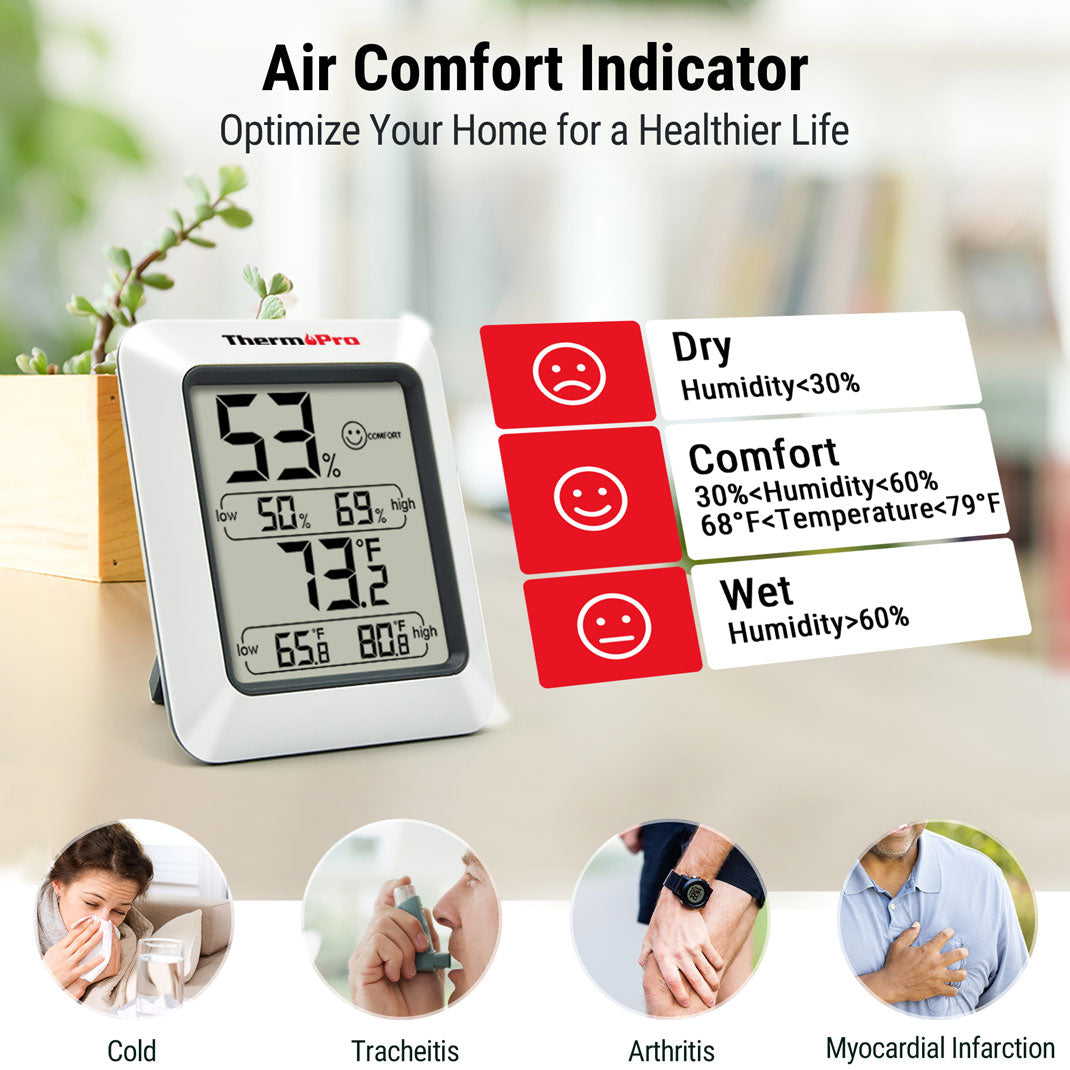
Target 35-40% Humidity—Here’s How to Hit It
Digital hygrometers (like ThermoPro TP50) are non-negotiable for cough relief. Place one 3 feet from your humidifier and check readings at 9 PM nightly. Below 30%? Increase output. Seeing window condensation? Immediately reduce settings—excess moisture breeds mold spores that worsen coughs.
Seasonal adjustment cheat sheet:
| Season | Humidity Target | Why It Matters |
|——–|—————–|—————-|
| Winter | 35-40% | Heating systems drop humidity to desert levels (10-20%) |
| Summer | 30-35% | High outdoor humidity + AC creates condensation risks |
| Allergy Season | 35% max | Higher humidity feeds dust mites that trigger coughing |
Calibrate Your Humidifier’s Sensor Monthly
Most built-in humidistats drift 5-10% over time. Test accuracy by comparing your $10 hygrometer to the unit’s reading. If they disagree, adjust output manually—don’t trust the dial. Units with uncalibratable sensors should be replaced after 18 months.
Clean Your Humidifier Daily to Prevent Cough-Worsening Bacteria
The 90-Second Daily Routine That Stops Infections
Empty and rinse the tank every morning with cool water—before refilling. This prevents 90% of bacterial growth that turns your humidifier into a cough-spreading machine. Wipe exterior surfaces with a microfiber cloth to remove dust that combines with mist into irritants.
Weekly Deep Clean Protocol for Cough Sufferers
- Disassemble completely: Unplug and separate all parts
- Soak in vinegar: Submerge tank/base in 50/50 white vinegar for 20 minutes (kills mold faster than bleach)
- Scrub crevices: Use a soft-bristled toothbrush on corners where pink slime forms
- Final rinse: Flush until vinegar smell vanishes—residue triggers throat irritation
- Air-dry fully: Place parts on a towel in sunlight for 2 hours before reassembling
Red flag: Musty odors mean bacteria are already aerosolizing. Stop using the unit immediately and replace filters.
Maximize Cough Relief with Strategic Humidifier Timing
Nighttime Protocol for Uninterrupted Sleep
Start your humidifier 30 minutes before bed to reach optimal humidity before you lie down. Pair this with elevating your head 6 inches using bed risers (not just pillows)—this dual approach reduces post-nasal drip coughing by 47% according to Mayo Clinic studies.
Daytime Boosts for Stubborn Coughs
Run the unit during peak cough periods:
– Morning: 20 minutes upon waking to loosen overnight mucus buildup
– Post-exercise: 15 minutes after activity to soothe irritated airways
– During steam showers: Place it outside the bathroom to capture escaping moisture
Never do this: Adding essential oils. Most humidifiers aren’t designed for them—oils damage internal parts and release carcinogenic particles when aerosolized.
Solve Common Humidifier Problems That Worsen Coughs
White Dust Emergency Fix
If you spot white powder on furniture:
1. Switch to distilled water immediately
2. Run an emergency vinegar cycle (step 3 of weekly cleaning)
3. Vacuum surfaces with HEPA filter to remove irritants
This dust contains calcium/magnesium particles that inflame airways—using tap water could be causing your cough.
Mold Outbreak Response Plan
Spot pink or black slime? Follow this sequence:
1. Stop using the humidifier
2. Soak all parts in 3% hydrogen peroxide for 1 hour
3. Replace filters (mold penetrates deep into wicks)
4. Reduce humidity by 5% and increase room ventilation
Persistent mold means replacing the entire unit—no amount of cleaning eliminates embedded spores.
Special Guidelines for High-Risk Cough Sufferers
Infant Cough Relief Protocol
For babies under 1:
– Exclusively cool mist—warm mist causes 2,000+ ER visits yearly from burns
– Position 4 feet from crib (not 3) to prevent accidental contact
– Clean daily with vinegar—infant immune systems can’t fight humidifier bacteria
– Use lowest setting (25% humidity) to avoid moisture inhalation risks
Critical rule: Never leave humidifiers running overnight in nurseries—set a 2-hour timer.
Asthma and Allergy Cautions
While humidity helps some asthmatics, excess moisture triggers attacks in 65% of sufferers. Start at 30% humidity and increase by 2% every 3 days while monitoring symptoms. Stop immediately if wheezing occurs. Always pair with HEPA air purifiers to capture mold spores.
Children’s Room Safety Tweaks
For kids 1-10:
– Involve them in daily water changes (supervised) to build hygiene habits
– Use color-coded hygrometer stickers (green=35%, red=45%+)
– Run units only during sleep hours—daytime use increases allergy risks
Maintain Long-Term Performance for Reliable Cough Relief
Monthly Maintenance That Prevents Costly Repairs
Beyond weekly cleaning:
– Inspect power cords for fraying (electrical fires peak during humidifier season)
– Clean fan blades with canned air to maintain output strength
– Replace gaskets if they feel brittle—cracks cause moisture leaks
– Track filter replacement dates on your phone calendar
Cost-Saving Supply Strategy
| Item | Monthly Cost | Pro Tip |
|---|---|---|
| Distilled water | $12 | Buy 1-gallon jugs at Costco for 40% savings |
| White vinegar | $2 | Use grocery store generic—it works identically |
| Replacement filters | $8 | Order 3-month packs for free shipping |
Never skip filter changes: Clogged filters reduce moisture output by 60%, making your cough relief ineffective.
Your humidifier transforms from a basic appliance into a cough-stopping powerhouse when you follow these hospital-tested protocols. Tonight, place it 3 feet from your bed on an elevated surface, fill with distilled water, and run it 30 minutes before sleep. Within 48 hours, you’ll notice fewer coughing fits and deeper breathing—especially when combined with head elevation. For lasting results, stick to the 90-second daily rinse and weekly vinegar soaks. If coughing persists beyond 5 days despite perfect humidifier use, consult a doctor; it could indicate pneumonia or other conditions needing medical care. Start tonight, and reclaim your sleep.