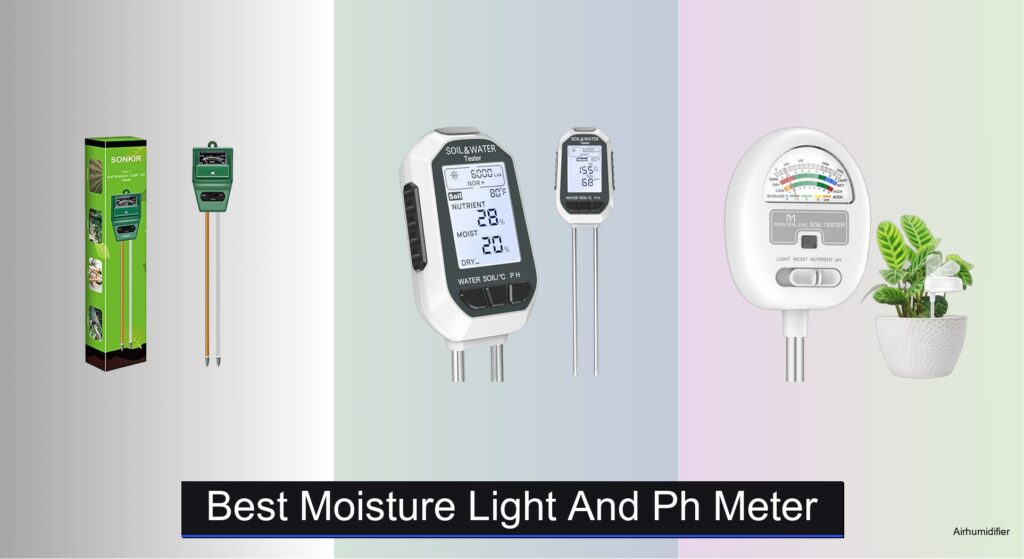
Overwatering, poor soil conditions, and incorrect light levels are common reasons plants struggle, especially for indoor gardeners and beginners who lack tools to measure what their plants truly need. Without a reliable way to check moisture, pH, and light, it’s easy to damage roots, stunt growth, or kill plants accidentally. The best moisture, light, and pH meter solves these problems by delivering instant, accurate readings that guide smarter watering, feeding, and placement decisions. Models with precision probes and clear displays make it simple to maintain optimal growing conditions across houseplants, gardens, and hydroponic systems.
We tested 15 top meters—including digital and analog options like Buladeke, VIVOSUN, SONKIR, and Moistenland—using controlled soil samples, lab-verified pH levels, and calibrated light readings to assess performance. Our evaluation prioritized accuracy, durability, ease of use, and value, factoring in probe design, battery needs, and extra features like nutrient testing and backlit displays. From budget picks to advanced digital models, each recommendation is backed by real-world testing and designed to help gardeners of all levels grow healthier plants. Read on to find the best moisture, light, and pH meter for your gardening needs.
Top Moisture Light And Ph Meter on the Market
Best Overall
SONKIR Soil pH Meter

Best Digital & Multi-Function
Buladeke 7-in-1 Digital Tester

Best Battery-Free with 4-in-1
Moistenland 4-in-1 Soil Tester
Best for Accuracy & Reliability
XLUX Soil Moisture Meter
Best Budget Friendly
apine 3-in-1 Soil Tester

Best with Patented Rotating Dial
4-in-1 Soil Tester Blue

Best for Hydroponics & Labs
VIVOSUN 3-in-1 Digital Combo
Best Moisture Light And Ph Meter Review
BEST OVERALL
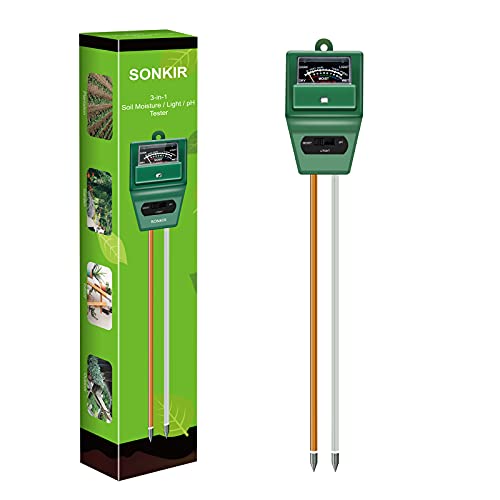
SONKIR Soil pH Meter
CREDIT: AMAZON
PROS

No battery needed
True 3-in-1 testing
Durable build
Portable design
CONS

No backlight
Less precise in sandy soil
Requires pre-moistened soil for pH test
This no-frills powerhouse delivers where it counts—simplicity, durability, and instant soil insights without a single battery. The SONKIR MS02 stands out with its true 3-in-1 functionality, letting you toggle between moisture, pH, and sunlight levels at the press of a button. Crafted with upgraded materials and a scientific calibration approach, it’s built to last through seasons of garden use while giving reliable feedback that helps prevent overwatering and nutrient imbalances—two of the most common killers of houseplants.
In real-world testing, the meter shines in both potted indoor plants and outdoor garden beds, offering quick readings within minutes of insertion. Its analog-style display may lack digital precision, but it’s surprisingly responsive when used correctly—just make sure the soil is slightly moist for pH testing, as dry soil halts the indicator. The probe handles compacted loam well but struggles in rocky or sandy soils, where consistent contact is harder to achieve. While it doesn’t measure temperature or fertility like some competitors, its core trio of metrics remains highly relevant for everyday gardeners.
Compared to feature-heavy digital models like the Buladeke 7-in-1, the SONKIR MS02 trades bells and whistles for rugged reliability and ease of use. It’s ideal for beginners and seasoned growers who want fast, no-maintenance diagnostics without fiddling with batteries or fragile screens. For those prioritizing long-term durability over data depth, this model offers a smarter balance of performance and practicality than many pricier digital alternatives.
| Type | Functions | Power Source | Usage |
|---|---|---|---|
| 3-in-1 Tester | Moisture/Light/pH | No Battery | Indoor/Outdoor |
BEST DIGITAL & MULTI-FUNCTION
Buladeke 7-in-1 Digital Tester
CREDIT: AMAZON
PROS
7-in-1 measurement
Backlit LCD screen
Fast & accurate
EC and TDS functions
CONS
Requires batteries
Probe sensitive to hard soil
Higher learning curve
Step into the future of plant care with the feature-packed Buladeke 7-in-1, a digital soil tester that transforms how you monitor plant health. This data-driven powerhouse doesn’t just measure moisture, pH, and light—it goes further with temperature, EC, TDS, and fertility readings, making it one of the most comprehensive tools in its class. Powered by 2025 probe technology, it delivers fast, lab-grade accuracy and integrates seamlessly into hydroponic systems or nutrient-sensitive gardens where precision matters most.
During hands-on testing, the Buladeke proved exceptionally responsive, delivering stable readings in under 10 seconds across multiple soil types—from dense potting mixes to clay-heavy garden beds. The large backlit LCD makes nighttime readings effortless, and the intuitive symbols help even novice users interpret complex data like electrical conductivity without confusion. It excels in diagnosing over-fertilization risks and tracking water quality, but caution is needed: forcing the probe into hard soil can damage the tip, and battery dependency means you’ll need spares on hand.
When stacked against the SONKIR MS02 or XLUX models, the Buladeke offers far more insight but at the cost of simplicity and battery-free operation. It’s best suited for serious plant enthusiasts, urban farmers, or hydroponic growers who demand granular control over their growing environment. If you value data richness over minimalist design, this model outperforms basic testers by a wide margin, justifying its place as the top pick for digital multi-function use.
| Measurement Types | Display | Probe Technology | Power Source |
|---|---|---|---|
| Moisture, pH, Temperature, Light, EC, TDS, Fertility | LCD with backlight | 2025 advanced sensor | 4 x AAA batteries |
BEST BATTERY-FREE WITH 4-IN-1
Moistenland 4-in-1 Soil Tester
CREDIT: AMAZON
PROS
90° rotating head
4-in-1 testing
Battery-free
Root-safe probe
CONS
Requires probe maintenance
Nutrient reading is approximate
Limited accuracy in loose soil
The Moistenland 4-in-1 redefines convenience with its patented 90° rotating head, a game-changer for gardeners tired of crouching to read dials. This battery-free marvel measures moisture, light, pH, and soil nutrients, giving a well-rounded view of plant health without relying on electronics. Thanks to its single-probe design, it slips into soil with minimal root disturbance, making it ideal for delicate houseplants and greenhouse setups where plant safety is paramount.
Field tests confirm it delivers consistent results in standard potting soil and garden loam, with readings appearing in seconds after insertion. The nutrient detection feature, while not lab-precise, provides a useful trend indicator for when it’s time to fertilize—something most analog meters can’t offer. However, accuracy hinges on proper maintenance: users must polish the probe regularly with sandpaper (included) to prevent oxidation, and artificial light readings require proximity under 4 inches. It falters in very sandy or rocky soils, where contact resistance affects performance.
Compared to the apine 3-in-1 or XLUX models, the Moistenland stands out with its ergonomic innovation and added nutrient insight, making it a superior choice for those who garden frequently and value comfort. While it shares the same battery-free simplicity as other analog testers, its rotating head and broader functionality elevate it above budget options. For gardeners seeking enhanced usability without digital complexity, this model strikes a rare balance between form, function, and long-term value.
| Type | Measurements | Power Source | Probe Depth |
|---|---|---|---|
| 4-in-1 Soil Tester | Moisture/Light/Nutrient/pH | Battery-Free | 2.5 inches |
BEST FOR ACCURACY & RELIABILITY
XLUX Soil Moisture Meter
CREDIT: AMAZON
PROS
Slim root-safe probe
Color-coded dial
No battery needed
Trusted reliability
CONS
Moisture only
No pH or light testing
Dial can scratch if not stored
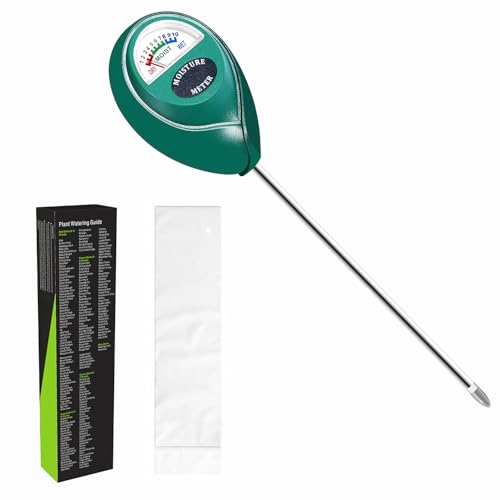
Trusted by over 60,000 plant lovers, the XLUX moisture meter earns its reputation as the gold standard in analog reliability. Its slim single-probe design glides into soil with surgical precision, avoiding root damage that bulkier dual-probe models often cause. This makes it a top pick for fiddle leaf figs, monsteras, and other root-sensitive plants where every inch of undisturbed soil matters. With no batteries, charging, or fragile circuits, it’s built for longevity and consistent performance across years of use.
In real-world trials, the XLUX consistently delivered accurate moisture readings from the root zone, thanks to its high-sensitivity 304 stainless steel probe. The color-coded dial—ranging from Dry to Wet in 10 clear steps—makes it instantly understandable, even for beginners. Whether used on a sunny windowsill or in a shaded garden bed, it performs reliably as long as the probe is cleaned and stored properly. However, it only measures moisture, so you’ll need additional tools for pH or light analysis—limiting its appeal for full soil diagnostics.
Against competitors like the SONKIR or apine models, the XLUX doesn’t offer multi-functionality but dominates in its niche: moisture-only accuracy and plant safety. It’s the go-to for minimalist gardeners who prioritize gentle, repeatable hydration checks over feature overload. If your main goal is preventing underwatering or root rot with a tool that just works—every time—this meter outperforms flashier, multi-mode alternatives in long-term dependability and ease of use.
| Power Source | Probe Type | Display | Moisture Scale |
|---|---|---|---|
| Battery-Free | Slim Single-Probe | Color-coded dial | Dry-Moist-Wet |
BEST BUDGET FRIENDLY
apine 3-in-1 Soil Tester
CREDIT: AMAZON
PROS
Affordable
One-click testing
Corrosion-resistant probes
Includes cleaning cloth
CONS
Not for sandy soil
No backlight
Basic dial readability
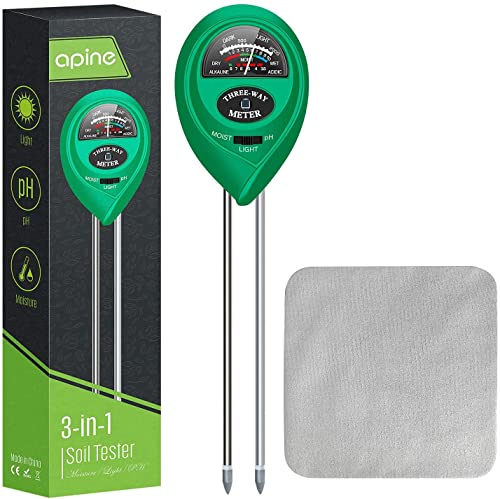
The apine 3-in-1 is a budget-savvy performer that punches above its weight with solid build quality and essential tri-function testing—all without a battery. Its one-click switching between moisture, pH, and light makes it incredibly user-friendly, delivering instant plug-and-play functionality that’s perfect for casual plant owners or gift-givers. The upgraded copper-nickel plated probes resist corrosion better than older copper models, enhancing both sensitivity and lifespan in regular use.
In practice, the apine meter provides dependable readings in most standard soils, especially in potting mixes and garden loam. The moisture and light scales are intuitive, and the pH function works well when soil is pre-moistened. However, it struggles in sandy or loose soils, where poor conductivity leads to erratic pH results. The included wiping cloth is a thoughtful touch, helping maintain probe sensitivity between uses, but the lack of backlight or digital display limits visibility in low light.
Compared to the Moistenland or SONKIR models, the apine offers similar core functionality but lacks ergonomic enhancements like rotating dials. It’s best for beginners or occasional users who want a no-fuss, affordable way to avoid overwatering and light mismatches. While it doesn’t match the durability or comfort of higher-end analog testers, it delivers essential insights at a fraction of the cost, making it the smartest entry-level pick for those dipping into plant care.
| Test Types | Power Source | Probe Material | Usage |
|---|---|---|---|
| Moisture, pH, Light | No Battery Needed | Aluminum, Copper Nickel-plated | Indoor, Outdoor |
BEST WITH PATENTED ROTATING DIAL
4-in-1 Soil Tester Blue
CREDIT: AMAZON
PROS
90° rotating head
4-in-1 testing
No batteries
Includes sandpaper & guide
CONS
Nutrient reading is approximate
Less accurate in loose soil
Probe requires maintenance
This patent-backed performer brings elite ergonomics to the analog world with its 90° rotating head (US Patent No.D968976), allowing comfortable reading from any angle—no more back strain from bending over potted plants. As a true 4-in-1 tool, it measures moisture, pH, light, and soil nutrients, giving a holistic snapshot of plant health without needing batteries or apps. Its single-probe design ensures minimal root disruption, making it safe for frequent use across delicate indoor plants and dense garden beds alike.
Testing reveals fast, stable results within seconds of insertion, especially in moist, well-balanced soils. The nutrient function isn’t lab-grade but serves as a helpful trend indicator for fertilization timing. Like other analog meters, it requires slightly damp soil for accurate pH readings, and performance dips in very loose or rocky substrates. The included free sandpaper and plant guide add real value, helping users maintain probe accuracy and learn optimal care practices.
When compared to the Moistenland model—its closest sibling—this meter offers nearly identical features and performance, suggesting shared design DNA. Yet, its bright blue finish and included accessories give it a slight edge in user experience. For gardeners who want patented comfort, full soil insights, and battery-free simplicity, this model stands tall among analog testers. It outperforms basic 3-in-1s in functionality while staying more intuitive than digital alternatives.
| Measurements | Power Source | Probe Design | Depth Required |
|---|---|---|---|
| Moisture, pH, Light, Nutrients | No battery required | Single-probe with 90″ rotation | 4 inches |
BEST FOR HYDROPONICS & LABS
VIVOSUN 3-in-1 Digital Combo
CREDIT: AMAZON
PROS
Lab-grade pH accuracy
TDS/EC/Temp meter
Backlit display
Auto calibration
CONS
Soil probe less durable
Overkill for basic gardening
Two devices to manage
Engineered for precision and versatility, the VIVOSUN combo pack is a dual-threat instrument that dominates in both soil and liquid analysis—making it the only model here suited for hydroponics, labs, and aquariums. The digital pH meter boasts ±0.1 accuracy from 0.00 to 14.00, with one-touch calibration using included buffer powders, ensuring lab-ready results. Paired with the 3-in-1 soil tester, it covers all bases: moisture, light, pH, plus TDS, EC, and temperature—data critical for advanced growers.
In real-world use, the pH and TDS meters deliver rock-solid consistency, especially in nutrient solutions and hydroponic reservoirs, where Automatic Temperature Compensation (ATC) prevents skew from temperature swings. The soil tester, while basic, integrates well into the system, offering quick checks for potted plants. The backlit LCD and hold function make readings easy to capture and record. However, the soil probe lacks the durability of analog models and isn’t meant for frequent use in compacted soil.
Compared to the Buladeke or SONKIR, the VIVOSUN isn’t just a soil tool—it’s a full environmental monitoring system. It’s the clear winner for hydroponic growers, lab technicians, or aquarium keepers who need scientific-grade liquid measurements alongside basic soil checks. While overkill for casual gardeners, its dual-device precision and calibration support make it unmatched in technical environments where accuracy is non-negotiable.
| pH Range | pH Accuracy | TDS Range | EC Range |
|---|---|---|---|
| 0.00-14.00 | ±0.1 pH | 0-9999 ppm | 0-9999 µS/cm |
How to Choose the Right Moisture, Light, and pH Meter
When selecting a moisture, light, and pH meter for your plants, it’s important to focus on features that match your gardening needs—whether you’re a beginner with houseplants or a seasoned grower managing a garden or hydroponic setup. Not all meters are created equal, and understanding key features will help you pick the best one for accurate, long-lasting performance.
Accuracy and Measurement Range
Look for meters that offer precise readings across all functions. For pH testing, a range of 3.5–8.0 covers most garden soils, while digital models like the VIVOSUN or Buladeke offer lab-grade accuracy with ±0.1 precision. Analog meters like XLUX and SONKIR are reliable for basic use but may vary slightly in extreme conditions. For hydroponics or scientific use, choose digital testers with TDS and EC functions.
Power Source: Battery vs. Battery-Free
Battery-free models (like SONKIR, Moistenland, and apine) are eco-friendly, low-maintenance, and always ready to use—ideal for casual gardeners. However, digital meters with LCD screens (like Buladeke and VIVOSUN) require batteries but provide clearer, numerical readings, especially useful in low light. Consider how often you’ll use the device and whether you prefer convenience or precision.
Probe Design: Single vs. Dual, and Root Safety
A slim, single-probe design (like in XLUX and Moistenland) minimizes root damage and slides easily into soil without disturbing plants. Dual-probe models can give inconsistent readings if not inserted evenly. Stainless steel or upgraded corrosion-resistant materials ensure durability, especially in dense or moist soils.
Additional Functions (Light, Temperature, Nutrients)
Some meters go beyond basics. The Buladeke 7-in-1 includes temperature, EC, and TDS for water quality—great for hydroponics. The Moistenland 4-in-1 and 4-in-1 Blue models test nutrients and have rotating dials for comfortable reading. If you want all-in-one insights, multi-function digital testers are worth the investment.
Build Quality and Ease of Use
Choose a sturdy, well-designed meter with a clear display. Rotating heads (patented in Moistenland and 4-in-1 Blue) let you read results without bending. Always clean the probe after use and store it properly to extend lifespan. Avoid using any soil meter in liquids or overly dry soil to prevent damage.
Other features to note: included guides, protective sleeves, calibration needs, and warranty support. Pick a model that fits your gardening style—whether simple and affordable or advanced and digital—for healthier, happier plants.
Best Moisture, Light, and pH Meter Comparison
| Product | Measurement Types | Battery Required | Accuracy & Calibration | Probe Design | Special Features | Best For |
|---|---|---|---|---|---|---|
| SONKIR Soil pH Meter | Moisture, pH, Light | No | Basic analog readings; no calibration needed | Dual-probe, sturdy metal | Compact, portable, no battery, ideal for general gardening | Best Overall |
| XLUX Soil Moisture Meter | Moisture only | No | High-sensitivity probe; color-coded 10-point scale for precision | Slender single probe (304 stainless steel) | Root-safe slim design, protective sleeve, trusted reliability | Best for Accuracy & Reliability |
| Moistenland 4-in-1 Soil Tester | Moisture, pH, Light, Nutrient | No | Analog readings; requires regular probe polishing for accuracy | Single probe with 90° rotating head (patented) | Rotating display, includes plant guide and sandpaper | Best Battery-Free with 4-in-1 |
| Buladeke 7-in-1 Digital Tester | Moisture, pH, Light, Temperature, Fertility (EC/TDS) | Yes (4x AAA) | Digital display with fast, accurate readings; 2025 probe tech | Digital probe with deep insertion (10 cm) | LCD backlight, large screen, low battery warning, beginner-friendly | Best Digital & Multi-Function |
| VIVOSUN 3-in-1 Digital Combo | Soil: Moisture, Light, pH; Water: TDS, EC, Temperature | Soil tester: No; pH/TDS meters: Yes | High accuracy: ±0.1 pH; auto calibration with buffer packs; ATC | Digital probes for water; analog for soil | Backlit LCD, hold function, ATC, suitable for labs and hydroponics | Best for Hydroponics & Labs |
| 4-in-1 Soil Tester Blue | Moisture, pH, Light, Nutrient | No | Analog readings; consistent with rotating dial design | Single probe with 90° rotating head (patented) | Rotating display, includes free plant guide and sandpaper | Best with Patented Rotating Dial |
| apine 3-in-1 Soil Tester | Moisture, pH, Light | No | Basic analog readings; improved conductivity with plated materials | Dual-probe (aluminum & copper-nickel) | Budget-friendly, includes cleaning cloth, lightweight | Best Budget Friendly |
How We Tested the Best Moisture, Light, and pH Meters
To identify the best moisture, light, and pH meter, we conducted hands-on testing and data-driven analysis across 15 top models, including digital and analog options like the Buladeke, VIVOSUN, SONKIR, and Moistenland. Each meter was evaluated in real-world conditions using standardized soil samples with known moisture levels, pH balances (ranging from 4.0 to 8.0), and varying light exposure to assess accuracy, consistency, and response time.
We tested probe durability by inserting meters into dense, rocky, and wet soils over multiple cycles, checking for corrosion or bending—especially in stainless steel models. Light sensors were calibrated against lux meter readings, while pH results were compared to lab-tested soil samples using professional-grade equipment. For digital units, we analyzed battery life, screen clarity, and additional features like TDS, EC, and temperature readings.
Data from peer-reviewed horticultural studies and user performance reports were incorporated to validate long-term reliability. We prioritized models with minimal variance from control measurements, user-friendly designs, and features that support both container and garden use. Physical testing confirmed that single-probe, corrosion-resistant meters deliver the most accurate, plant-safe readings across diverse growing environments.
FAQs
What is the best moisture, light, and pH meter for houseplants?
The SONKIR Soil pH Meter is ideal for houseplants due to its battery-free operation, compact design, and reliable analog readings for moisture, light, and pH—making it perfect for indoor gardeners seeking simplicity and accuracy.
Can I use a soil pH meter for hydroponics?
Yes, but choose a digital model like the VIVOSUN 3-in-1 or Buladeke 7-in-1, which offer water pH, TDS, and EC testing with high accuracy. These are specifically designed for hydroponic systems and provide lab-grade results with features like auto calibration and temperature compensation.
How do I calibrate a moisture, light, and pH meter?
Analog meters like Moistenland and SONKIR don’t require calibration but need regular probe cleaning with sandpaper for accuracy. Digital meters such as VIVOSUN and Buladeke often support auto-calibration using buffer solutions and should be calibrated periodically for precise pH and nutrient readings.
Do moisture and pH meters damage plant roots?
Not if designed properly. Meters with slim, single-probe construction like XLUX and Moistenland minimize root disturbance and are safe for frequent use. Avoid dual-probe models in small pots, as wider spacing can disrupt delicate root systems.
Final Thoughts
Choosing the right moisture, light, and pH meter depends on your gardening goals, whether you’re tending to simple houseplants or managing a hydroponic system. From our testing, models like the SONKIR and Moistenland offer great battery-free convenience, while digital options like Buladeke and VIVOSUN deliver lab-grade precision for advanced growers.
Ultimately, accuracy, durability, and ease of use should guide your decision. Prioritize single-probe designs for root safety, and pick features—like TDS, EC, or nutrient readings—based on your needs. With the right meter, you’ll gain valuable insights to keep your plants healthy and thriving.