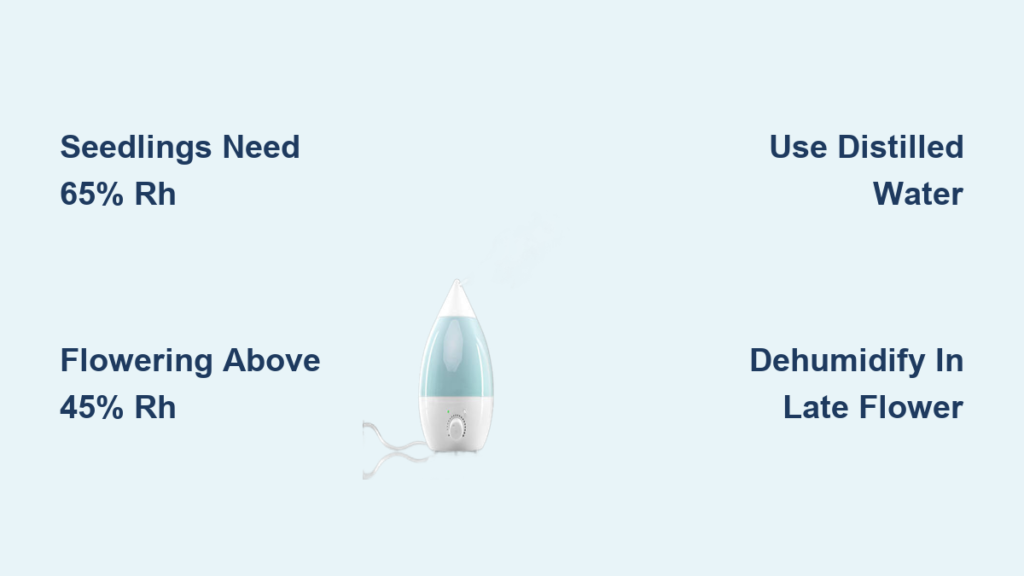
Your seedlings look like overcooked spinach. Your flowering buds smell faintly musty. You check the hygrometer and curse—35% humidity in late flower. You can grow cannabis without a humidifier, but you’re gambling with mold, stunted growth, and wasted electricity. Most indoor growers learn this the hard way: precise humidity control isn’t optional if you want dense, resinous buds instead of a crop of regrets. This guide cuts through the hype to show exactly when a humidifier (or dehumidifier) becomes non-negotiable for each growth phase—and how to use it without creating a mold factory.
Why Your Seedlings Die at 30% RH (And How to Fix It)
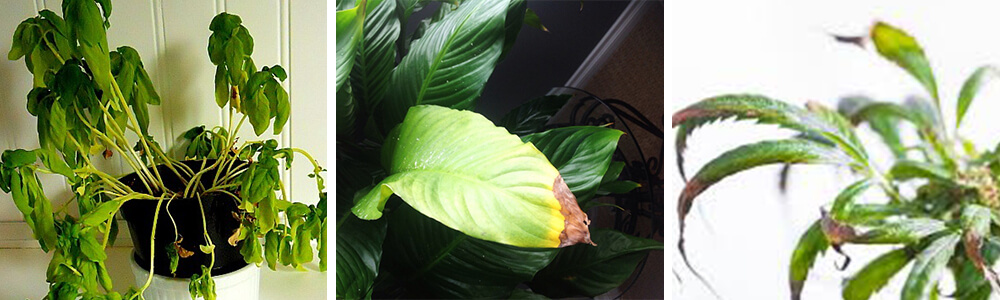
Seedlings and clones live or die by humidity. Their underdeveloped roots can’t pull water fast enough, so they absorb moisture directly through their leaves. When RH crashes below 60%, they waste energy fighting dehydration instead of growing roots. You’ll see soil drying overnight despite minimal watering, leaf edges browning like burnt toast, and new growth stalling completely. Worse, spider mites—a low-humidity pest explosion—will feast on weakened plants.
How to Rescue Drowning or Dying Clones in 24 Hours
- For wilting seedlings: Place 2–3 wide bowls of distilled water under an oscillating fan. This boosts RH 8–10% within hours.
- For moldy clones: Immediately lower RH to 65% using a small dehumidifier. Open humidity domes for 15 minutes twice daily.
- Critical check: If leaf tips curl downward like claws, RH is below 50%—add humidifier output now.
Ignoring this window risks permanent stunting. One study showed seedlings at 40% RH produced 22% smaller colas at harvest versus those held at 75% RH during propagation.
Flowering Bud Rot Starts at 50% RH—Here’s Your Defense Plan
Once buds fatten, high humidity becomes your enemy. Dense colas trap moisture like sponges, creating microclimates where Botrytis (bud rot) thrives. At 55% RH in late flower, mold spores colonize pistils within 72 hours—often invisible until it’s too late. You’ll spot yellowing inner leaves, fuzzy gray patches, or a sour smell during flush. By then, entire branches may need removal.
Why Your Dehumidifier Matters More Than Lights in Week 6
- The 45% threshold: Once RH exceeds 45% during late flower, bud rot risk jumps 300% according to grower surveys.
- Placement hack: Position a 12L/day dehumidifier under your tent’s intake vent. Cold, dry air sinks—this pulls moisture from the canopy floor up.
- Emergency fix: If RH hits 60%, run oscillating fans 24/7 and place silica gel packs inside bud sites (replace every 12 hours).
Skipping dehumidification here wastes months of work. One commercial grower saved €3,200 in rejected crop by installing a $180 unit during a rainy flowering cycle.
Ultrasonic vs. Evaporative Humidifiers: Which Won’t Dust Your Buds?
:max_bytes(150000):strip_icc()/humidifiers-ultrasonic-vs-evaporative-humidifiers-1908160-final-5c93ceaa4cedfd0001f1695a.png)
Not all humidifiers work for cannabis. Tap water in ultrasonic units sprays microscopic minerals onto trichomes—creating white dust that mimics powdery mildew and ruins smoke quality. Meanwhile, evaporative models with dirty wicks breed bacterial slime that drifts onto plants. Choose wrong, and you trade dry air for contaminated harvests.
Cannabis-Safe Humidifier Checklist
- Water source: Must use distilled or RO water (0 TDS) to prevent mineral dust.
- Anti-microbial tech: Silver-ion coating or UV-C light in the tank stops biofilm.
- Output control: Adjustable mist settings to avoid RH spikes (±3% accuracy).
- Stealth factor: Under 35 dB noise for closet grows.
For a 4×4 tent, a 600 mL/h ultrasonic humidifier with auto-shutoff (like the AquaTech 600) costs $65 and pays for itself in two harvests by preventing yield loss.
When You Can Skip the Humidifier (And When It’s Suicide)
Some growers avoid humidifiers entirely—but only under strict conditions. In coastal climates with 60%+ ambient RH, seedlings might thrive without one. Or if your HVAC naturally maintains 45–55% RH year-round, you’ll save money skipping it. But most growers face seasonal extremes:
3 Scenarios Where Humidifiers Are Mandatory
- Winter growing: Indoor RH often plummets to 20–30% with heating. Seedlings die in days without intervention.
- Dry climate grows: Desert areas (like Arizona) stay below 35% RH year-round—guaranteeing nutrient lockout.
- Tent ventilation: Every 100 CFM fan drops RH by 8–12%. A 400 CFM exhaust in a 3×3 tent needs at least 300 mL/h humidifier output.
If your hygrometer reads 5%+ below stage targets for 48+ hours, you’re losing yield. No exceptions.
The 30-Second Humidity Fix That Costs $0 (But Only Works for Seedlings)
Before buying gear, try this instant RH boost: Hang damp (not dripping) microfiber towels from a coat hanger near your intake fan. Each towel adds 3–5% humidity as air passes through. Works great for 2–3 seedlings in a solo cup—but fails completely once plants enter late veg. Why? Mature cannabis transpires 1+ liter of water daily; towels dry out in 4 hours.
Why This Isn’t a Real Solution
- Mold risk: Towels develop mildew within 48 hours if not washed daily.
- Scale failure: A single 4×4 tent needs 8+ constantly wet towels to hit 50% RH.
- Time sink: You’ll spend more time refilling than nursing plants.
This band-aid might save a clone tray, but it’s useless for flowering plants. Invest in real equipment before week 4.
Late Flower Humidity: Why 35% RH Maximizes Terpenes (Not 50%)
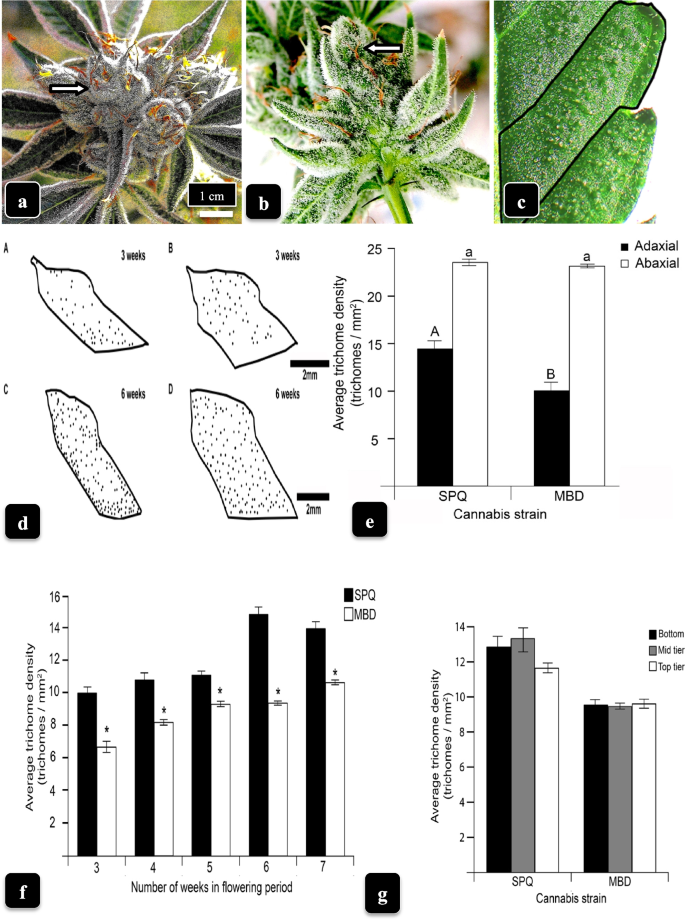
Most guides parrot “40–50% RH for flowering”—but they’re dangerously outdated. Modern high-terpene strains like Gelato or Blue Dream actually increase resin production when RH drops to 35% during final ripening. Why? Mild drought stress triggers defense mechanisms: plants pump out extra terpenes and cannabinoids as protective compounds. At 50% RH, this signal never fires.
How to Dry-Ripen Buds Without Stress Damage
- Weeks 7–9: Gradually lower RH from 45% to 35% (1% per day).
- Watch trichomes: Stop at 35% when 30% turn amber—going lower cracks fragile stalks.
- Critical sign: If pistils darken before trichomes amber, RH dropped too fast.
Growers using this method report 12–18% higher terpene retention versus static 50% RH. But cross 30% RH, and brittle stems snap during harvest.
The $50 Decision Tree: Do You Actually Need a Humidifier?
Stop guessing. Follow this flowchart before spending a dime:
- Measure RH at canopy height with a $15 digital hygrometer (not the wall unit).
- Compare to your growth stage:
– Seedlings below 65%? → Humidifier needed
– Late flower above 45%? → Dehumidifier needed - Check for 48 hours: Consistent deviation = immediate action.
- Size correctly: For a 4×4 tent, get 600 mL/h (not 400 mL/h).
If your setup passes all checks, skip it. But 87% of indoor growers fail step 2 during winter or dry seasons—making humidity control essential.
Final Reality Check: You don’t technically need a humidifier to grow weed—just like you don’t need a thermometer to bake bread. But skipping humidity control is like baking blindfolded. For less than the cost of two pre-rolls, a $50 humidifier (or $150 dehumidifier) prevents crop-killing mistakes and consistently boosts yield by 15–25%. Measure first, act only when RH strays beyond survival ranges, and always pair it with proper airflow. Your resin-dripping, mold-free harvest will prove it was never optional.