Waking up with a clogged nose that won’t clear after repeated blowing? You’re not alone—dry indoor air from winter heating systems strips moisture from nasal tissues, causing inflammation and stubborn congestion. Millions struggle with this cycle of discomfort, especially during colder months when humidity levels plummet. The critical question: does a humidifier help with stuffy nose symptoms, or is it just another unproven home remedy?
The answer lies in how humidifiers directly combat dry air—the root cause of nasal irritation. When indoor humidity drops below 30%, your nasal passages lose moisture, triggering swelling, thickened mucus, and that suffocating “stuffed-up” feeling. By restoring optimal humidity (30-50%), a humidifier soothes inflamed tissues and thins mucus within hours, offering drug-free relief.
Research confirms humidified air breaks the dry-air congestion cycle. Properly used, it reduces nasal swelling, prevents tissue cracking, and makes mucus easier to expel—without the rebound effects of decongestant sprays. Let’s explore exactly how to leverage this simple solution for lasting relief.
How Humidifiers Clear Stuffy Noses
Moisture Breaks Up Mucus Blockages
Dry air transforms healthy nasal mucus into thick, glue-like blockages that resist blowing or coughing. A humidifier releases fine water vapor that penetrates these hardened secretions, thinning them into a fluid state your body can naturally expel. You’ll notice results within 30-60 minutes: mucus becomes slippery and easier to clear with gentle nose-blowing—no more forceful (and damaging) attempts. For best results, run the unit 2 hours before bed so moisture saturates your nasal passages overnight.
Reduces Nasal Passage Inflammation
Swollen nasal tissues physically obstruct airflow, creating that dreaded “stuffed” sensation. Moist air acts like a continuous saline mist, calming irritated membranes and reducing inflammation. This is especially crucial at night—when you’re lying flat—since gravity worsens congestion. Users report waking with dramatically clearer airways after consistent humidifier use, avoiding the cycle of mouth-breathing that dries throats and triggers snoring.
Prevents Cracking and Nosebleeds
Forced nose-blowing or picking dry nasal tissue creates micro-tears that invite infection and worsen swelling. Humidifiers maintain tissue elasticity, eliminating the “sandpaper” feeling that prompts aggressive clearing. This breaks the irritation cycle: less picking = less inflammation = less congestion. If you experience frequent nosebleeds alongside stuffiness, maintaining 40-45% humidity is non-negotiable for healing.
Best Humidifier Types for Nasal Relief
Cool Mist Units Dominate the Market
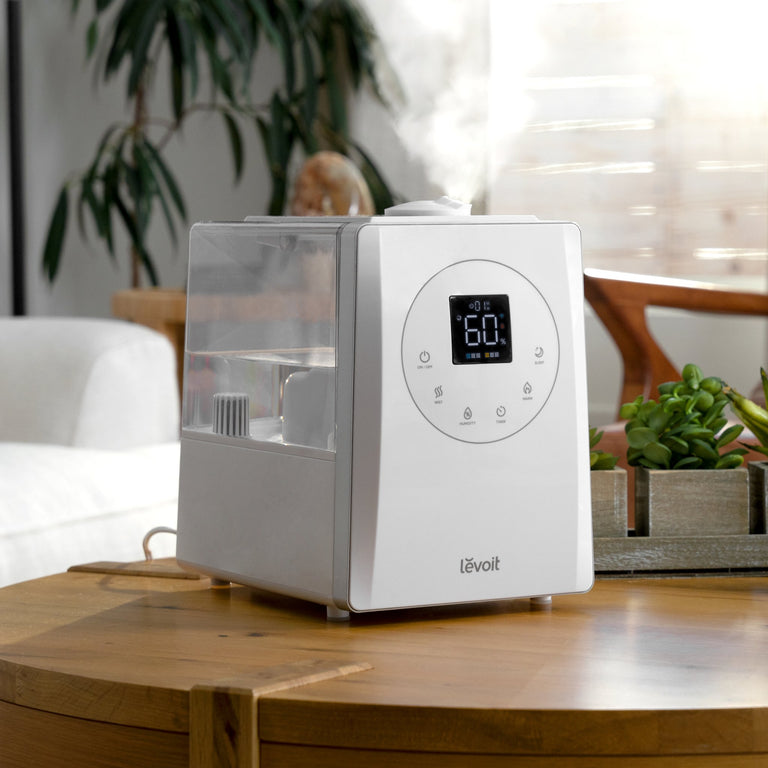
Ultrasonic models like the Levoit LV600 Hybrid lead for stuffy nose relief. Their silent operation (using vibrating diaphragms) won’t disrupt sleep, while dual warm/cool mist options let you adjust based on congestion severity—cool mist for inflammation, warm for thick mucus. Evaporative units (fan-and-wick systems) self-regulate humidity, preventing over-moistening that breeds mold. Impellers offer budget-friendly relief via spinning discs but create more noise—best for daytime use.
Steam Humidifiers: Lower Germ Risk
Steam units boil water before release, killing 99% of bacteria and mold spores—a critical advantage if you have allergies or weakened immunity. While studies haven’t proven superior sinus relief versus cool mist, the germ-killing action prevents contaminated mist from worsening congestion. Just keep units away from children (burn risk) and never add essential oils to boiling water, which can create harmful vapors.
Skip Whole-House Systems for Targeted Relief
Whole-house humidifiers (only 4% of sales) require HVAC installation and bi-annual filter changes—overkill for isolated stuffy nose issues. Portable units deliver precise humidity exactly where you need it: your bedroom. Since nasal congestion peaks at night, a 1-2 gallon cool mist humidifier placed 3-5 feet from your bed provides faster, more effective relief than whole-home systems.
Setting Up Your Humidifier for Maximum Relief
Choose Correct Room Size
Undersized units fail; oversized ones cause mold. Match capacity to room size:
– Small rooms (≤300 sq ft): 0.5-1 gallon tank (e.g., nurseries)
– Medium rooms (300-500 sq ft): 1-2 gallons (typical bedrooms)
– Large rooms (500+ sq ft): 2+ gallons with dual mist outlets
Warning: Exceeding 50% humidity encourages dust mites and mold—common allergy triggers that worsen congestion.
Optimal Placement Strategy
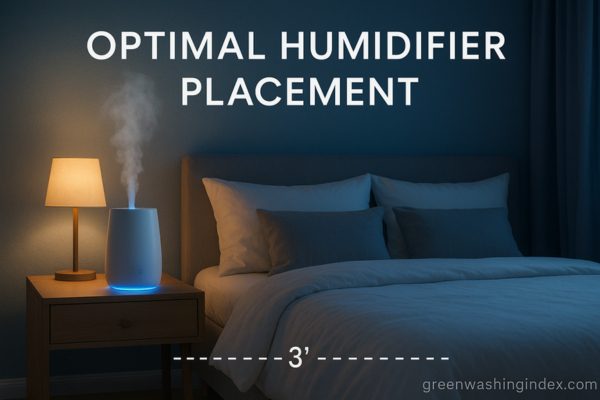
Place your humidifier on a nightstand 2-3 feet off the ground, 3-5 feet from your pillow. This ensures mist reaches your nose without dampening bedding (which causes mold). Never position it against walls or curtains—moisture buildup damages surfaces and reduces airflow efficiency.
Target Humidity Settings
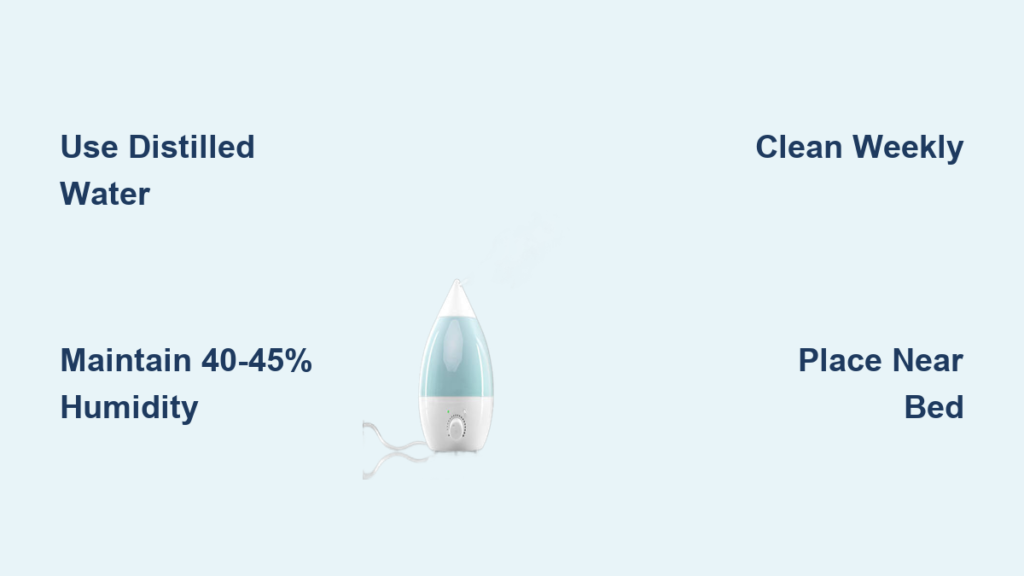
Aim for 40-45% humidity during active congestion (measured with a $10 digital hygrometer). The Mayo Clinic confirms this range thins mucus without promoting allergens. Once symptoms ease, drop to 35% to prevent over-humidification. Run units only while sleeping or in stuffy rooms—continuous use invites mold.
Daily Maintenance Prevents Problems
Critical Cleaning Schedule
A dirty humidifier worsens congestion by spraying mold and bacteria into your air. Follow this non-negotiable routine:
– Daily: Empty and rinse the tank with warm water
– Weekly: Soak tank and base in 1:1 white vinegar/water for 30 minutes
– Monthly: Check for mineral crusts; replace filters (evaporative models)
Water Quality Matters
Always use distilled or demineralized water—tap water’s minerals create “white dust” that irritates sensitive nasal passages and coats your room in grime. This switch cuts cleaning time by 50% and ensures cleaner mist. Save tap water for plants; your nose deserves purity.
Filter Replacement Guidelines
- Evaporative wicks: Replace every 1-3 months (soak in vinegar monthly to extend life)
- Pre-filters: Swap monthly during winter
- Demineralization cartridges: Change per manual (usually every 2 months)
Warning Signs Your Humidifier Needs Attention
When Relief Turns to Harm
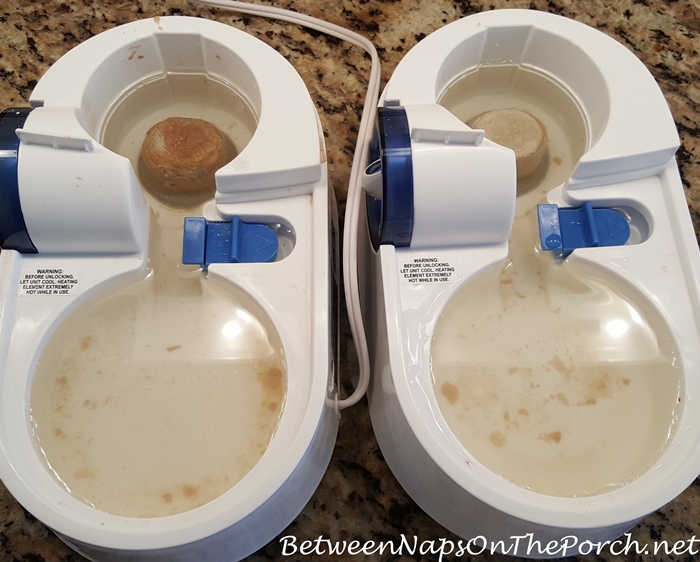
White dust on surfaces means mineral overload—switch to distilled water immediately. Musty odors indicate bacterial growth; discontinue use and deep-clean with vinegar. Worsening congestion after 24 hours of use signals over-humidification (check hygrometer) or a dirty unit. Never ignore these red flags—they turn relief tools into health hazards.
Essential Oil Cautions
Adding eucalyptus or menthol oils seems logical for congestion, but they can trigger asthma attacks or pet sensitivities. Never add oils to ultrasonic or steam units—their fine mist carries concentrated particles deep into lungs. If trying oils, use only in evaporative models with water-only settings first, and stop if irritation occurs.
Complementary Relief Strategies
Nasal Irrigation Enhances Results
Pair humidifier use with daily saline rinses using a neti pot or bulb syringe. The humidifier prevents post-rinse dryness, while irrigation flushes thick mucus. Use distilled water with pre-mixed saline packets—never tap water—to avoid rare but dangerous amoeba risks.
Temperature Therapy Techniques
Apply a warm compress (damp washcloth) over sinuses for 10 minutes to thin mucus, followed by a cold compress for 2 minutes to reduce swelling. Do this 2x daily while the humidifier runs for compounded relief.
Medication Timing Adjustments
Limit decongestant sprays to 3 days max to avoid rebound congestion. Time antihistamines (which dry mucus) with increased humidifier use—they work better when air isn’t parched.
When Home Remedies Aren’t Enough
Red Flags for Medical Attention
Seek an ENT specialist if:
– Congestion persists >7 days despite proper humidifier use
– You develop facial pain or green/yellow discharge >10 days
– Fever accompanies stuffiness (sign of infection)
These indicate sinusitis, polyps, or allergies requiring prescription treatment—not just dry air.
Specialist Evaluation Process
An ENT will assess nasal anatomy via endoscopy, test for allergies, and review medications affecting nasal moisture. They might prescribe steroid sprays or recommend humidity adjustments beyond standard ranges for your specific condition.
Measuring Success: Relief Indicators
Immediate Improvements (24-48 hours)
- Easier morning nose-blowing (less force needed)
- Reduced throat dryness upon waking
- Fewer nose-rubbing episodes
Long-term Benefits (1-2 weeks)
- Zero nighttime congestion wake-ups
- 80% less reliance on decongestant sprays
- Noticeably fewer seasonal congestion episodes
Track progress daily using a simple 1-10 scale for morning congestion. True success means waking at ≤3/10 stuffiness within 48 hours of correct humidifier use.
Final Note: A humidifier does help with stuffy nose—but only with precise humidity control (30-50%), distilled water, and rigorous cleaning. Pair it with nasal irrigation and targeted placement for drug-free relief that outperforms sprays. If congestion persists beyond a week, consult a specialist; your clear breathing is worth the investment. Start tonight: refill your unit with distilled water, set humidity to 42%, and wake up breathing freely.