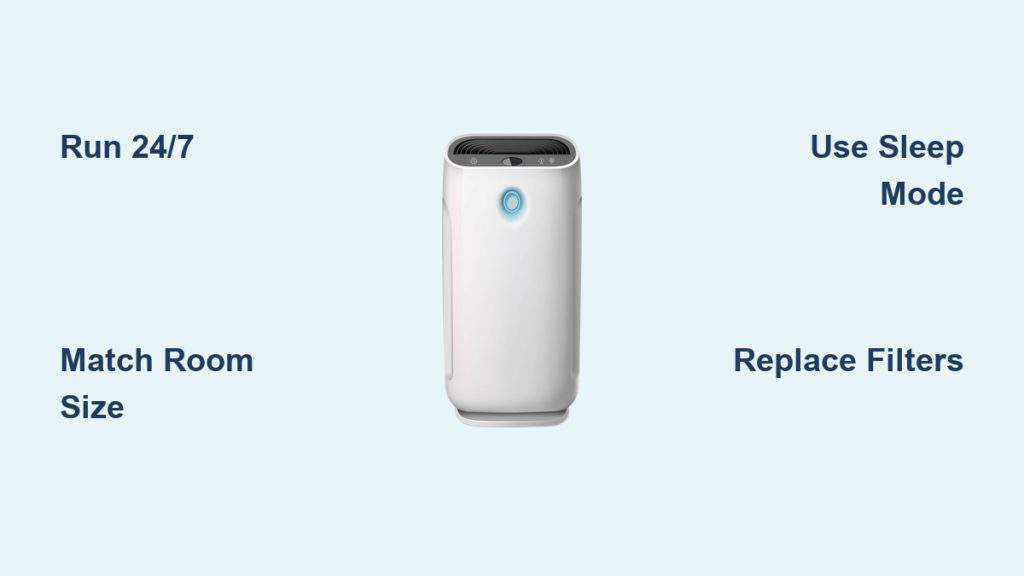
You’ve invested in an air purifier for your bedroom, but now you’re wondering: how long should you actually keep it running each day? This question keeps many health-conscious homeowners awake at night—ironically, since better sleep is often the reason they purchased the device in the first place. The truth is, there’s no universal timer setting that works for every bedroom. Your ideal runtime depends on several factors including room size, filter type, health concerns, and seasonal conditions. Getting this balance right means the difference between consistently clean air that supports deeper sleep and better respiratory health versus wasted energy and subpar results.
Most experts agree that continuous operation delivers the best air quality, but the reality of your specific situation might require adjustments. Whether you’re battling seasonal allergies, sharing your space with pets, or simply want to maximize your investment, understanding the precise runtime requirements for your bedroom will help you breathe easier—literally.
Continuous Operation for Maximum Protection
Why 24/7 Runtime Delivers Best Results
Running your air purifier around the clock provides the most consistent air quality in your bedroom. Airborne contaminants don’t take breaks—they continuously enter your space through doors, windows, and even on your clothing and hair. When your purifier operates non-stop, it captures these pollutants as soon as they appear rather than allowing them to accumulate between operating cycles. This constant filtration creates what experts call a “clean air envelope” around your sleeping area, significantly reducing your exposure to irritants while you’re most vulnerable.
Bedrooms typically remain closed for extended periods, especially during sleep, which traps pollutants inside with nowhere to escape. By keeping your purifier running continuously, you prevent this buildup of dust, dander, and other allergens that could disrupt your sleep quality. Modern units with auto-sensing technology automatically adjust fan speeds based on real-time air quality, making continuous operation more energy-efficient than older models that ran at fixed speeds regardless of actual need.
Energy Efficiency of Modern Air Purifiers
Concerns about electricity costs often prevent people from running their air purifiers continuously, but these worries are generally overblown. Most bedroom-sized air purifiers consume between 30 and 100 watts on medium settings—comparable to a standard light bulb. Running your unit 24/7 typically adds just $3 to $15 to your monthly electricity bill, depending on your local rates and the specific model.
When you consider the health benefits—including reduced allergy symptoms, fewer respiratory issues, and improved sleep quality—the modest energy cost becomes a worthwhile investment. ENERGY STAR certified models offer even greater efficiency, with some consuming less than 5 watts in sleep mode. These units make continuous operation practically negligible from an energy consumption perspective while delivering substantial health benefits.
Critical Factors Determining Your Runtime
Room Dimensions and Air Exchange Requirements
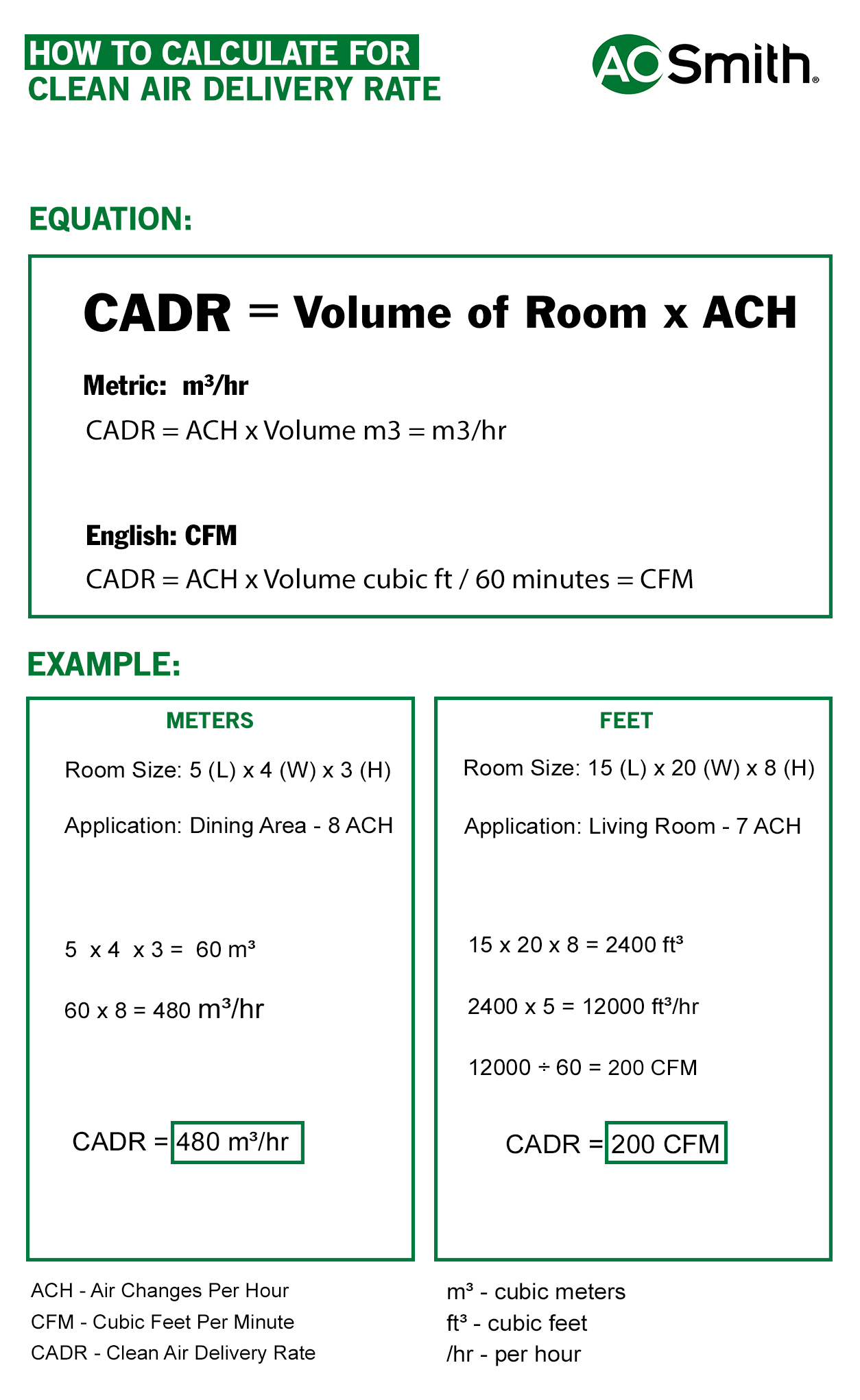
Your bedroom’s size directly impacts how long your air purifier needs to run to achieve proper air cleaning. Every unit has a Clean Air Delivery Rate (CADR) that indicates how quickly it can clean a specific room size. For optimal results, your purifier should complete four to five complete air changes per hour—meaning all the air in your room passes through the filter that many times every 60 minutes.
A standard 12×15 foot bedroom (180 square feet) with 8-foot ceilings contains approximately 1,440 cubic feet of air. A properly sized purifier for this space will clean the entire air volume multiple times per hour. If your unit is undersized, it will struggle to keep up even with continuous operation. Conversely, an oversized unit in a small bedroom will clean the air more quickly, potentially allowing for slightly reduced runtime while maintaining excellent air quality. Always match your purifier’s capacity to your actual room size for the most efficient operation.
Filter Technology Impact on Runtime

The type of filter in your air purifier significantly influences both runtime requirements and overall effectiveness. True HEPA filters capture 99.97% of particles 0.3 microns or larger, including dust, pollen, and pet dander. Units with genuine HEPA filters maintain consistent performance throughout their runtime since they don’t lose filtering capacity as they operate—unlike cheaper alternatives that may become less effective as they load with particles.
Activated carbon filters work differently—they adsorb gases, odors, and VOCs until they become saturated. While runtime itself doesn’t change much with carbon filters, their effectiveness for odor control diminishes over time regardless of how long you run the unit each day. This means you’ll need to replace carbon filters more frequently if odor removal is your primary concern, but the recommended runtime remains similar to units with HEPA-only filtration.
Nighttime Operation Strategies
Sleep Quality and Respiratory Benefits
Running your air purifier throughout the night delivers substantial advantages for sleep quality and respiratory health. During sleep, your breathing becomes deeper and more regular, meaning you inhale more air per breath—making clean bedroom air particularly crucial during these 6-8 hours. Research shows that improved air quality correlates with deeper sleep cycles, reduced snoring, and fewer nighttime allergy symptoms—all contributing to feeling more refreshed upon waking.
Many users report falling asleep faster and experiencing fewer nighttime awakenings when their air purifier runs continuously. The gentle white noise produced by most units also creates a soothing sound environment that masks disruptive noises from outside or within the home. For allergy sufferers, nighttime operation is especially critical since symptoms often worsen when lying down due to increased exposure to settled allergens.
Optimizing Settings for Undisturbed Sleep
Setting your air purifier to sleep mode or the lowest effective setting during nighttime hours provides the ideal balance between air cleaning and quiet operation. Sleep modes typically reduce fan speed and noise output while still maintaining adequate air circulation—most quality bedroom models operate below 25 decibels in this mode, quieter than a whisper.
If your unit has an auto mode with air quality sensors, it will automatically adjust to lower speeds during cleaner nighttime hours while ramping up if pollutants increase. For bedrooms with allergy sufferers, medium settings often provide the best compromise between noise levels and cleaning effectiveness. The key metric is ensuring your purifier completes at least two to three complete air changes during your sleeping period—most properly sized units accomplish this even on lower settings.
Cost-Benefit Analysis of Extended Runtime

Real-World Energy Consumption Data
Understanding the actual cost of continuous operation helps put runtime decisions in perspective. A typical bedroom air purifier running on medium setting (about 50 watts) consumes approximately 1.2 kilowatt-hours per day. At the U.S. average electricity rate of $0.13 per kWh, this translates to just $0.16 per day or about $4.80 monthly—less than the cost of a single specialty coffee.
Compared to other bedroom appliances, air purifiers are remarkably efficient. Running your purifier continuously costs significantly less than operating a small space heater (which can use 1,500 watts) or even many modern televisions. The health benefits of consistently clean air—including reduced need for allergy medications and fewer sick days—often far outweigh these modest operating costs. For most households, the incremental cost of continuous operation is negligible compared to the tangible health improvements it provides.
Strategic Runtime Reduction Opportunities
After Establishing Clean Air Baseline
Once your bedroom air quality reaches optimal levels, you might consider reducing runtime while maintaining acceptable air quality. In homes with minimal pollution sources and no allergy sufferers, running the purifier for 8-12 hours daily—particularly during sleeping hours and periods of room occupancy—may suffice. However, even in these ideal conditions, reducing runtime below 8 hours often allows contaminants to accumulate noticeably between operating periods.
The critical factor is your household’s specific pollution load. Homes with pets, smokers, or residents with respiratory conditions will see air quality degrade more quickly when the purifier is off. For most people, the marginal benefit of continuous operation outweighs the minimal additional cost, especially considering that modern units automatically reduce energy use during cleaner air conditions.
Seasonal Adjustments for Maximum Efficiency
Smart seasonal adjustments can optimize your runtime without sacrificing air quality. During pollen season, continuous operation is non-negotiable for allergy sufferers—reducing runtime even slightly can trigger symptoms. In winter months when homes are tightly sealed against cold air, continuous operation helps combat indoor pollutants from cooking, heating, and everyday activities.
During pleasant weather when you can open windows for natural ventilation, you might reduce runtime since outdoor air provides some passive air exchange. However, be mindful of local air quality conditions—on days with high pollen counts, wildfire smoke, or pollution alerts, continuous operation remains essential regardless of the season. Monitoring local air quality indexes helps you make informed decisions about runtime adjustments.
Maintenance Practices for Consistent Performance
Proper Filter Replacement Timing
Your runtime effectiveness depends heavily on timely filter replacement. Most manufacturers recommend replacing HEPA filters every 6-12 months and carbon filters every 3-6 months, but actual lifespan depends on runtime and pollution levels. Continuous operation doesn’t significantly accelerate filter wear—the main factors are total air volume processed and pollutant concentration in your environment.
Watch for these signs your filter needs replacement: visible dust buildup on the filter surface, reduced airflow from the unit, or a return of allergy symptoms that had previously improved. Some purifiers feature smart indicators that monitor performance to alert you when replacement is needed. Keeping track of installation dates ensures your purifier maintains peak efficiency regardless of runtime.
Strategic Placement for Maximum Coverage
Where you position your air purifier dramatically affects its effectiveness regardless of runtime. Place your unit at least 2-3 feet away from walls and furniture to ensure unobstructed airflow intake and output. For optimal results in a bedroom, position the purifier so it draws air from the main breathing zone—typically near the bed at head height.
Avoid corners or locations behind furniture, as these create dead zones where air doesn’t circulate effectively. If central placement isn’t possible, position the unit where it can pull air across your sleeping area. Proper placement means your purifier achieves maximum air cleaning efficiency with minimal runtime, ensuring you get the most benefit from every hour it operates.