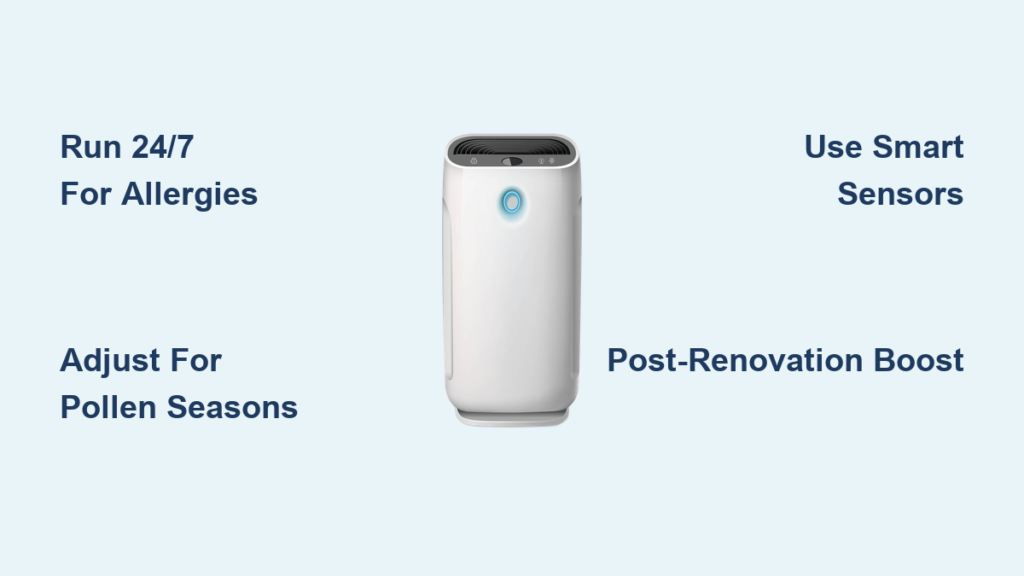
If your air purifier sits quietly in the corner while you wonder whether it’s working hard enough or wasting energy, you’re not alone. Many homeowners struggle with determining the optimal runtime for their air purification systems. Running your air purifier too infrequently leaves indoor air pollutants unchecked, while operating it unnecessarily can drive up electricity costs. The right answer depends on several factors including your specific health needs, local air quality conditions, and the type of purifier you own. This guide cuts through the confusion by providing clear, actionable recommendations for determining exactly how often to run your air purifier based on your unique situation—so you can breathe easier without wasting energy.
Continuous Operation Benefits for High-Risk Households
Why 24/7 Operation Matters for Allergy Sufferers
Running your air purifier continuously provides significant advantages if you or family members suffer from allergies, asthma, or other respiratory conditions. Pollutants like pet dander, pollen, and dust mites constantly circulate in your home environment, and intermittent operation allows these particles to accumulate between cycles. Continuous operation creates a steady-state environment where airborne contaminants never reach problematic levels. For households with severe allergy sufferers, maintaining this constant clean air environment prevents symptom triggers before they can affect sensitive individuals. The purification process works most efficiently when it maintains clean air rather than constantly playing catch-up with accumulating pollutants.
Managing Airborne Pathogens During Illness Outbreaks
When someone in your home is sick with a cold, flu, or more serious respiratory illness, continuous air purifier operation becomes critical for reducing transmission risk. Airborne viruses and bacteria can linger in indoor environments for hours, creating ongoing exposure risk. Running your purifier without interruption captures these pathogens before they can spread throughout your living space. During active illness periods in your household, maintain maximum continuous operation—ideally with HEPA filtration—to significantly reduce the concentration of infectious particles in the air. This precaution proves especially valuable during seasonal illness outbreaks or pandemic concerns when minimizing airborne transmission becomes a health priority.
Strategic Intermittent Operation for Energy Efficiency
Calculating Optimal Runtime Based on Room Occupancy
You don’t need to run your air purifier constantly when rooms remain unoccupied for extended periods. A strategic approach adjusts runtime based on actual room usage patterns. For bedrooms, operate your purifier during sleeping hours when you’re most vulnerable to airborne irritants. In living areas, run the unit during peak occupancy times but reduce or pause operation when the space sits empty. Many modern air purifiers feature occupancy sensors or programmable timers that automate this process—set your device to run at medium or high settings 30 minutes before you typically enter a room, then reduce to maintenance mode during active use. This targeted approach maintains air quality where and when you need it most while conserving energy during unoccupied periods.
Seasonal Adjustments for Changing Air Quality Conditions
Your air purifier needs vary significantly throughout the year as outdoor conditions change. During high pollen seasons (typically spring for trees, summer for grasses, and fall for weeds), run your purifier continuously with windows closed to prevent outdoor allergens from entering your home. In winter months when indoor air becomes stagnant from sealed windows, operate your purifier for 4-8 hours daily to address accumulated indoor pollutants. During wildfire season or periods of poor outdoor air quality, maintain continuous operation with all windows and doors sealed. Monitor local air quality indexes through apps or websites, and increase your purifier’s runtime whenever outdoor AQI exceeds 50—this proactive approach prevents outdoor pollutants from degrading your indoor air quality.
Model-Specific Runtime Recommendations

HEPA Filter System Usage Guidelines
HEPA filter-based air purifiers deliver the most effective particle removal but require specific operational considerations. These systems work best when run continuously in occupied spaces, as the mechanical filtration process needs constant operation to maintain clean air conditions. Most HEPA purifiers feature multiple speed settings—use higher speeds during initial “clean-up” phases when addressing visible smoke or strong odors, then reduce to lower, quieter settings for maintenance mode. Check your unit’s Clean Air Delivery Rate (CADR) specifications to determine appropriate room sizing; running an undersized HEPA purifier in too large a space necessitates longer runtime to achieve effective air changes per hour. For standard home use with moderate air quality concerns, maintain HEPA purifiers on low-to-medium settings continuously, increasing to high settings during cooking, cleaning, or high-pollution events.
Activated Carbon Filter System Maintenance Schedule

Air purifiers with activated carbon filters require different operational strategies than pure particle-removing models. Carbon filters excel at capturing gases, odors, and VOCs but saturate more quickly than mechanical filters. For homes with significant odor concerns (from cooking, pets, or off-gassing furniture), run carbon-equipped purifiers continuously to prevent volatile compounds from accumulating. The critical factor with carbon filters is monitoring saturation—most require replacement every 3-6 months depending on usage intensity and pollutant exposure. When you notice odors returning despite continuous operation, this signals carbon filter exhaustion. Unlike particle filters that maintain effectiveness until visibly clogged, carbon filters lose adsorption capacity gradually, making runtime adjustments alone insufficient when the media becomes saturated.
Energy Consumption Considerations by Usage Pattern
Calculating Daily Operating Costs by Runtime
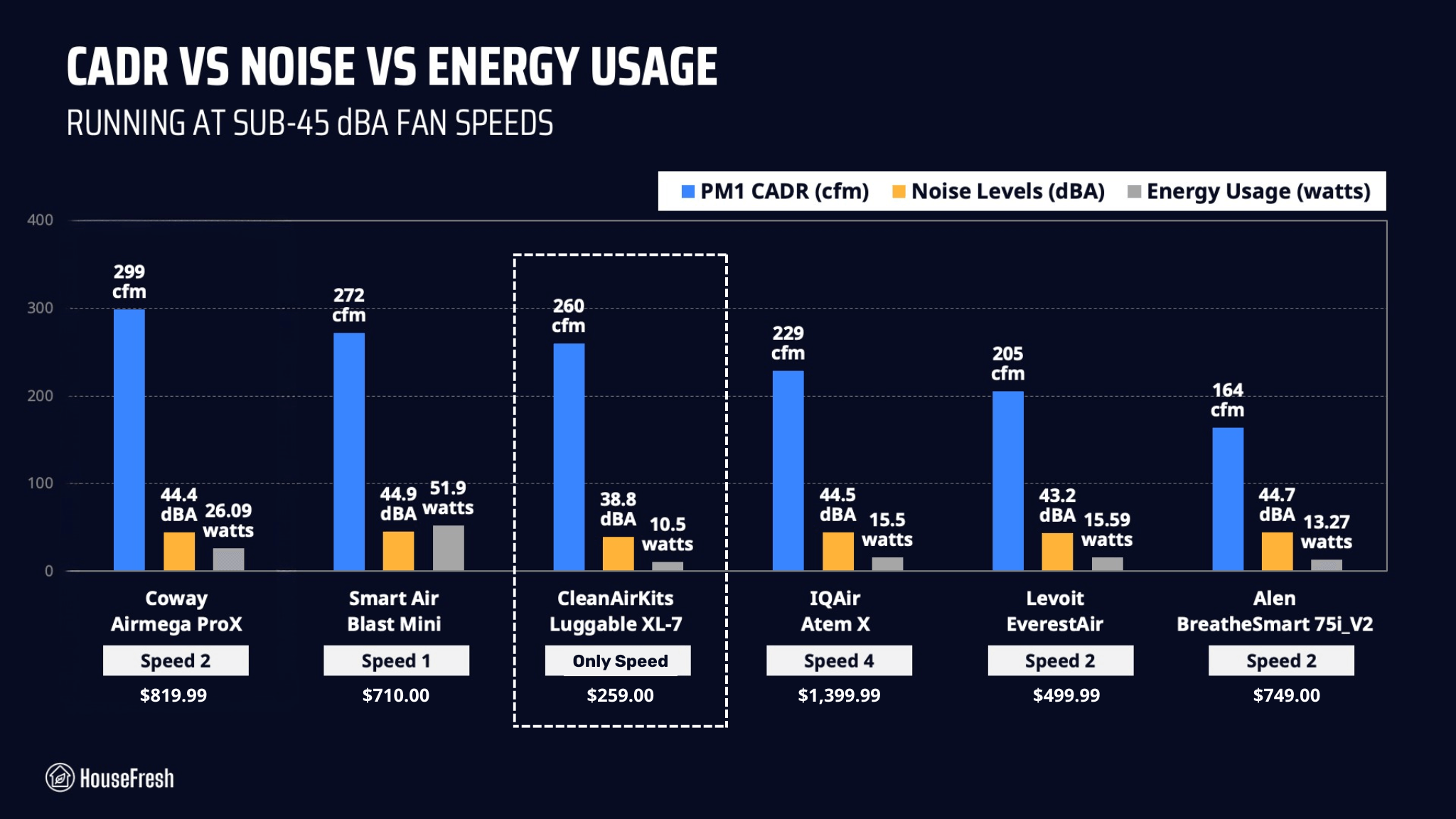
Understanding your air purifier’s energy consumption helps determine cost-effective runtime strategies. Most modern units consume between 5-70 watts depending on fan speed, with many efficient models using less power on low settings than a standard LED lightbulb. Calculate your specific operating cost by multiplying the unit’s wattage (found on the spec sheet or energy label) by your local electricity rate, then by daily runtime hours. For example, a 20-watt purifier running continuously at $0.15/kWh costs approximately $0.07 per day or $2.15 monthly. Higher settings increase consumption significantly—running the same unit at maximum speed (50 watts) would cost $0.18 daily. This calculation reveals that continuous low-speed operation often proves more economical than intermittent high-speed use while delivering superior air quality.
Smart Features That Optimize Runtime Efficiency
Modern air purifiers incorporate intelligent features that automatically adjust runtime based on actual air quality needs. Units with particle sensors detect pollution spikes and increase fan speed temporarily before returning to energy-saving modes. Programmable timers allow scheduling operation around your daily routine, while Wi-Fi connectivity enables remote adjustments when your plans change unexpectedly. Some advanced models integrate with smart home systems to coordinate operation with HVAC usage or occupancy sensors. These features eliminate guesswork about “how often to run air purifier” by making data-driven decisions about when increased purification is necessary. When shopping for a new unit, prioritize models with these automation capabilities to achieve optimal air quality with minimal energy waste.
Special Circumstances Requiring Adjusted Operation
Post-Renovation Air Quality Management
After home renovation or construction work, significantly increase your air purifier runtime to address elevated particle levels. Construction activities generate fine dust particles that remain airborne for days or weeks after work completes. Run your purifier continuously for 48-72 hours immediately following renovation work, preferably with windows closed to prevent outdoor particles from entering. Continue extended operation (12-24 hours daily) for 1-2 weeks post-construction until airborne dust levels normalize. For major renovations involving drywall, sanding, or demolition, consider using a purifier specifically rated for construction dust with appropriate pre-filters to prevent premature main filter clogging.
Pet Owner Air Purification Strategies
Households with multiple pets require adjusted air purifier operation to manage constant dander and hair circulation. Run your purifier continuously in main living areas where pets spend time, with particular attention to sleeping quarters where dander accumulates in bedding. Increase runtime by 2-4 hours daily during seasonal shedding periods when pet hair becomes especially problematic. Position purifiers strategically near pet bedding areas but ensure adequate clearance around the unit to prevent hair buildup on intake vents. For homes with multiple pets, consider running additional units in separate zones rather than relying on a single oversized purifier—this distributed approach maintains cleaner air throughout your living space with more efficient energy use.
Final Note: The ideal air purifier runtime balances health needs with energy efficiency. Most households benefit from continuous low-speed operation with strategic increases during high-pollution events or specific usage periods. Monitor your indoor air quality and adjust based on visible dust, odors, or health symptoms. Regular filter maintenance ensures your purifier operates efficiently regardless of runtime, while smart features help optimize usage patterns automatically. By implementing these tailored strategies, you’ll create a healthier indoor environment without unnecessary energy expenditure—breathing cleaner air has never been this straightforward.