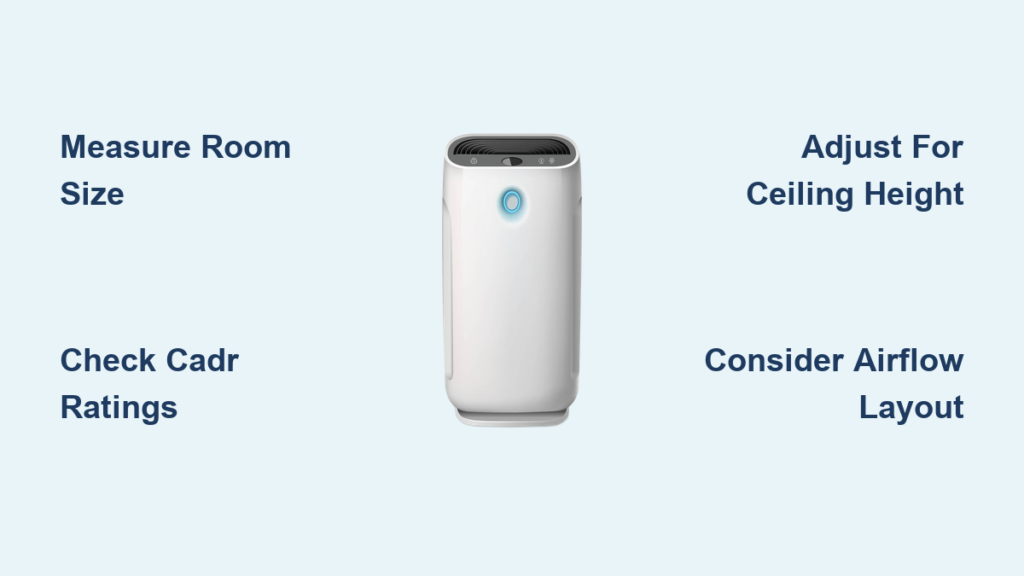
You’ve decided to invest in an air purifier to improve your indoor air quality, but now you’re facing a critical question: what size unit do you actually need? Many homeowners make the costly mistake of purchasing an undersized air purifier that can’t effectively clean their space, leaving them frustrated with poor results despite spending good money. The right size air purifier can remove 99.97% of airborne particles as small as 0.3 microns from your breathing space, but choosing incorrectly means your unit will run constantly without making a meaningful difference in air quality.
Selecting the proper air purifier size isn’t as simple as matching square footage to a product description. Manufacturers often exaggerate coverage claims, and room layout, ceiling height, and specific air quality concerns dramatically impact what will work effectively in your space. This guide cuts through the marketing hype to give you a precise, step-by-step method for determining exactly what size air purifier you need for your specific living situation—whether you’re dealing with pet dander in a studio apartment or wildfire smoke in a large open-concept home.
Calculate Your Exact Room Size Requirements
Before comparing models, you need accurate measurements of the space where you’ll use your air purifier. Simply checking your home’s total square footage won’t give you the precision needed for effective air cleaning.
Measure Room Dimensions Correctly
Grab a tape measure and record the length and width of each room where you plan to use an air purifier. Multiply these numbers to get the square footage. For irregularly shaped rooms, divide the space into rectangles, calculate each section, then add them together. Don’t forget to measure ceiling height—standard 8-foot ceilings require different capacity than vaulted 10-12 foot ceilings common in newer homes.
Adjust for Real-World Air Cleaning Needs
Manufacturers typically base coverage claims on ideal laboratory conditions with 8-foot ceilings. For every foot above 8 feet, increase your required capacity by 12%. If you have 9-foot ceilings, multiply your square footage by 1.12. For rooms with multiple entry points or high traffic, add 25% to your calculated square footage. Pet owners should increase their target capacity by 20% to handle additional dander and odors.
Why Manufacturer Coverage Claims Are Misleading
Most air purifier packaging prominently displays “covers up to 300 sq ft” or similar claims, but these numbers often represent best-case scenarios under perfect conditions. Independent testing shows many units only deliver 60-70% of their claimed coverage in real homes with furniture, varying ceiling heights, and multiple air quality challenges. Always select a unit rated for at least 25% more square footage than your actual space to ensure effective cleaning.
Understand CADR Ratings: The True Measure of Cleaning Power

The Clean Air Delivery Rate (CADR) is the industry-standard measurement that reveals an air purifier’s actual performance capacity, cutting through vague marketing claims about “suitable for medium rooms.”
How CADR Translates to Room Size
CADR measures how quickly an air purifier delivers clean air for three particle sizes: smoke (0.1-0.3 microns), dust (0.5-3 microns), and pollen (5-11 microns). For proper sizing, focus on the smoke CADR rating, as these smallest particles are hardest to capture and most relevant for general air quality. As a rule of thumb, your air purifier’s smoke CADR should equal at least two-thirds of your room’s square footage. For a 300 sq ft room, look for a smoke CADR of at least 200.
Finding Verified CADR Information
Look for the AHAM Verifide® seal on air purifier packaging or product pages, which confirms independent testing of CADR ratings. Many online listings omit CADR information or only show manufacturer claims without verification. When comparing models, prioritize units with published CADR numbers over those that only list “room size” recommendations.
Match Purifier Size to Your Specific Air Quality Concerns
The right air purifier size depends significantly on what contaminants you’re trying to remove from your indoor air.
Allergy and Asthma Sufferers Need Higher Capacity
If you’re managing allergies or asthma, you need more powerful air cleaning. Increase your target CADR by 30% beyond standard recommendations. For severe allergy sufferers in a 200 sq ft bedroom, instead of a unit with 135 smoke CADR (two-thirds of 200), choose one with at least 175 smoke CADR to ensure thorough removal of pollen, dust mites, and other triggers.
Pet Owners Require Special Considerations
Pets dramatically increase the air cleaning load in your home. For homes with one pet, increase your required capacity by 20%. For multiple pets or heavy shedding breeds, boost it by 35-40%. Pet owners should also prioritize air purifiers with pre-filters designed to capture large hair particles before they clog the main HEPA filter, extending filter life and maintaining optimal airflow.
Smoke and Odor Removal Needs More Powerful Units
Wildfire smoke, cooking odors, or tobacco residue require even greater capacity. Look for units with smoke CADR ratings equal to 80-90% of your room’s square footage rather than the standard two-thirds guideline. These situations also demand activated carbon filters with substantial weight (at least 2.5 pounds for medium rooms) to effectively absorb gaseous pollutants.
Account for Room Layout and Placement Factors

Where you place your air purifier significantly impacts how effectively it can clean your space, which affects what size unit you need.
The Importance of Airflow Pathways
Air purifiers work by drawing in contaminated air and expelling clean air. Furniture placement, room dividers, and doorway configurations can create barriers that reduce effectiveness. For rooms with complex layouts or multiple obstacles, increase your required capacity by 15-20%. Open floor plans require special attention—measure the entire connected space rather than individual rooms.
Optimal Placement Techniques
Place your air purifier in an open area with at least 12 inches of clearance on all sides, preferably near the center of the room or in the main pathway of air movement. Avoid corners or behind furniture. For multi-story homes, you’ll need separate units for each floor unless you have an open staircase that allows significant air movement between levels.
Determine Runtime Needs for Your Situation
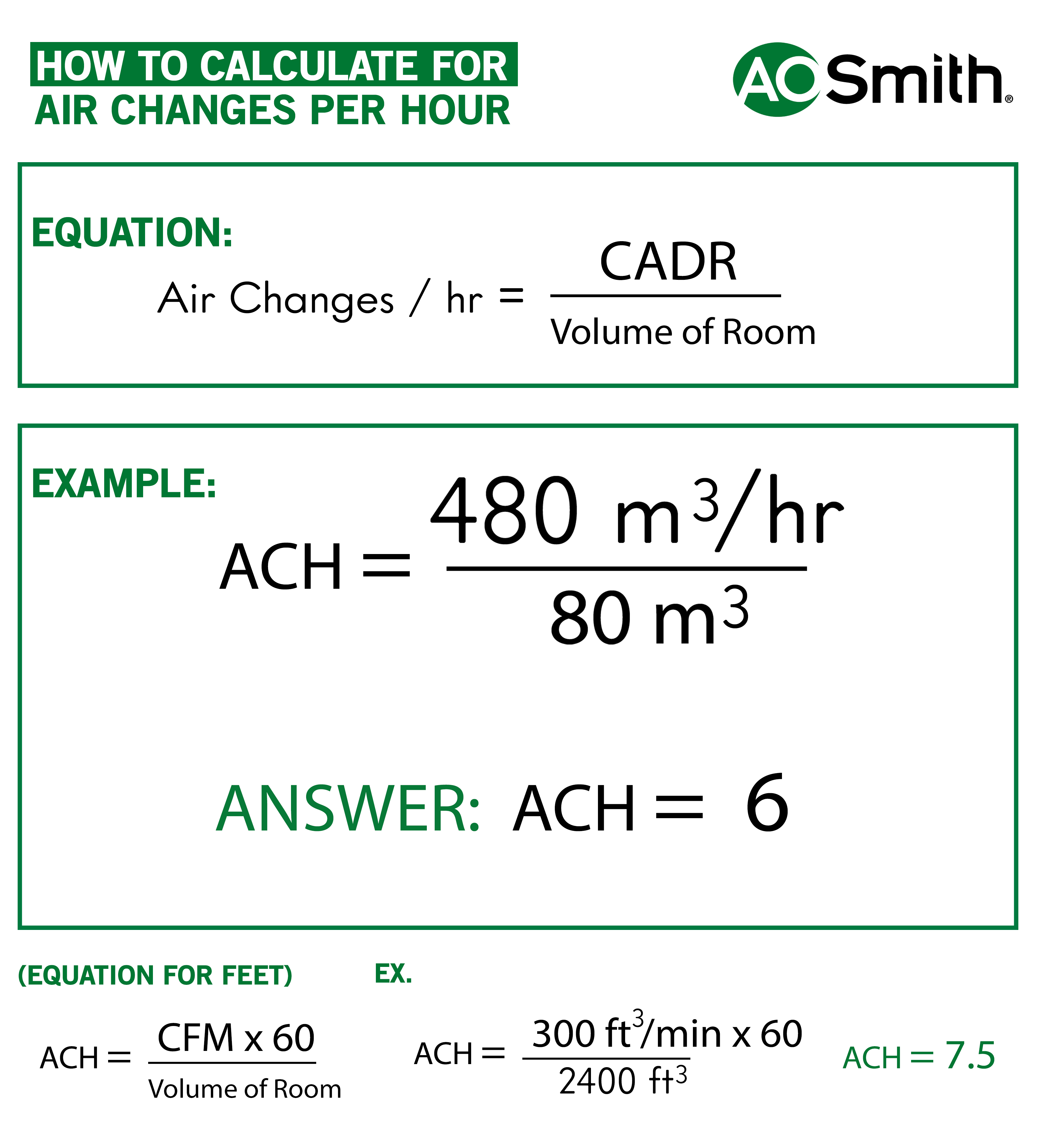
The size air purifier you need depends on how quickly you want it to clean your air and how long you plan to run it.
Understanding Air Changes Per Hour
Most experts recommend air purifiers that can achieve 4-5 air changes per hour for optimal air quality. This means the unit should be able to process the entire volume of air in your room 4-5 times each hour. To calculate this requirement: multiply your room’s square footage by ceiling height, then multiply by 4-5, then divide by 60 to get the required cubic feet per minute (CFM) airflow.
Balancing Noise with Performance
Higher-capacity air purifiers often produce more noise at maximum settings. If you plan to use your air purifier in a bedroom while sleeping, you may need a larger unit that can operate effectively at lower, quieter settings. A unit slightly oversized for your space can run more quietly while still delivering adequate air changes.
Avoid These Common Sizing Mistakes
Many consumers repeat the same errors when selecting air purifier size, leading to disappointing results and wasted money.
Mistake #1: Relying Solely on Manufacturer Room Size Claims
As mentioned earlier, manufacturer claims often represent ideal conditions that don’t reflect real-world performance. Always verify with CADR ratings and adjust for your specific circumstances.
Mistake #2: Ignoring Ceiling Height
Standard sizing calculations assume 8-foot ceilings. In homes with 9-10 foot ceilings (common in newer construction), you need a significantly more powerful unit. For every additional foot of ceiling height, increase your required capacity by 12%.
Mistake #3: Buying One Unit for Multiple Rooms
Air purifiers only clean the air in the room where they’re placed. Moving a single unit between rooms means none of your spaces receive continuous air cleaning. For whole-home coverage, you’ll need multiple appropriately sized units or a system integrated with your HVAC.
Final Size Selection Checklist
Before purchasing, run through this verification process to ensure you’ve selected the right air purifier size:
- Calculated exact room dimensions including ceiling height
- Adjusted for pets, allergies, or specific air quality concerns
- Verified CADR ratings rather than relying on room size claims
- Confirmed adequate clearance space for proper airflow
- Considered noise levels at required operating speeds
- Accounted for room layout and obstacles
- Selected a unit with capacity 20-25% greater than minimum requirements
Choosing the right size air purifier transforms it from an expensive paperweight into an effective tool for cleaner, healthier indoor air. By following these precise sizing guidelines rather than marketing claims, you’ll ensure your investment delivers measurable improvements to your home’s air quality. Remember that a properly sized air purifier should noticeably improve air freshness within 20-30 minutes of operation in your target space—anything less likely means you’ve undersized your unit.