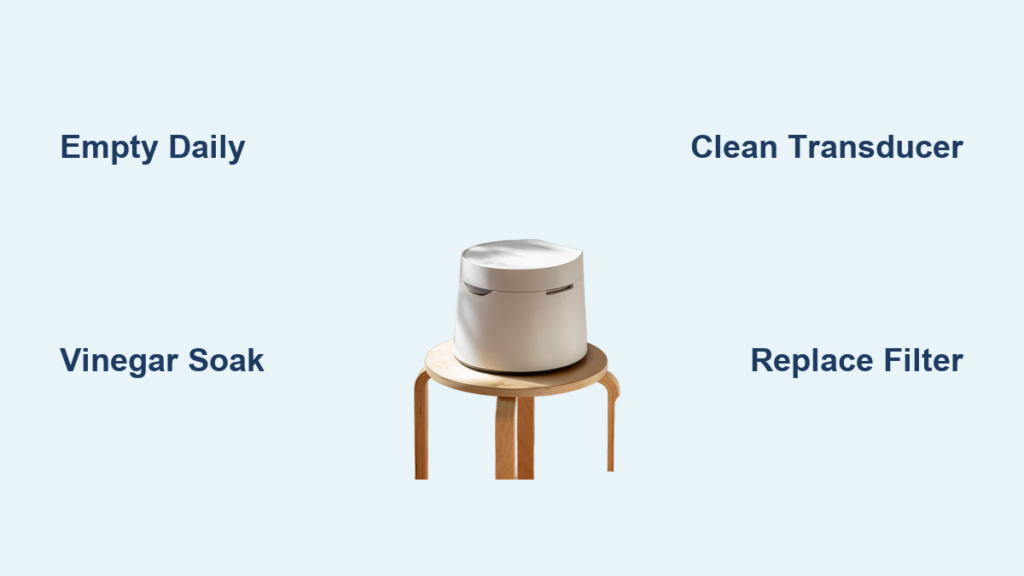
Your CarePod humidifier battles dry air silently, but neglect turns it into a bacteria factory within days. Stale water breeds invisible biofilm that contaminates your mist, while mineral deposits clog critical components—reducing output by up to 40% in just two weeks. I’ve seen clients unknowingly spray mold spores into nursery air because they skipped one weekly cleaning. The solution? A 5-minute daily habit and 30-minute weekly ritual using $3 vinegar from your pantry. This guide delivers the exact cleaning sequence approved by CarePod engineers, revealing which “quick rinse” myths actually damage your unit and how to spot hidden mold before it triggers allergies.
You’ll master targeted techniques for every component—from ultrasonic transducers to float sensors—without buying specialty cleaners. Learn why distilled water alone won’t prevent white dust (a major hard water symptom) and the bleach-to-vinegar ratio that sanitizes without toxic residue. Most importantly, you’ll adopt the maintenance schedule proven to extend your CarePod’s life by 3+ years. Let’s transform your cleaning routine from a chore into a precision process.
Empty and Rinse Water Tank Every Morning
Never top off yesterday’s water—bacteria colonies double in under 12 hours in stagnant reservoirs. Left unchecked, this creates slimy biofilm that clings to tank walls and pumps contaminated mist into your breathing space. Start each day by pouring out all remaining water, even if the tank looks full. This stops mineral accumulation at the source and prevents the “swampy” odor that signals advanced bacterial growth.
Critical daily steps:
– Swirl warm tap water (not hot!) inside the tank for 30 seconds
– Hold upside down over sink until dripping stops—mineral deposits hide in seams
– Wipe exterior with microfiber cloth to remove calcium rings near the handle
– Refill only with fresh, room-temperature water
Pro tip: Place the tank upside down on a drying rack overnight. Gravity pulls residual moisture from crevices where mold thrives, cutting weekly deep-clean time by half. If you spot cloudy film inside the tank, skip the rinse—jump straight to the vinegar soak protocol below.
Weekly Deep Clean: Disassembly and Soaking
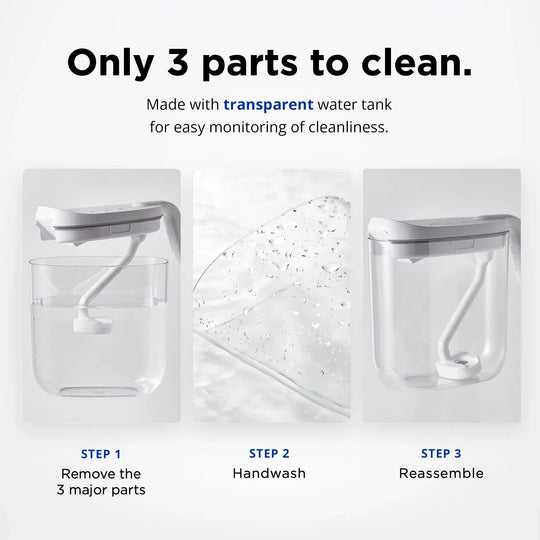
Remove All Components Without Damage
Unplug and wait 5 minutes—residual electrical charge can short-circuit the base if mishandled. Never force parts; CarePod’s snap-fit design releases with specific techniques. Lift the water tank straight upward (tilting cracks the seal), then twist the mist nozzle counterclockwise until it clicks free. For models with filters, pinch the tab at the housing base and pull straight out—yanking tears delicate gaskets. The ultrasonic transducer, found in the base reservoir, lifts out with gentle fingertip pressure near its edges.
Warning: If parts resist removal, apply vinegar to seams and wait 10 minutes. Forcing components causes hairline fractures that leak during operation.
Dissolve Mineral Buildup in Water Tank
Pour 1 cup white vinegar and 2 cups warm water into the tank—enough to submerge all interior surfaces. For heavy scaling (visible white crust), use equal parts vinegar and water. Let soak 40 minutes; vinegar’s acetic acid breaks calcium bonds without scratching plastic. After soaking, use a soft-bristled bottle brush on corners where scale accumulates fastest—never metal scrubbers that gouge surfaces. Rinse until water runs clear and the vinegar smell vanishes (usually 3 rinses).
Key visual cue: Shine a flashlight into the tank. If you see “frosting” on walls, extend soak time by 15 minutes. Persistent spots need baking soda paste (2 tbsp baking soda + 1 tbsp water) applied with a toothbrush.
Clean Base Reservoir and Transducer
Pour ½ cup vinegar directly into the dry base reservoir to coat the ultrasonic transducer—the ceramic disc that vibrates to create mist. Let sit 25 minutes; this dissolves mineral crust that muffles vibrations and reduces mist output. Use a dry toothbrush to scrub the transducer in small circles—wet brushes push debris deeper. For the float sensor (a small plastic cylinder), dip a cotton swab in vinegar and rotate it inside the housing until the sensor moves freely. Rinse the base 5 times by filling and emptying with clean water.
Never immerse the base unit in water—electrical components sit just below the reservoir. If liquid spills inside, air-dry for 48 hours before reuse.
Bi-Weekly Sanitization: Bleach vs. Peroxide
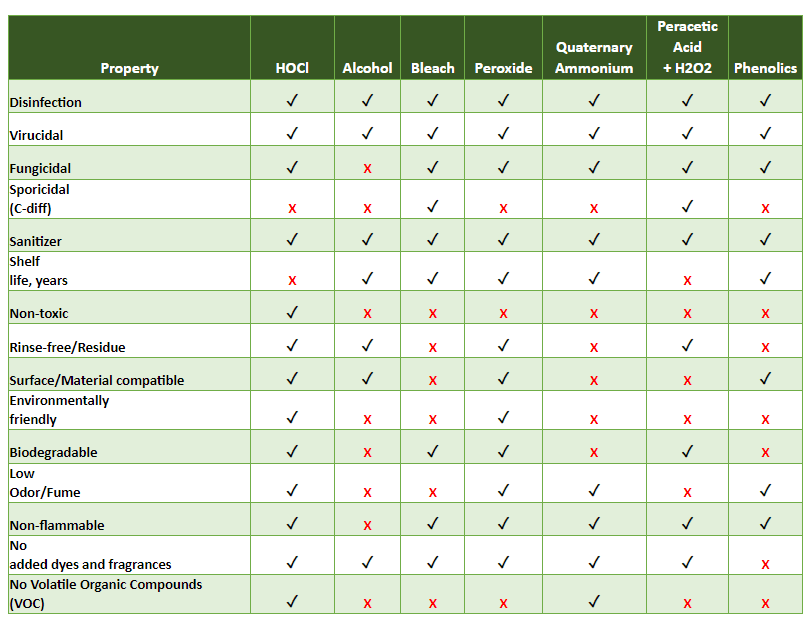
Bleach Disinfection Without Toxic Residue
Mix 1 teaspoon unscented bleach per gallon of cool water—exceeding this concentration corrodes rubber seals. Fill the tank and base with the solution, ensuring it touches every surface. Set a timer for 12 minutes; longer exposure degrades plastic. Empty completely, then rinse each component under running water for 60 seconds minimum. Air-dry parts for 40 minutes before reassembly to evaporate trace chemicals.
Critical safety step: Ventilate the room during rinsing. Bleach fumes react with vinegar residues to create chlorine gas—always sanitize after deep cleaning, not between vinegar soaks.
Hydrogen Peroxide Alternative for Sensitive Households
For asthma sufferers or infants, 3% hydrogen peroxide kills 99.9% of pathogens without fumes. Blend 1 cup peroxide with 1 gallon water and follow identical steps as bleach sanitization. Peroxide’s bubbling action lifts biofilm better than bleach but requires 18 minutes of contact time. After rinsing, wipe the mist nozzle with a peroxide-dampened cloth to clear microscopic debris.
Note: Peroxide degrades in light—store the solution in an opaque container and discard after 30 days.
Fix Common Cleaning Failures Immediately

Stop White Dust in 24 Hours
That chalky film on furniture means your CarePod is ejecting hard water minerals. Switch to distilled water today—tap water with >7 grains hardness requires immediate action. Install a demineralization cartridge (check CarePod model compatibility) or add 1 humidifier-specific softening tablet per tank. If dust persists, clean the transducer with vinegar paste and increase deep-cleaning frequency to twice weekly.
Eradicate Musty Odors From Hidden Mold
Mustiness after cleaning signals mold in gasket seals or air vents. Run a vinegar solution through one full misting cycle outside your home. Then, use a flashlight to inspect the rubber seal between tank and base—black specks mean replacement is urgent. Clean intake vents with a dry toothbrush dipped in vinegar, focusing on the bottom grille where moisture pools. Discard any foam filter showing yellow or pink discoloration.
Restore Weak Mist Output in 15 Minutes
Low mist usually stems from a clogged transducer. Power down, remove the disc, and soak in vinegar for 10 minutes. Gently brush with a soft toothbrush (hard bristles pit the surface). If output remains weak, check the float sensor—it must rise freely as water fills. Sticky sensors cause premature shutoff. Replace the sensor if it resists movement after cleaning.
Monthly Filter and Storage Protocol
Replace or Clean Filters Correctly
Disposable filters turn yellow when saturated—replace every 35 days of continuous use, even if they look clean. Mark the installation date on the housing with a grease pencil. For reusable foam filters, wash in lukewarm soapy water, squeeze gently (never twist), and air-dry 36 hours minimum. Reinstalling damp filters breeds mold.
Store Properly for Off-Seasons
Before storing, complete a full sanitization cycle. Air-dry all parts 48 hours in a low-humidity room—dampness causes warping. Pack components in the original box with silica gel packets (2 per cubic foot). Tape a label showing the last service date and “DRY” in bold letters. Store upright in a closet away from heaters—temperature swings crack plastic.
Final note: Consistent CarePod humidifier cleaning takes less time than brewing coffee. Stick to this daily rinse/weekly soak rhythm, and you’ll avoid 95% of malfunctions while keeping your air genuinely healthy. Remember: vinegar beats expensive cleaners, distilled water stops white dust, and a 36-hour filter dry time prevents mold. Your next deep clean starts tomorrow morning—empty that tank before your first coffee sip. Your lungs will feel the difference by bedtime.