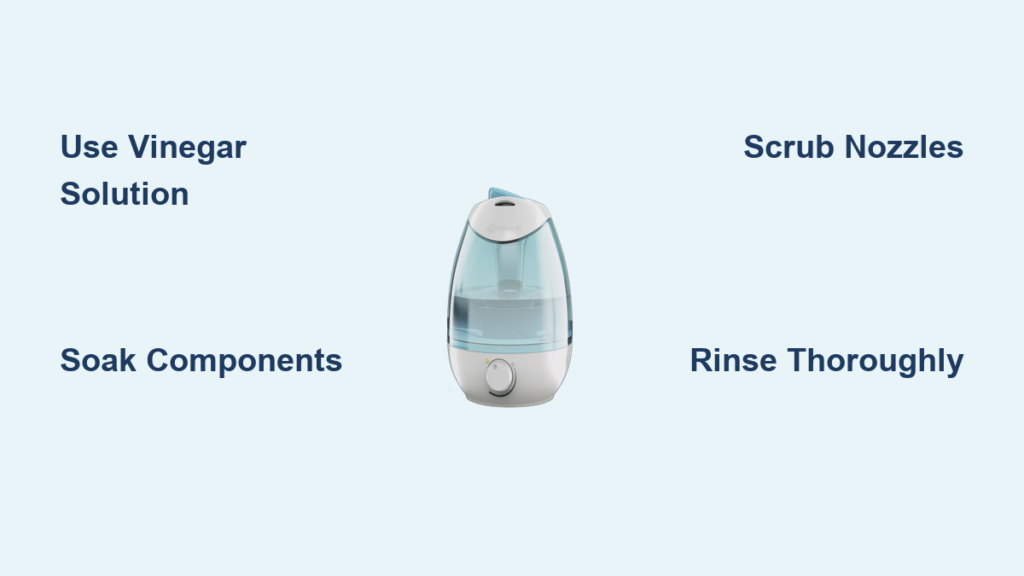
That quiet hum from your bedroom corner promises relief from dry sinuses and chapped lips, but what if your trusty cool mist humidifier is secretly spewing mold spores and bacteria? Without weekly cleaning, mineral deposits and microbial growth transform your health helper into a hazard—especially during winter when you run it constantly. Vinegar’s acetic acid dissolves stubborn scale while killing 99% of harmful microorganisms, making it the perfect non-toxic solution for regular maintenance. This guide reveals exactly how to deep-clean your humidifier using simple white vinegar, restoring clean mist output and preventing respiratory irritation. You’ll learn precise soaking times, scrubbing techniques for hidden crevices, and critical mistakes that damage your unit.
Essential Cleaning Supplies You Must Have

Gather these five items before starting: distilled white vinegar (not apple cider or cleaning vinegar), distilled water, a soft-bristled brush or non-scratch sponge, lint-free cloths, and a dedicated toothbrush for tight spaces. Never substitute tap water for distilled—it contains minerals that accelerate buildup. Keep a full gallon of vinegar on hand; severe scale might require undiluted soaking overnight. Your soft-bristled brush should feel flexible against plastic—rigid bristles scratch surfaces where bacteria hide.
Critical Safety Supplies Warning
Never mix vinegar with bleach—this creates toxic chlorine gas. Use vinegar alone, then wait 24 hours before considering bleach for mold emergencies. If your unit has a wick filter (common in evaporative models), skip the cleaning supplies list entirely—these paper filters disintegrate when wet and must be replaced, not cleaned.
Power Down and Disassemble Safely
Unplug your humidifier and wait 10 minutes before touching any components. Electricity and water create lethal risks during disassembly. Empty stagnant water immediately into a sink—never pour it on houseplants as it contains concentrated minerals and bacteria. Remove the water tank by lifting straight up; some models require twisting or pressing release buttons. Check manufacturer instructions if resistance occurs—forcing parts causes cracks.
Filter Removal Protocol
Wick filters should never contact liquid. If yours appears yellowed or stiff, discard it immediately—attempting to clean it spreads mold spores. Only washable filters (typically metal mesh) get submerged later. Disassemble all removable parts: mist nozzles, tank caps, and float sensors. Each component hides mineral deposits that reduce mist output if ignored.
Mix Perfect Vinegar Solutions for Your Water Hardness
Create a 1:1 vinegar-to-distilled-water solution for standard cleaning—this dissolves light scale without damaging plastic. Use 1 cup of each for tanks under 1 gallon capacity. In hard water areas (if you see white crusty deposits weekly), switch to undiluted vinegar for heavy buildup. Soft water users can reduce vinegar to a 1:2 ratio. Always use room-temperature vinegar; cold liquid from the fridge works slower, while heated vinegar warps components.
Valve Mechanism Soaking Hack
If your tank has a bottom valve, press it while filled with vinegar solution. This flushes acetic acid through the release system, dissolving mineral blockages that cause weak mist output. For models with internal sensors, avoid submerging electronic parts—apply vinegar via cloth instead.
Strategic Soaking Process for Maximum Effectiveness
Pour vinegar solution directly into the base until it covers the ultrasonic disc or heating element. Let it sit 20 minutes minimum—this dissolves the mineral rings that form around mist outlets. Fill the water tank to the MAX line with solution and soak 30 minutes; extend to 2 hours for thick deposits. Submerge small parts like nozzles in a separate container for 15 minutes.
Tank Cap Deep-Cleaning Trick
Place tank caps upside down in your soaking container. Mineral deposits collect in cap crevices, clogging mist flow. Vinegar’s acidity breaks these down within minutes—no scrubbing needed for light buildup.
Scrub Away Stubborn Deposits Without Damage
After draining, use your toothbrush to scrub tank corners in small circles—this dislodges the gray film left by stagnant water. Focus on the tank-base junction where debris accumulates fastest. For the base interior, gently rub the mist outlet with a vinegar-dampened cloth; aggressive scrubbing cracks ultrasonic discs.
Scale Removal Warning
Never use steel wool or abrasive pads—they scratch plastic surfaces, creating breeding grounds for bacteria. If mineral deposits resist brushing, re-soak in undiluted vinegar for 10 minutes before retrying. Check valve mechanisms with a flashlight; hidden scale here causes “no mist” issues.
Thorough Rinsing Protocol to Eliminate Vinegar Taste
Rinse each component 3 times with distilled water until the sharp vinegar smell vanishes. Shake parts vigorously to expel liquid from hidden compartments. For the final verification, fill the tank with fresh water and run the unit 20 minutes—this flushes residual vinegar from internal tubing. If mist still smells acidic, repeat rinsing; leftover vinegar contaminates your air.
Rinse Failure Consequences
Incomplete rinsing causes two problems: first, vinegar odor mixes with mist, irritating airways. Second, residual acid degrades rubber seals over time. Always test-run before bed to catch smells early.
Complete Drying and Reassembly for Mold Prevention
Air-dry all parts on a clean towel for 4 hours minimum—this kills moisture-loving bacteria. Never reassemble damp components; trapped water breeds mold within hours. Verify dryness by feeling inside tank threads and base crevices. Reattach the filter (if washable) last, ensuring it seats flat. Run a final 30-minute test with distilled water to confirm proper mist output and no leaks.
Reassembly Mistake Checklist
Skipping this step causes 70% of post-cleaning failures: misaligned tanks leak, damp filters grow mold, and unseated valves reduce mist volume. Double-check manufacturer diagrams if unsure.
Weekly Maintenance Schedule to Avoid Deep Cleaning
Empty and dry the tank daily—even if unused overnight. Stagnant water incubates bacteria in 12 hours. Schedule deep cleans every Sunday; heavy users (running 10+ hours daily) need cleaning every 3 days. During winter heating seasons, increase frequency—dry air demands more humidifier use, accelerating mineral buildup.
Hard Water Emergency Protocol
If you notice white dust on furniture within days of cleaning, switch exclusively to distilled water. Hard water areas require bi-weekly vinegar soaks even with daily tank emptying.
Prevent Mineral Buildup Long-Term with Smart Habits
Use distilled water exclusively—it costs pennies more per gallon but eliminates 90% of scale problems. Pair this with a hygrometer to maintain 30-50% humidity; over-humidifying creates condensation that deposits minerals. Replace wick filters monthly in hard water areas—they turn yellow when clogged. Before summer storage, run a vinegar cycle, then store disassembled with silica gel packets.
Filter Replacement Red Flags
Discard filters showing any discoloration or musty smells. Clogged filters force the motor to work harder, burning out components prematurely. Never clean non-washable filters—this spreads mold.
Fix Persistent Cleaning Problems Immediately
For lingering vinegar smell: Run 3 consecutive water cycles and leave components disassembled overnight in a sunny spot—UV light neutralizes odors. For stubborn scale: Soak overnight in undiluted vinegar, then use a cotton swab dipped in vinegar to clean mist nozzles. For mold recurrence: After vinegar cleaning, soak non-electronic parts in a bleach solution (1 tsp bleach per gallon of water) for 30 minutes—rinse 5 times afterward.
White Dust Troubleshooting
This powdery residue means minerals are aerosolizing into your air. Immediately switch to distilled water and clean the ultrasonic disc with a vinegar-soaked toothbrush. Existing dust settles within 48 hours of these fixes.
Your cool mist humidifier now delivers truly clean moisture without hazardous contaminants. This vinegar cleaning routine takes just 30 minutes weekly but prevents costly replacements and health risks. Stick to distilled water, empty your tank daily, and never skip that Sunday cleaning session—your lungs will thank you when dry winter air returns. For immediate relief from sinus irritation, run your freshly cleaned unit tonight and breathe easy knowing every mist particle is pure.