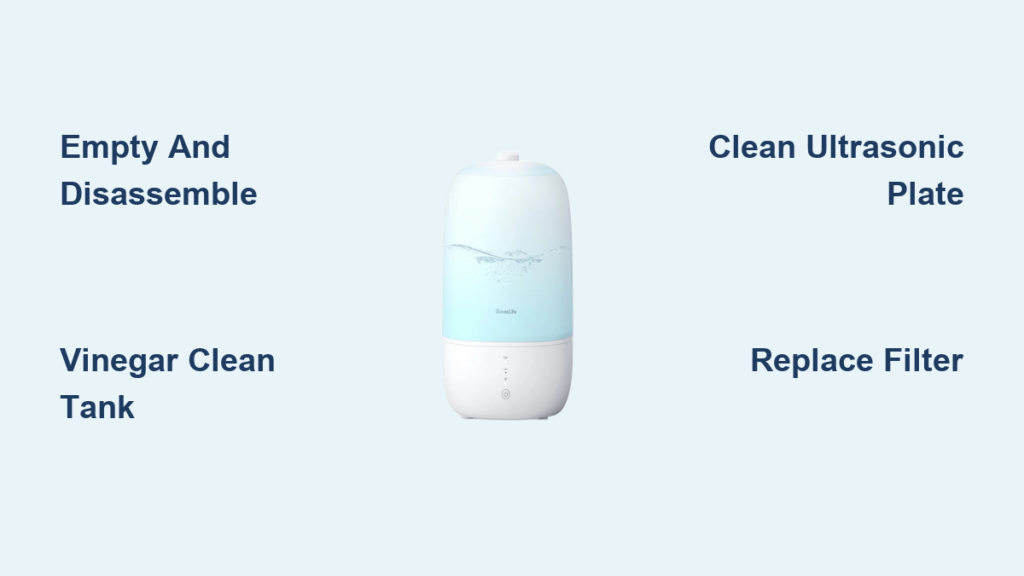
Your Govee humidifier works tirelessly to maintain healthy humidity levels, but mineral deposits, mold, and bacteria can quickly compromise its performance. Without regular cleaning, that comforting mist might actually be dispersing harmful particles into your air. This comprehensive guide walks you through the essential cleaning process that keeps your Govee unit running efficiently while protecting your family’s health.
While official Govee documentation wasn’t available for this guide, we’ve compiled the most effective cleaning methods used by humidifier experts and verified Govee owners. These proven techniques work across popular models like the H7142 and other smart WiFi-enabled units. Following these steps ensures your humidifier delivers clean, healthy moisture without spreading contaminants.
Empty and Disassemble Your Govee Unit Safely
Power down completely before touching any component. Unplug your Govee humidifier and wait 15 minutes for internal parts to cool. This prevents electrical shock and gives heated elements time to reach safe temperatures. Never attempt cleaning while the unit remains connected to power.
Remove All Removable Components
- Lift the water tank straight up using the built-in handle
- Twist off the mist nozzle counterclockwise
- Pull out the filter cartridge (if your model uses one)
- Detach the base cover by pressing release tabs
- Remove the water sensor float gently from its track
Place a towel beneath your workspace. Even “empty” tanks often contain residual water that can damage electronics if spilled on the base unit. Take a quick photo before disassembly—Govee models vary slightly in component arrangement, and this visual reference prevents confusion during reassembly.
Deep Clean the Water Tank Thoroughly
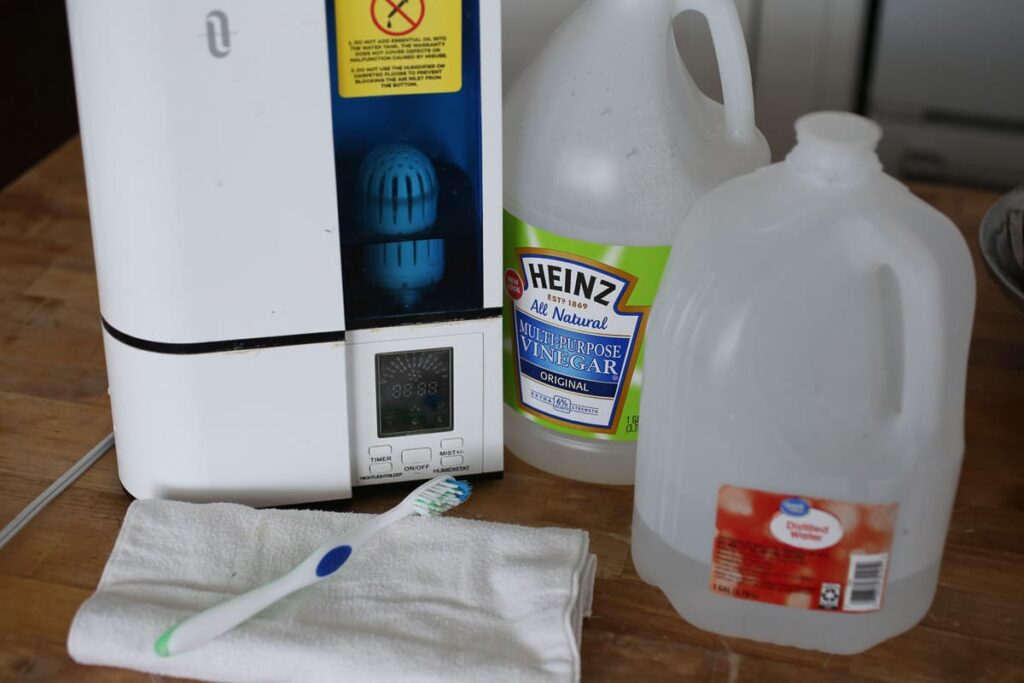
White vinegar solution breaks down mineral deposits naturally. Mix equal parts white vinegar and warm water in your sink—enough to submerge the tank completely. This solution effectively dissolves hard water buildup without damaging plastic components.
Complete Tank Cleaning Process
- Fill the tank with vinegar solution through the opening
- Let soak 30 minutes for light buildup, 2 hours for heavy deposits
- Scrub interior walls using a soft bottle brush or sponge
- Pay attention to corners where mold commonly forms
- Rinse thoroughly until vinegar smell disappears
Never use bleach or harsh chemicals. These can damage plastic components and create toxic fumes when the humidifier operates. For stubborn white, crusty deposits, create a paste using 2 tablespoons baking soda and water. Apply directly to affected areas, let sit 10 minutes, then scrub with a soft toothbrush. The mild abrasive action removes buildup without scratching plastic surfaces.
Clean Base Unit and Internal Components Carefully
The base unit contains your humidifier’s electrical components and requires special care. Never submerge the base in water or cleaning solution, as this can cause permanent damage to electrical components.
Base Cleaning Protocol
- Dampen a microfiber cloth with diluted vinegar solution
- Clean all exterior surfaces including control panel and LED displays
- Use cotton swabs for tight spaces around buttons and vents
- Dry immediately with a clean, lint-free cloth
Ultrasonic Plate Cleaning
This small metal disc generates your humidifier’s mist. Mineral deposits here reduce performance dramatically.
- Locate the ultrasonic plate (usually a small, circular metal piece)
- Dampen a cotton swab with vinegar solution
- Gently wipe the plate using circular motions
- Remove all white residue until metal appears shiny
- Rinse with distilled water on a clean swab
If your Govee model has a removable ultrasonic module, you can soak it in vinegar solution for 10 minutes. Check for any official Govee documentation to confirm this feature for your specific model.
Mist Tube and Nozzle Cleaning
These channels direct mist flow and easily collect mineral deposits.
- Flush with vinegar solution using a small funnel
- Use pipe cleaners for narrow tubes
- Soak detachable nozzles in vinegar solution for 20 minutes
- Rinse until water runs clear and odor-free
Filter Maintenance and Replacement Essentials

Govee uses different filtration systems across models. Check your specific model to determine the correct approach, as using improper cleaning methods can damage filters.
Filter Cartridge Care
- Rinse under cool water to remove loose debris
- Soak in vinegar solution for 15 minutes monthly
- Replace every 30-60 days depending on usage and water hardness
- Never wring out filters—gently squeeze excess water instead
Filter-Free Models
- Clean the water intake screen weekly using a soft brush
- Remove debris buildup that could damage the pump
- Inspect for damage during each cleaning session
Using distilled water reduces mineral buildup and extends filter life by 2-3 times compared to tap water. This money-saving tip also decreases cleaning frequency.
Smart Features and Sensor Care During Cleaning
Your Govee’s smart capabilities require special attention during cleaning to maintain WiFi connectivity and sensor accuracy.
Humidity Sensor Maintenance
- Locate the small sensor window (usually near the base)
- Use a dry cotton swab to remove dust and debris
- Avoid moisture on electronic sensors
- Test accuracy using the Govee app after cleaning
WiFi Connectivity Preservation
- Ensure all components are completely dry before reconnecting
- Reset WiFi connection if app shows “offline” after cleaning
- Update firmware through the Govee Home app post-cleaning
Take a screenshot of your app settings before cleaning. This speeds up reconfiguration if settings reset during the process. Smart features are a key benefit of Govee units, so proper sensor care ensures you continue enjoying remote control and humidity monitoring.
Monthly Disinfection to Prevent Mold Growth
Monthly disinfection prevents the pink slime and black mold that thrive in humid environments. While vinegar cleaning handles routine maintenance, periodic disinfection is essential.
Hydrogen Peroxide Method
- Mix 1 teaspoon 3% hydrogen peroxide per cup of water
- Run solution through the humidifier for 30 minutes
- Empty and rinse thoroughly before normal use
- Air-dry completely between uses
Tea Tree Oil Alternative
- Add 3-4 drops to water tank monthly
- Run for 15 minutes to distribute throughout system
- Natural antifungal properties prevent mold without chemicals
These methods effectively kill mold spores without leaving harmful residues that could be dispersed into your air.
Reassemble and Test Function Properly
Check every component for proper placement before powering on. Misaligned parts cause leaks and poor performance, potentially damaging your unit.
Final Assembly Verification
- Replace the filter (if applicable) ensuring proper orientation
- Seat the water sensor float in its track
- Align the mist tube with the base opening
- Snap the base cover firmly into place
- Fill tank with fresh water and replace on base
Performance Validation
- Power on and select highest mist setting
- Check for leaks around the base and tank connection
- Verify mist output appears within 2 minutes
- Confirm WiFi connectivity through the app
- Test automatic shutoff by removing the tank
This systematic testing ensures your humidifier functions correctly after cleaning, preventing potential damage from improper reassembly.
Establish Your Govee Cleaning Schedule
Daily: Empty and refill with fresh water. Never let water sit overnight.
Weekly: Quick wipe-down of exterior surfaces and mist nozzle.
Monthly: Deep clean all components using vinegar solution.
Seasonally: Disinfect and inspect for wear before storage.
If you have hard water (evident by white dust around your humidifier), increase cleaning frequency to bi-weekly deep cleans. Consider a water softener attachment or distilled water to reduce buildup.
Troubleshooting Common Post-Cleaning Issues
Weak Mist Output Fixes
- Check ultrasonic plate for remaining mineral deposits
- Verify water level is above minimum line
- Ensure proper filter seating
- Test different mist settings
Leak Solutions After Cleaning
- Confirm tank is seated properly on the base
- Check O-ring seal for damage or misalignment
- Inspect for cracks in the water tank
- Tighten nozzle connection if applicable
Persistent Musty Odors
- Repeat deep cleaning with stronger vinegar solution
- Replace filter immediately if mold is present
- Clean mist tube more thoroughly
- Increase ventilation in the room
Extend Your Govee Humidifier’s Lifespan
Use distilled or filtered water whenever possible. This single change reduces cleaning frequency and prevents the mineral buildup that damages internal components. Distilled water significantly extends the life of your ultrasonic plate and other critical components.
Store properly during off-seasons. Clean thoroughly, ensure complete dryness, and store in a cool, dry place. Add silica gel packets to absorb moisture and prevent mold.
Replace consumables promptly. Delaying filter changes or ignoring worn seals leads to more expensive repairs later. Regular maintenance prevents major issues down the line.
Your Govee humidifier will provide years of reliable service with consistent cleaning every 1-2 weeks. The 30-minute investment prevents costly repairs and ensures you’re breathing clean, properly humidified air. Set a recurring phone reminder—your lungs (and wallet) will thank you. Remember that while general humidifier maintenance principles apply, always seek official Govee guidance when available for model-specific care instructions.