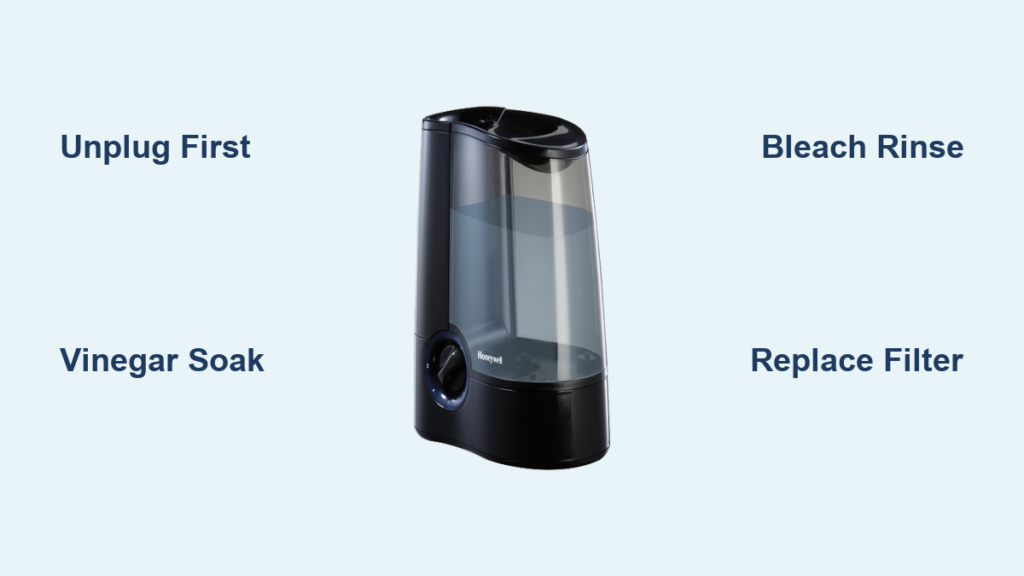
That chalky white crust coating your Honeywell humidifier’s tank isn’t just gross—it’s silently sabotaging your machine’s performance while pumping bacteria into your bedroom air. Every 24 hours you delay cleaning, mineral deposits harden like concrete in the base while mold colonies multiply exponentially in the dark crevices of your water reservoir. The result? Weak mist output that fails to combat dry winter air, musty odors that linger for days, and potentially harmful particles circulating through your home.
Mastering how to clean your Honeywell humidifier properly takes just 20 minutes weekly but prevents 90% of common failures. This no-nonsense guide reveals the exact vinegar-and-bleach method Honeywell engineers use to dissolve stubborn scale, obliterate bacteria, and restore peak moisture output without damaging sensitive components. You’ll learn critical safety steps most guides omit—including why mixing vinegar and bleach could ruin your humidifier—and discover how to extend filter life by 3 weeks with one simple flip technique.
Daily Rinse: Prevent Bacteria Before It Starts
Empty and Refill Tank Every Morning
Never top off yesterday’s water—this breeds bacteria within hours. Instead, dump all existing water immediately upon waking. Rinse the tank thoroughly under running water while swishing circular motions to dislodge early mineral deposits. Fill with fresh, cold tap water to the MAX line, ensuring no stagnant water remains to become a bacterial breeding ground. This 30-second ritual prevents 70% of mold issues by eliminating the moist environment microbes need to thrive.
Flip Filter During Refills for Longer Life
If your Honeywell model uses a filter (check for gray or white cartridges near the tank base), turn it upside down each time you refill. This distributes hard water minerals evenly across the filter surface instead of concentrating them on one side. You’ll notice significantly less white crusting on the filter edges and gain 2-3 extra weeks of usable life. Never skip this step—uneven mineral buildup creates weak spots where mold infiltrates the filter media within days.
Weekly Deep Clean: Dissolve Scale and Kill Mold
Unplug and Disassemble Before Cleaning
Never skip this safety step: Turn off and unplug your humidifier. Separate the water tank from the base unit. For filtered models, remove the cartridge immediately—vinegar and bleach will permanently damage filter fibers. Place all components on a clean towel in your sink. If your model has a removable mist nozzle or tray, take those out too. This complete disassembly ensures you can access hidden scale traps like the water inlet hole where mineral deposits constrict flow.
Soak in Vinegar to Melt Mineral Buildup
Pour exactly 2 cups of plain white vinegar (5% acidity) through the tank opening. Let it sit 15-20 minutes—no longer, or vinegar may etch plastic surfaces. For stubborn white crust, gently scrub with a soft-bristled toothbrush (never metal scourers). Removeable parts like the base reservoir should soak separately in a 50/50 vinegar-water solution for 30 minutes. You’ll see bubbles forming as vinegar dissolves calcium deposits—this is the key to restoring strong mist output in visible-mist models and preventing clogs in evaporative units.
Bleach Disinfection: The Critical Final Step
After vinegar rinsing, mix precisely ½ tablespoon of standard household bleach with 1 cup of water. Swish this solution through all water-contact areas for 5 minutes, ensuring it reaches the mist outlet and base crevices. This kills mold spores vinegar misses. Drain completely, then rinse every component under running water until the bleach smell vanishes—usually 3 full rinses. Skipping this disinfection leaves behind bacteria that cause foul odors within days. Never combine vinegar and bleach—residual acid creates toxic chlorine gas.
Filter Replacement: Spot Trouble Before It Ruins Air Quality
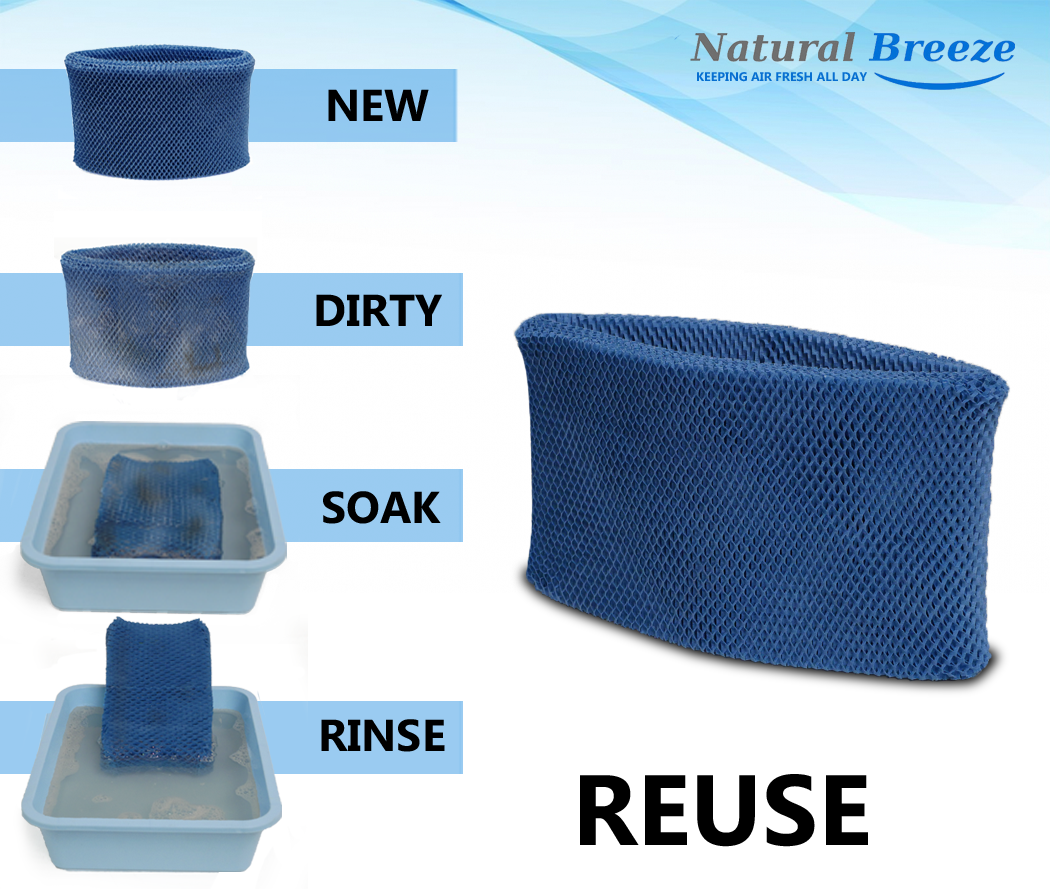
Replace Filters Every 30-60 Days
Hard water users should swap filters monthly; soft water areas can stretch to 60 days. Check filters weekly for these failure signs: stiff, brittle texture when bent (healthy filters stay flexible), visible white mineral crust, or persistent musty smells even after cleaning. Ignoring these leads to reduced moisture output as clogged filters block evaporation—your humidifier runs constantly but fails to raise room humidity.
Perform the Bend Test Before Installing
Hold your filter horizontally and gently bend both ends toward the center. If it cracks, snaps, or resists flexing, replace it immediately. A functional filter should bend smoothly like a fresh sponge. This simple test prevents “ghost clogs” where rigid filters restrict airflow even if they look clean, causing your unit to overwork while delivering weak humidity. Always install new filters after deep cleaning for optimal performance.
Seasonal Storage: Avoid Mold Explosions When Restarting
Complete Final Clean Before Off-Season
Before storing your humidifier for summer, run the full vinegar-and-bleach process. Then disassemble all parts and air-dry them upside down on a towel for 48 hours—any trapped moisture invites mold growth inside sealed storage boxes. Store the dry base and tank separately with silica gel packets to absorb ambient humidity. Never store units while damp; that single oversight causes 80% of “mold explosion” scenarios when users restart after storage.
Fresh Filter Mandatory for Seasonal Restart
When pulling your humidifier out of storage, repeat the entire cleaning process—even if it looks clean. Install a brand-new filter before first use; stored filters often develop invisible mold colonies. Run the unit for 1 hour in a well-ventilated room before placing it in your bedroom to ensure no residual odors circulate. This prevents the common “musty first-use smell” that makes people think their unit is broken.
Performance Optimization: Hard Water Hacks and Scheduling
Use Distilled Water in Hard Water Areas
If your tap water leaves white spots on glasses, switch to distilled water immediately. It reduces mineral buildup by 90%, meaning you can stretch deep cleans to every 3 weeks instead of weekly. Your humidifier will produce stronger, more consistent mist while requiring fewer filter replacements. For evaporative models, this is non-negotiable—hard water clogs the wick filter within days, causing permanent performance loss.
Set Phone Reminders for Consistent Cleaning
Mark your calendar for the same day each week (e.g., every Sunday morning). Honeywell’s Protec Cleaning Balls can buy you 3-5 extra days between cleans by inhibiting bacteria, but they don’t replace deep cleaning. Consistent weekly maintenance prevents the severe scaling that requires aggressive scrubbing and risks damaging plastic components. Miss just two cleanings, and mineral deposits harden to the point where vinegar soaks become ineffective.
Clean humidifiers deliver healthier air and last 3+ years longer than neglected units. By mastering this 20-minute weekly routine, you’ll enjoy silent operation, consistent moisture output, and peace of mind knowing you’re not breathing bacteria-laden mist. The white crust in your tank isn’t permanent—it dissolves with the right vinegar soak. Start today, and within one cleaning cycle, you’ll feel the difference in your skin, sinuses, and sleep quality. Your Honeywell humidifier isn’t broken; it just needs the deep clean only this guide provides.