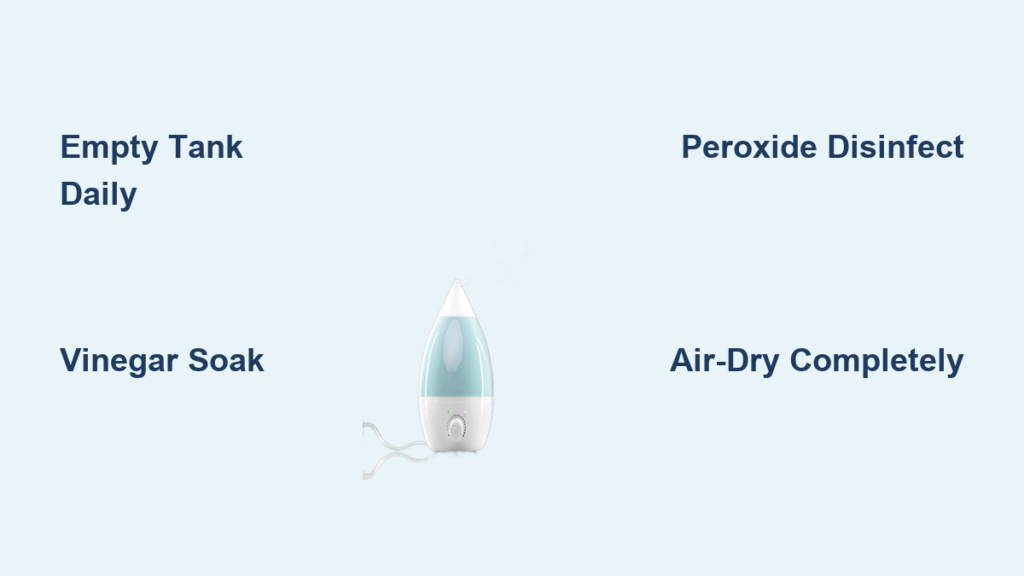
That slimy pink film coating your humidifier isn’t just gross—it’s Serratia Marcescens bacteria multiplying at lightning speed. Left untreated, this biofilm transforms your air-purifying device into a germ-spewing health hazard. The good news? You can eliminate it completely and prevent its return with the right approach. This guide walks you through a proven cleaning protocol that removes pink mold permanently, protects vulnerable family members, and keeps your humidifier running safely year-round. By following these science-backed steps, you’ll master how to clean pink mold in humidifier systems in under an hour.
Locate All Pink Mold Hotspots Immediately
Target These Critical Areas First
Serratia marcescens colonizes every moisture-rich surface within 24–48 hours. Start your inspection at these bacterial breeding grounds:
– Water tank interior surfaces – where stagnant water creates perfect growth conditions
– Mist nozzle or vapor spout – aerosolizes bacteria directly into your breathing space
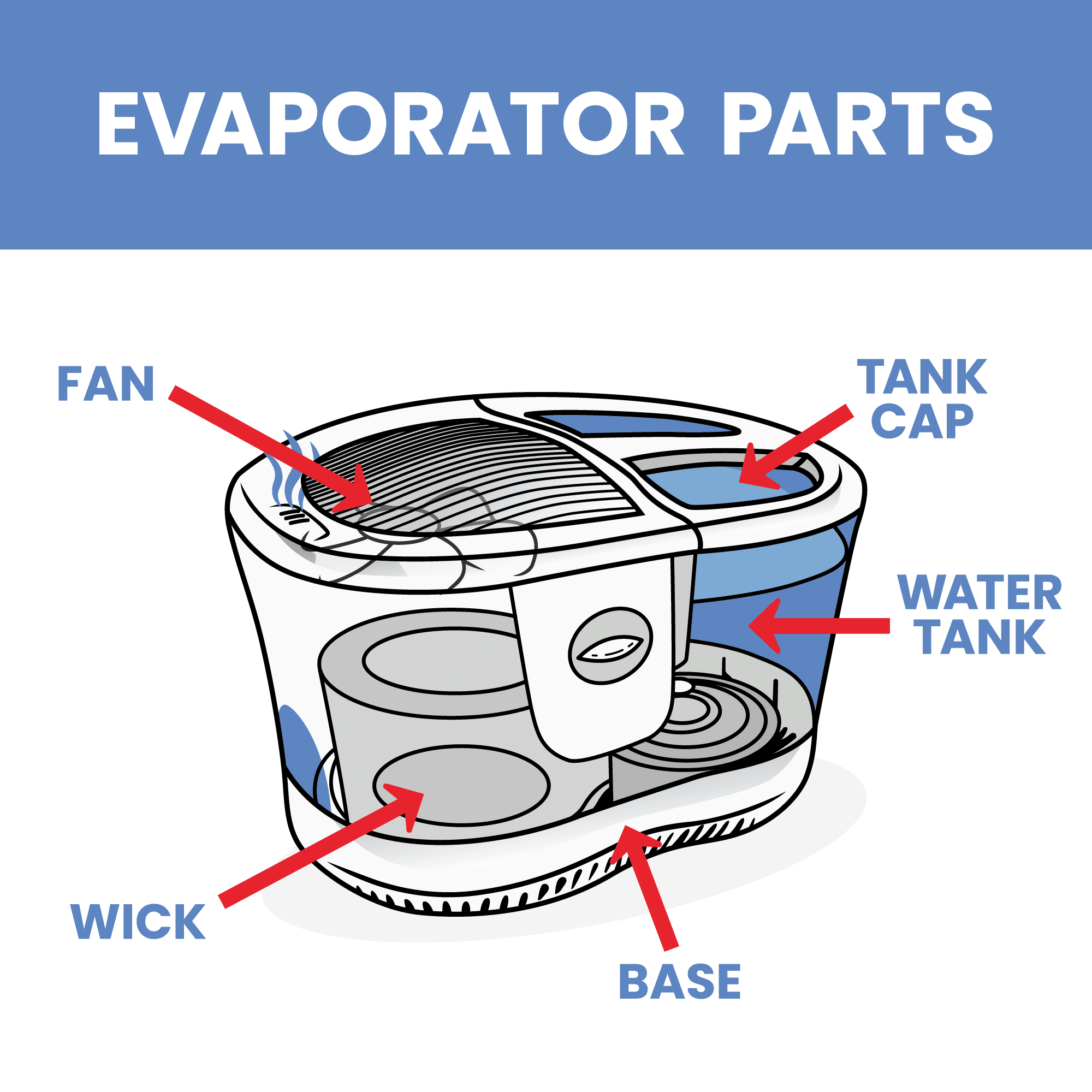
– Rubber gaskets and O-rings – hidden crevices trap moisture and nutrients
– Filter housing compartments – shields colonies from routine rinsing
– Condensation collection trays – standing water accelerates colonization
– Internal tubing channels – especially in ultrasonic models where buildup hides
Recognize Early Warning Signs
Don’t wait for visible pink slime. Initial colonization appears as faint reddish streaks that quickly thicken into slippery biofilm. If you detect musty odors during operation or experience unexplained coughing fits when the humidifier runs, Serratia marcescens has already established itself. Remember: this bacteria thrives at room temperature (77–95°F) and feeds on minerals in tap water.
Eliminate Health Risks From Bacterial Exposure

Protect Vulnerable Family Members
While healthy adults may only experience minor throat irritation, specific groups face severe consequences from inhaling aerosolized bacteria:
– Asthma sufferers – bacteria triggers dangerous respiratory attacks
– Immunocompromised individuals – infections spread rapidly through compromised systems
– Infants and elderly – developing or aging lungs struggle to expel 1–5 µm particles
– Chronic respiratory patients – conditions like COPD worsen dramatically
Understand the Transmission Danger
Serratia marcescens particles become airborne through your humidifier’s mist, reaching deep into lungs where they cause Humidifier Lung—a hypersensitivity pneumonitis with flu-like symptoms (cough, fever, breathing difficulties). This isn’t surface contamination; it’s active disease transmission happening every time you run an infected unit. Immediate action is critical when you discover pink mold.
Gather Essential Cleaning Supplies Today
Required Mold-Killing Toolkit
Skip ineffective store-bought cleaners and assemble these science-proven supplies:
– White vinegar (5% acetic acid) – dissolves biofilm without damaging components
– 3% hydrogen peroxide – eliminates residual spores after vinegar treatment
– Soft-bristle bottle brush – reaches tight corners without scratching plastic
– Old toothbrush – perfect for gaskets and intricate parts
– Disposable gloves – prevents skin contact with concentrated bacteria
– Distilled water – for final rinsing and future operation
Avoid These Dangerous Mistakes
Never use bleach, ammonia, or abrasive pads. Bleach creates toxic fumes when mixed with vinegar residues, while steel wool scratches plastic surfaces—creating new bacterial hideouts. For stubborn buildup, use baking soda paste (1 tbsp baking soda + 1 tsp water) instead of harsh scrubbers.
Execute the Two-Step Mold Elimination Protocol
Disassemble Safely and Thoroughly
- Unplug immediately – electrical safety is non-negotiable
- Photograph assembly – snap your phone for foolproof reassembly
- Remove all detachable parts – tank, nozzle, filter, float valve, trays
- Don gloves – protect skin from direct bacterial contact
- Empty standing water – dispose of contaminated liquid safely
Vinegar Soak and Scrub Process
Fill the tank with equal parts white vinegar and warm water. Submerge small parts in a separate bowl. Soak for 30–60 minutes, agitating every 10 minutes to loosen scale. Then:
– Use your bottle brush on large surfaces with circular motions
– Switch to the toothbrush for gaskets and crevices
– Never scrub aggressively – micro-scratches harbor future colonies
– Rinse 3–4 times with warm water until vinegar smell disappears
Peroxide Disinfection Finish
Create a 1:4 solution (1 part 3% hydrogen peroxide to 4 parts water). Fill all components and soak for 10–15 minutes only—longer exposure damages plastic. Rinse thoroughly with distilled water to remove chemical residues. This dual-action approach kills 99.9% of bacteria, including spores vinegar misses.
Implement Drying Techniques That Prevent Regrowth
Critical Air-Drying Procedure
- Lay all parts on lint-free towels in a well-ventilated area
- Aim a fan at components to accelerate drying (2–4 hours typical)
- Check hidden seams with a flashlight for trapped moisture
- Never use heat sources – hair dryers warp plastic and create new crevices
Proper Storage Protocol
When storing your humidifier for over 48 hours, disassemble completely and wrap dry components in paper towels. Place them in a breathable cotton bag—not plastic containers that trap moisture. Always store with the tank cap off to prevent condensation buildup.
Adopt the 3-Tier Prevention Strategy That Works
Daily Maintenance Habits
- Empty tank after each use – eliminates stagnant water breeding grounds
- 30-second warm water rinse – removes early biofilm formation
- Always use distilled water – cuts mineral nutrients feeding bacteria
- Leave cap off – allows complete air-drying between uses
Weekly Deep Cleaning Schedule
Every 7 days, perform the full vinegar soak and peroxide disinfection—even if no pink mold is visible. This breaks Serratia marcescens’ 24–48 hour colonization cycle. For evaporative units, replace non-washable wick filters monthly when discolored.
Environmental Controls
- Maintain room humidity at 30–50% using a hygrometer
- Avoid nighttime-only usage – prolonged undisturbed moisture accelerates growth
- Clean filters weekly – even “permanent” filters trap bacterial colonies
Fix Persistent Mold Problems in Minutes

When Pink Residue Returns Within 24 Hours
Cause: Micro-scratches in plastic harbor deep-seated spores
Solution: Replace the water tank immediately or apply food-grade silicone spray (verify manufacturer approval) to seal pores
Eliminating Lingering Musty Odors
Cause: Biofilm deep in internal tubing
Solution: Fill unit with vinegar solution and run outdoors for 10 minutes, followed by 2–3 full rinse cycles
Model-Specific Emergency Fixes
- Ultrasonic models: Clean transducer disc with vinegar-soaked cotton swabs (never submerge base)
- Evaporative units: Replace wick filters if discoloration persists after cleaning
- Steam vaporizers: Wrap vinegar-soaked cloths around heating elements for 30 minutes
Know Exactly When to Replace Your Humidifier
Immediate Replacement Triggers
Replace your unit immediately if:
– Cracks appear in tank or base—bacteria lives permanently inside fissures
– Mold returns within 24 hours after thorough cleaning—indicates porous saturation
– Sealed design prevents complete disassembly (common in cheap ultrasonic models)
– Manufacturer parts unavailable for proper maintenance
Upgrade to Mold-Resistant Technology
When replacing, choose units with antimicrobial tanks or UV-C sanitization that actively prevent bacterial colonization. Look for models allowing full disassembly—your health depends on complete access to all moisture-contact surfaces.
Humidifier Maintenance Quick Reference Chart
Daily Non-Negotiables
- [ ] Empty tank completely after use
- [ ] Quick warm water rinse
- [ ] Air-dry with cap off
- [ ] Use only distilled water
Weekly Critical Actions
- [ ] Full disassembly and inspection
- [ ] 30-minute vinegar soak
- [ ] Soft brush scrubbing
- [ ] Peroxide disinfection
- [ ] 4+ hour air-drying
Monthly Safety Checks
- [ ] Replace filters when stiff/discolored
- [ ] Verify room humidity (30–50%)
- [ ] Inspect for tank cracks
Permanent pink mold elimination hinges on consistent prevention, not crisis cleaning. By implementing this protocol—especially the daily emptying and weekly vinegar soaks—you transform your humidifier from a health hazard into a safe air-quality ally. Remember: Serratia marcescens colonizes within 48 hours, so never skip maintenance. Your lungs will thank you the next time dry winter air threatens your comfort. Start today by emptying your tank and grabbing that bottle of white vinegar—it’s the simplest step in how to clean pink mold in humidifier systems effectively.