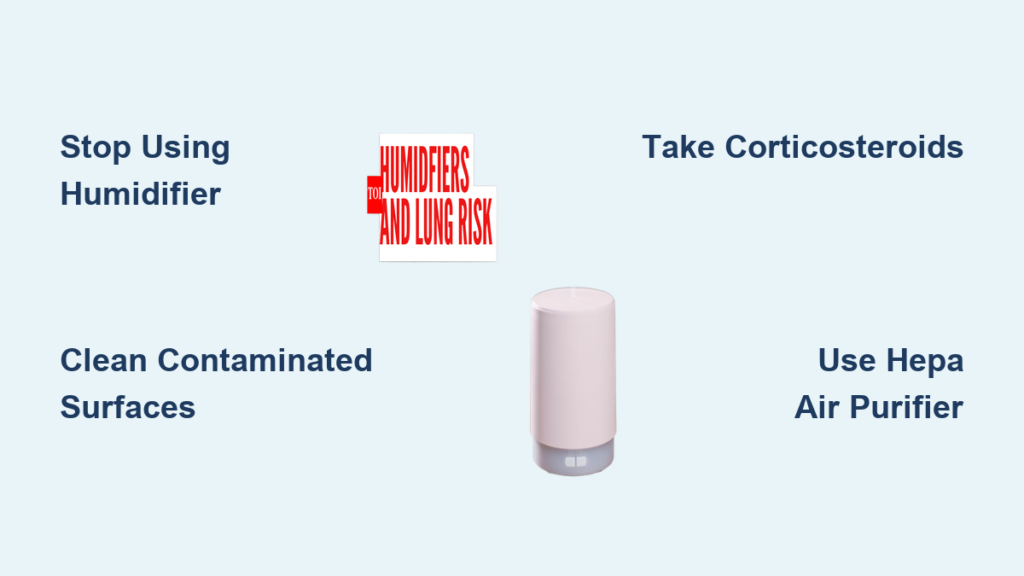
You wake up gasping for air, chest tight like someone’s sitting on it. The humidifier that was supposed to ease your breathing is now making you sick. This is humidifier lung—a serious allergic reaction to contaminated mist that inflames your lungs’ air sacs. The good news? Complete recovery is possible if you act quickly. This guide walks you through the exact steps to eliminate symptoms and prevent permanent damage. How to get rid of humidifier lung starts with recognizing the danger signs and stopping exposure immediately.
Humidifier lung isn’t just a minor irritation—it’s a form of hypersensitivity pneumonitis where mold and bacteria from dirty humidifiers trigger dangerous lung inflammation. Every breath of contaminated mist worsens damage to your delicate air sacs. If you’ve noticed breathing problems coinciding with humidifier use, this isn’t the flu. You’ll learn proven medical treatments, critical home recovery strategies, and foolproof prevention methods to reclaim your lung health. Stop using that humidifier right now—your recovery begins today.
Stop Using Contaminated Humidifiers Immediately
This step is non-negotiable for how to get rid of humidifier lung. Continuing exposure guarantees worsening inflammation and potential permanent scarring. Your action plan must include:
- Power off and unplug all humidifiers immediately—no exceptions
- Empty water reservoirs and dry them thoroughly outdoors
- Remove units from living spaces to prevent accidental restart
- Take photos of mold or slime inside for warranty documentation
Warning: Do not attempt to clean and reuse contaminated units. Microorganisms embed deep in internal components, making complete sterilization impossible. Discard ultrasonic and evaporative humidifiers showing any discoloration or residue.
Deep Clean Contaminated Surfaces Now
Mold spores spread far beyond the humidifier base. Focus cleaning on these critical zones:
- Bedroom surfaces within 6 feet of the unit (nightstands, dressers, curtains)
- HVAC vents and adjacent walls where mist settled
- Fabric items like bedding and clothing stored nearby
Use a 1:10 bleach solution on hard surfaces, wearing an N95 mask during cleaning. Wash all fabrics in hot water with detergent. For central HVAC systems, schedule professional duct cleaning—residual mold in air handlers will reignite symptoms.
Execute Medical Treatment Protocol
Emergency Care Warning Signs
Seek immediate ER care if you experience:
– Severe breathing difficulty at rest
– Blue lips or fingernails (cyanosis)
– Chest pain or pressure
– Confusion or mental fogginess
These indicate dangerously low oxygen levels requiring urgent intervention.
Essential Diagnostic Testing
Your doctor will confirm humidifier lung through:
1. Blood antibody tests identifying specific hypersensitivity reactions
2. Chest X-ray revealing inflammation patterns
3. Pulmonary function tests measuring lung capacity loss
4. High-resolution CT scan for detailed damage assessment
Pro Tip: Track symptom changes after removing the humidifier. Improvement within days strongly supports the diagnosis, accelerating treatment.
Critical Medication Strategy
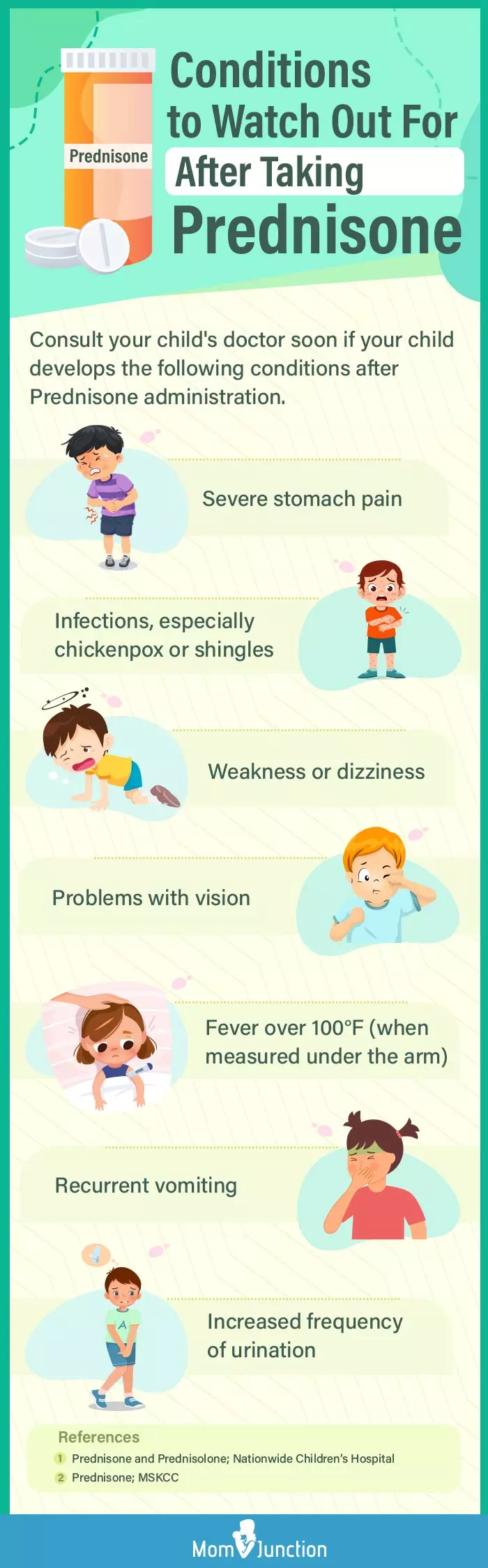
Corticosteroids are non-optional for inflammation control:
– Prednisone prescribed for 4-8 weeks (typical starting dose: 40-60mg daily)
– Inhaled steroids like fluticasone for ongoing airway protection
– Bronchodilators (albuterol) to ease acute breathing difficulties
Avoid this mistake: Stopping steroids early when symptoms improve. This causes rebound inflammation. Complete the full course even if you feel better.
Implement Home Recovery Tactics

Create a Healing Sleep Sanctuary
Transform your bedroom into an allergen-free zone:
– Install a HEPA air purifier rated for your room size (run 24/7)
– Maintain 30-50% humidity using dehumidifiers, not humidifiers
– Wash bedding weekly in hot water (>130°F)
– Remove carpets and heavy drapes that trap mold spores
Visual cue: Use a digital hygrometer to monitor humidity levels. Anything above 50% risks new mold growth.
Rebuild Lung Capacity Safely
Start breathing exercises 72 hours after stopping humidifier use:
– Pursed-lip breathing: Inhale 2 seconds through nose, exhale 4 seconds through pursed lips (10 reps, 3x daily)
– Diaphragmatic breathing: Place hand on belly; feel it rise during inhalation (5 minutes, 2x daily)
– Walking progression: Begin with 5-minute indoor walks, adding 2 minutes daily
Stop immediately if you experience dizziness, chest pain, or increased coughing. Pushing too hard delays healing.
Prevent Future Outbreaks Permanently
Replace Humidifiers With Safe Alternatives
Never reintroduce traditional humidifiers. Instead:
– Place peace lilies or Boston ferns in dry rooms (naturally release moisture)
– Leave bathroom door open during showers for steam diffusion
– Set bowls of water near radiators (change water daily)
– Install whole-house humidifiers with UV sterilization (consult HVAC professional)
Critical rule: If you must use a humidifier, empty and dry the tank daily and use only distilled water. Weekly vinegar cleaning is mandatory.
Monthly Environmental Inspections
Prevent recurrence with these checks:
– HVAC drip pans: Confirm no standing water
– Exhaust fans: Verify proper airflow in bathrooms/kitchens
– Window condensation: Wipe morning moisture immediately
– Basement humidity: Keep below 50% with dehumidifiers
Replace HVAC filters every 90 days and schedule professional duct cleaning annually. Digital humidity monitors ($15-$25) provide real-time alerts.
Track Recovery and Watch for Relapse

Symptom Monitoring System
Log these daily metrics for 3 months:
| Time | Breathlessness (1-10) | Cough Frequency | Energy Level |
|——|————————|—————–|————-|
| AM | | | |
| PM | | | |
Red flags requiring doctor contact:
– New cough lasting >2 weeks
– Fever with breathing issues
– Unexplained fatigue after light activity
– Oxygen saturation below 95% (use pulse oximeter)
Realistic Healing Timeline
Weeks 1-2: Acute symptoms improve 50-70% after source removal
Months 1-3: Gradual return to normal activity with steroid taper
Months 3-6: Critical assessment for permanent scarring via CT scan
Year 1+: Annual lung function tests even after full recovery
Life expectancy fact: With no lung scarring, life expectancy remains normal. Existing fibrosis reduces longevity proportionally to damage severity—making early intervention vital.
Essential Doctor Consultation Questions
Ask these at your next appointment:
– “What specific mold/bacteria caused my reaction?”
– “Do I have irreversible lung scarring?”
– “How long must I avoid all humidifiers?”
– “Which breathing exercises accelerate healing?”
– “When can I safely resume exercise?”
Demand a pulmonologist referral if symptoms persist beyond 4 weeks of treatment or if pulmonary tests show >30% capacity loss. Early specialist care prevents permanent disability.
Final Note: Complete humidifier elimination is the only proven method for how to get rid of humidifier lung. No cleaning protocol makes contaminated units safe—discard them immediately. Your lungs can fully heal within 6 months when you remove the source and follow medical treatment, but every day of continued exposure risks irreversible damage. Prioritize HEPA air purification and natural humidity alternatives over convenience—your breath depends on it.