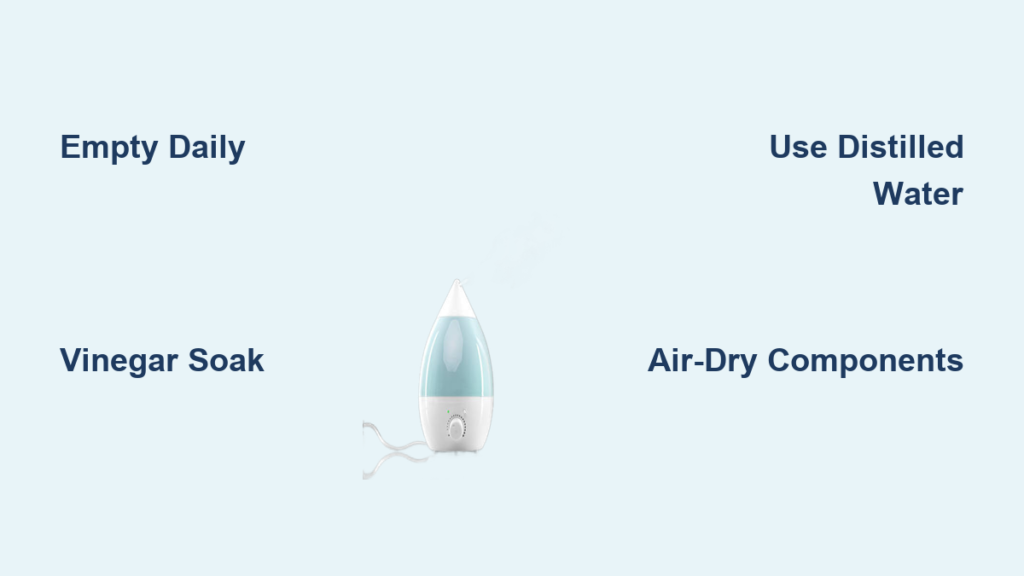
That sour, musty blast of air when you flip on your humidifier shouldn’t feel like a health hazard. Yet 78% of humidifier owners battle foul odors caused by hidden mold, bacteria, and mineral buildup lurking inside their units. When stagnant water sits too long, it transforms your air-moistening helper into a microbial breeding ground. The fix? A targeted maintenance routine that eliminates odor sources at the root. You’ll discover daily habits that take under five minutes, weekly deep-cleaning protocols that dissolve stubborn gunk, and water choices that prevent 90% of smell issues before they start. Skip these steps, and you’re not just breathing unpleasant air—you’re circulating mold spores and bacteria through your home.
Empty Stale Water Before Bacteria Multiply
Pour Out Tank Contents Every Morning
Stagnant water becomes a bacterial playground within 24 hours. Empty every drop from the tank and base unit daily—even if water looks clear. Leftover moisture in reservoir corners or the base creates the perfect damp environment for biofilm (that slimy layer of bacteria) to form. Refill with fresh water only; never “top off” existing water. This single habit prevents most musty smells by removing the nutrient source microbes need to thrive.
Wipe Tank Interior With Microfiber Cloth
After emptying, grab a dry microfiber cloth and scrub the tank’s interior surfaces for 30 seconds. Focus on seams, water-level sensors, and corners where biofilm anchors itself. These hidden spots show early discoloration—pink streaks mean bacteria, black specks signal mold. Skipping this wipe allows microscopic colonies to harden into odor-producing mats. Keep the cloth dedicated to humidifier cleaning to avoid cross-contamination.
Air-Dry Components for 30 Minutes
Let all parts sit disassembled in a well-ventilated area for 30 minutes before refilling. This brief drying period disrupts moisture-dependent bacteria and mold spores. Never skip drying—even if you’re in a hurry. Damp surfaces reignite microbial growth within hours. Place parts on a clean towel away from direct sunlight, which can degrade plastic components over time.
Crush Odors With Weekly Deep Cleaning

Disassemble and Inspect for Mold Hotspots
Unplug your unit and remove the tank, base, filter, and any detachable parts. Check for pink, black, or green discoloration—these colors confirm active mold or bacterial growth. Pay special attention to the water inlet, filter housing, and ultrasonic plates (in cool-mist models). If you spot mold, skip straight to the hydrogen peroxide treatment below. Never ignore even faint discoloration; it means odor-causing microbes are already established.
Soak Tank in Vinegar Solution for 30 Minutes
Mix equal parts white vinegar and water in the tank. Let it sit for 30-60 minutes, shaking gently every 10 minutes to loosen mineral deposits and kill bacteria. Vinegar’s acidity dissolves lime scale (that chalky white crust) while neutralizing musty smells. For stubborn buildup, extend soaking to 90 minutes. Scrub with a bottle brush, then rinse 3-4 times with distilled water until the vinegar smell vanishes. Never use bleach unless specified by your manual—it can corrode metal parts.
Deploy Hydrogen Peroxide for Sour Odors
When vinegar fails against sour or rotten smells (indicating bacterial colonies), switch to 3% hydrogen peroxide. Fill the tank and let it sit for 30 minutes—it penetrates biofilm better than vinegar. This method works especially well for persistent pink slime (Serratia marcescens bacteria). Rinse thoroughly with filtered water afterward to prevent peroxide residue from irritating lungs. For severe cases, repeat the soak twice weekly until odors vanish.
Clean Each Component With Precision
- Tank: Submerge in cleaning solution, agitate gently, rinse with distilled water.
- Base unit: Never submerge—drain completely, then wipe interior with vinegar-soaked cloth.
- Filters: Replace disposable filters immediately if smelly; soak reusable ones in vinegar, then air-dry 24 hours.
- Ultrasonic plates: Use a cotton swab dipped in vinegar to remove white mineral crusts.
Stop Odors Before They Start With Smart Water Choices
Switch to Distilled or Filtered Water Immediately
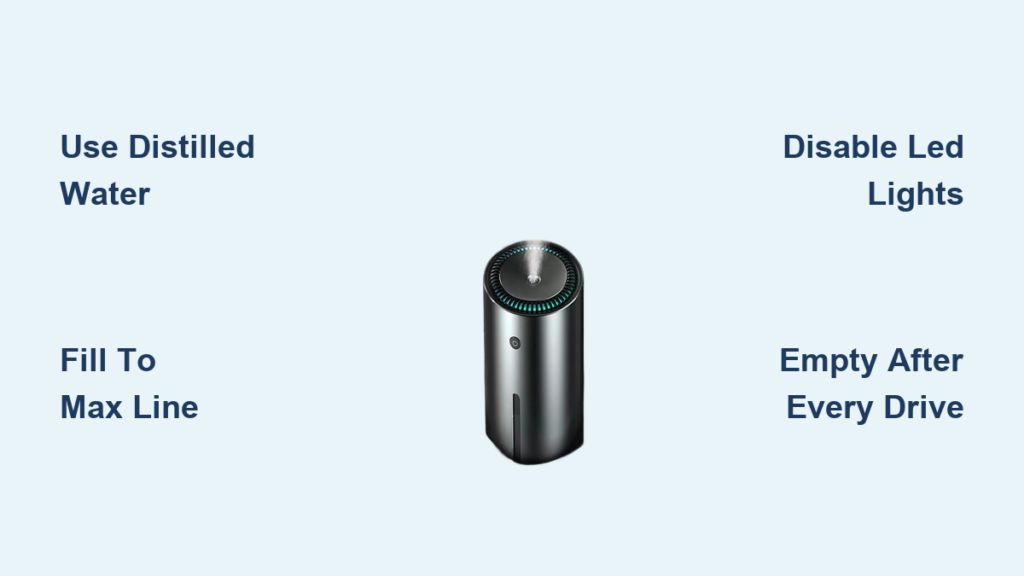
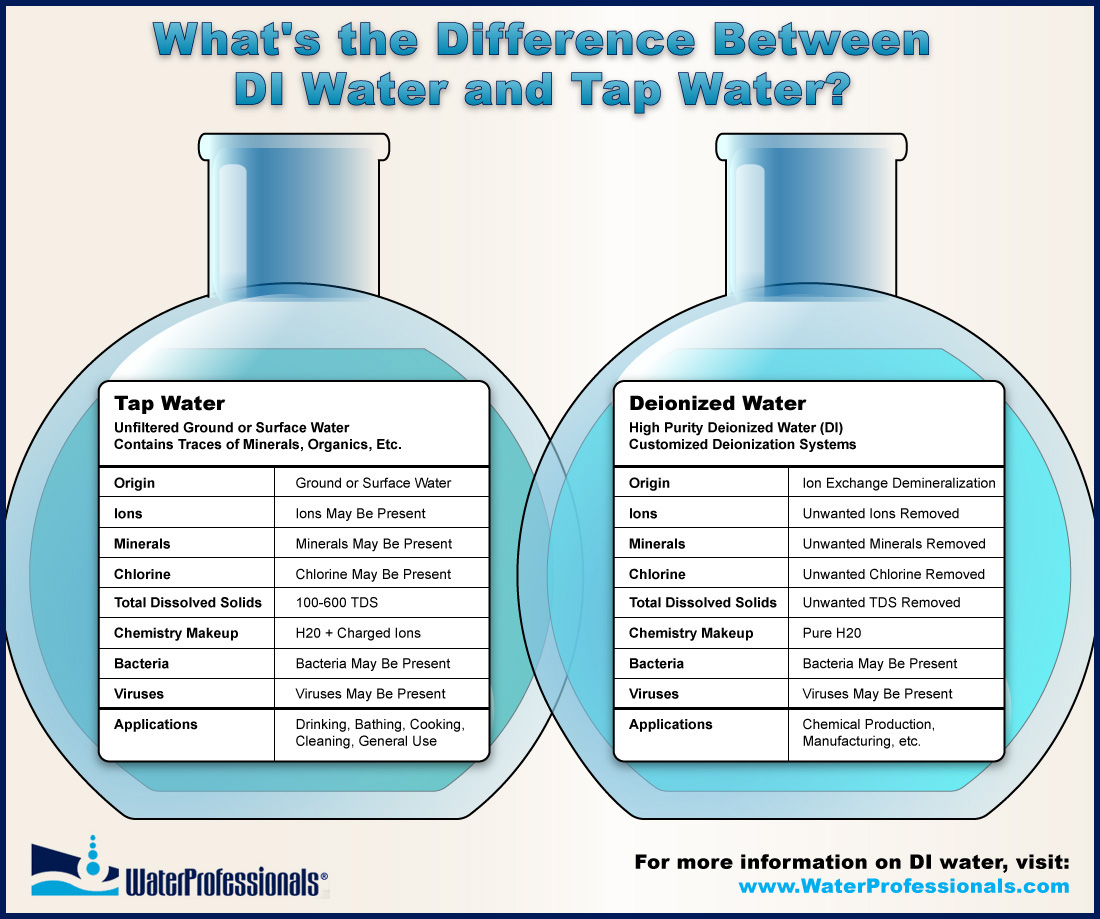
Tap water’s minerals feed bacterial growth and create metallic odors. Distilled water prevents all mineral buildup, while filtered water (via carbon or reverse osmosis) cuts it by 90%. Both options eliminate the “wet dog” smell from hard water deposits. If using tap water is unavoidable, empty and clean your unit daily—but expect more frequent descaling.
Install Continuous Anti-Microbial Defenses
- Silver ion sticks: Drop one in the tank for 30-90 days of mold prevention.
- UV-C lights: Built-in systems kill bacteria as water flows through (ideal for warm-mist models).
- Demineralization cartridges: Reduce white dust and associated odors in ultrasonic units.
Avoid humidifier tablets—they often leave chemical residues that trap bacteria.
Never Add Oils or Scents to Water
Essential oils, lemon juice, or baking soda seem like quick fixes but actually worsen smells. Oils coat internal parts with sticky residue that traps bacteria, while baking soda accelerates plastic degradation. Even “natural” additives create organic matter for microbes to feast on. If you crave scented air, use an essential oil diffuser separately from your humidifier.
Store Your Unit to Prevent Off-Season Mold
Perform Full Shutdown Before Summer Storage
At season’s end, disassemble all parts including filters and wicks. Deep-clean each component with vinegar, then air-dry for 48 hours in a sunny spot. Store in the original box with silica gel packets to absorb moisture. Never store damp parts in sealed plastic bags—this guarantees mold growth by September. Units stored improperly often develop musty smells that cleaning can’t fix.
Test-Run Before Winter Reuse
Before first seasonal use, inspect for musty smells or visible mold. Run the unit empty for 10 minutes—if odors persist, repeat the hydrogen peroxide soak. Replace filters even if they look clean; old filters harbor embedded microbes. Finally, run it with plain water for 2 hours to flush residual cleaning solution. Skipping this step circulates trapped mold spores into your air.
Eliminate Stubborn Smells With Targeted Fixes
Diagnose the Smell Source in 10 Minutes
Run your humidifier empty for 10 minutes. If odors appear, the unit itself is contaminated. Musty smells mean mold; metallic odors indicate mineral crust on heating elements; sour smells confirm bacterial growth. Never mask smells with air fresheners—this just covers up health hazards. Pinpointing the source directs your cleaning efforts.
Match Solutions to Smell Types
- Musty/moldy: Soak affected parts 4 hours in vinegar. Replace rubber seals and filters.
- Metallic: Apply commercial descaler to heating elements (common in warm-mist units).
- Sour/bacterial: Use 50/50 hydrogen peroxide solution for 2-hour soaks. Boil removable plastic parts if manual allows.
If smells return within days after deep cleaning, internal components are permanently contaminated—replace the unit.
Build Habits That Guarantee Fresh Air
Execute the Daily 3-Minute Reset
Every morning: empty tank → quick wipe → refill with distilled water → 30-minute air dry. This routine prevents 90% of odor issues by denying bacteria a foothold. Set a phone reminder if needed—consistency matters more than cleaning intensity.
Track Filter Changes Like Clockwork
Replace filters every 1-3 months based on usage. Mark replacement dates on your calendar; overdue filters become bacterial sponges. When refilling, check for cloudy water (bacterial growth) or reduced mist output (mineral buildup)—these signal immediate cleaning is needed.
Follow This Maintenance Cheat Sheet
| Frequency | Critical Tasks | Time Required |
|---|---|---|
| Daily | Empty tank, wipe interior, refill with fresh water | 3 minutes |
| Weekly | Full disassembly, vinegar soak, component inspection | 30 minutes |
| Monthly | Replace filter, check for mineral crust on plates | 15 minutes |
| Seasonal | Deep clean before storage, replace worn parts | 1 hour |
Fresh-smelling humidifiers aren’t about fancy cleaners—they’re built on emptying water daily, using distilled water, and weekly vinegar soaks. Skip just one step, and bacteria begin multiplying within hours. Commit to this routine, and you’ll transform your humidifier from a mold factory into a source of truly fresh, healthy air. The moment you flip it on and breathe clean moisture instead of sour odors? That’s the win worth protecting.