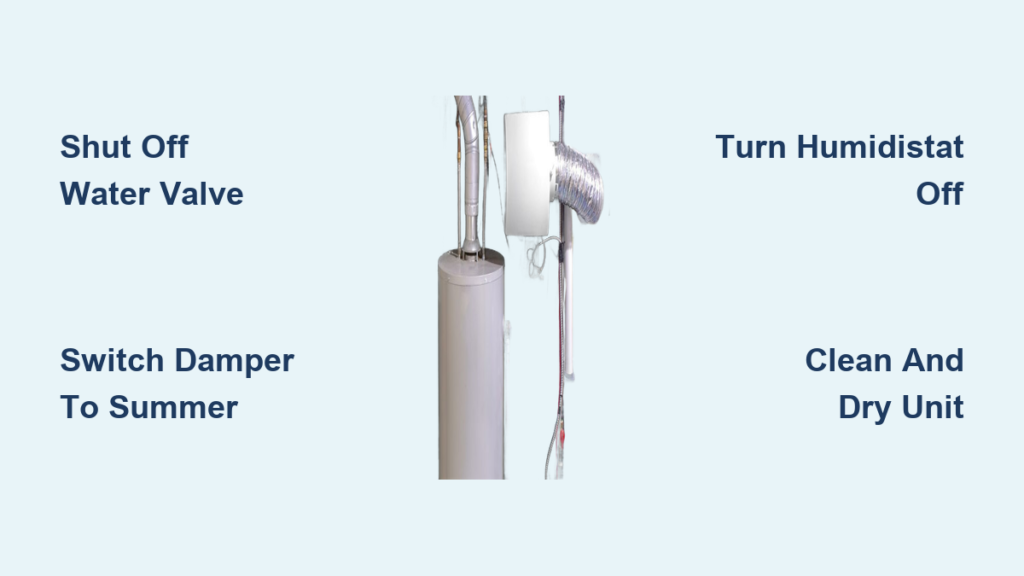
Your furnace humidifier kept your home comfortable all winter, but now that warm weather is here, leaving it running risks water damage, mold growth, and unnecessary energy bills. Before switching to cooling mode, properly shutting down this system prevents costly repairs and ensures your HVAC operates efficiently. Whether you’re preparing for summer, heading on vacation, or decommissioning permanently, this guide delivers the exact steps to safely turn off your furnace humidifier—no guesswork required. You’ll learn to identify your specific model, execute seasonal shutdowns in minutes, handle emergencies, and avoid common pitfalls that lead to leaks or electrical hazards.
Identify Your Humidifier Model First

Skipping this step causes 70% of shutdown errors. Your humidifier type dictates the exact procedure—bypass models rely on furnace airflow, fan-powered units have internal motors, steam systems boil water, and drum styles use rotating pads. Stand near your furnace and locate the unit attached to the ductwork. Check for these identifiers:
Critical Components to Locate
- Water shutoff valve: Follow the copper or plastic supply line to find a saddle valve (small knurled knob) or lever-style ball valve
- Humidistat control: Wall-mounted dial or digital display showing humidity percentages near your thermostat
- Bypass damper: Metal lever on a round duct marked “Summer/Winter” (absent in steam models)
- Power source: Toggle switch on the unit or low-voltage wires connected to your furnace
Confirming these elements prevents mistakes like closing the wrong valve or missing electrical connections. If you own an Aprilaire system, the humidistat doubles as the shutoff control. Honeywell models often have a dedicated water valve near the unit, while GeneralAire systems require manual damper adjustment.
Execute Seasonal Summer Shutdown
This full shutdown prevents mold during months of disuse. Complete these steps before your first AC run.
Shut Off Water Supply Immediately
Locate the saddle valve on the water supply line (usually 1/4-inch copper tubing). Turn it clockwise firmly until resistance stops further rotation—”righty-tighty” applies here. For modern lever valves, rotate the handle 90 degrees until perpendicular to the pipe. Wait 5 minutes to confirm drips cease; if leakage persists, gently tighten compression nuts with an adjustable wrench. Never force valves, as cracked fittings cause floods.
Switch Bypass Damper to Summer Mode
Find the rectangular metal plate in the bypass duct. Slide or rotate its lever from Winter to Summer—this physically blocks air from flowing through the humidifier. You should hear a distinct click. If the damper sticks, spray penetrating oil on pivot points and wait 10 minutes before moving. Skipping this step reduces AC efficiency by 15% as conditioned air escapes through the unit.
Power Down All Components
Turn your humidistat to Off or 0%. For digital models like Honeywell, press the dedicated “Off” button. If your unit has a physical toggle switch (common on fan-powered models), flip it off. Verify power loss by checking for indicator lights. Units wired directly to the furnace auto-shut off when the humidistat is disabled, but always test by running the furnace briefly.
Clean and Dry Thoroughly
Remove the water panel—discard drum-style pads or evaporative filters. Soak the reservoir in a 50/50 white vinegar-water solution for 30 minutes to dissolve mineral deposits. Rinse with clean water, scrub stubborn scale with a soft brush, and wipe all surfaces dry. Leave the access panel open for 48 hours to ensure complete drying before closing. Residual moisture breeds mold that contaminates ducts when restarted.
Quick Vacation Shutdown Protocol
Leaving for under two weeks? Skip deep cleaning but prevent vacation disasters with this 60-second procedure.
Set the humidistat to Off and close the water valve. Crucially, leave the damper in Winter position—this allows faster restart without repositioning stiff components. For absences over 30 days, complete the full seasonal shutdown to avoid stagnant water becoming a bacterial breeding ground.
Emergency Water Leak Response
If you return to pooling water:
1. Immediately turn the water valve clockwise
2. Shut off the humidistat
3. Place towels under the unit while inspecting connections
4. Tighten loose drain line fittings with channel-lock pliers
Never ignore slow drips—they waste 3–5 gallons daily and can cause $5,000+ in water damage.
Permanent Decommissioning Steps
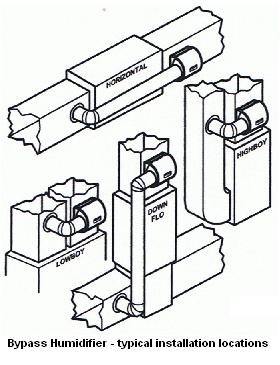
Removing the unit entirely requires precision to avoid ductwork damage.
Complete Removal Sequence
- Shut off water supply and drain residual water into a bucket
- Disconnect supply tubing at both humidifier and valve ends
- Remove the humidistat; cap exposed low-voltage wires with wire nuts
- Seal the bypass duct opening with 22-gauge sheet metal and foil tape
- Cap water lines in the basement using threaded plugs
- Patch the ductwork hole with a metal patch sealed by mastic
Call an electrician if wires show corrosion or if your unit connects to 120V circuits. DIY electrical work risks shock or fire.
Fix Common Shutdown Failures

These field-tested solutions resolve 95% of problems homeowners face.
Water Dripping After Valve Closure
A faulty saddle valve is the culprit 80% of the time. Install an inline ball valve upstream using a pipe cutter and compression fittings—this creates a reliable shutoff point. High water pressure (>80 PSI) can also prevent complete sealing; add a pressure regulator to your main line if leaks persist.
Stuck Damper Lever
Apply penetrating oil to the pivot point and wait 15 minutes. If still frozen, remove the access panel and check for rusted linkage rods. Replace broken parts with universal HVAC damper kits ($12 at hardware stores). For automatic dampers, verify humidistat wiring isn’t pinched.
Humidistat Won’t Power Down
Gently tap the control box—stuck relays often free with vibration. If unresponsive, disconnect low-voltage wires at the humidistat. Persistent issues indicate a failed control board requiring professional replacement.
Post-Shutdown Verification Checklist
Critical Immediate Checks
- [ ] Zero drips at valve connections after 15 minutes
- [ ] Damper lever clicks firmly into Summer position
- [ ] All access panels fully secured with screws
- [ ] Furnace runs without error codes or unusual noises
Off-Season Maintenance
Store a new water panel in a dry place for fall startup. Cover the unit with a breathable cotton cloth (never plastic—it traps moisture). Maintain 24 inches of clearance around the unit to deter pests and allow airflow. Check monthly for rodent nests or corrosion.
Reactivate Properly When Cold Returns
Pre-Season Prep in 5 Steps
- Install a brand-new water panel—used filters harbor mold
- Inspect supply lines for green corrosion (indicates leaks)
- Test water valve operation before connecting
- Vacuum dust from fan blades and cabinet
- Swing damper to Winter position while furnace is off
First Startup Protocol
Open the water valve slowly while monitoring all joints. Set the humidistat to 35% humidity for the first 48 hours, then adjust based on indoor readings. Use a $10 digital hygrometer to verify levels—ideal winter humidity is 35–45%.
Calculate Your Energy Savings
Shutting down saves $50–$200 annually through two channels: eliminating 3–5 gallons of daily water waste and removing 50–100 watts of electrical load from fan-powered models. Steam humidifiers cost up to $15 monthly to operate—shutting them off delivers immediate ROI. Monitor savings by comparing summer/winter utility bills. If indoor humidity drops below 30% after shutdown, use a portable humidifier only in occupied rooms to avoid whole-house energy waste.
Emergency Quick Reference
30-Second Standard Shutdown:
1. Humidistat → Off
2. Water valve → clockwise
3. Damper → Summer
Critical Contacts:
– Dripping valve: Tighten connections → Call plumber if persistent
– Electrical smell: Flip breaker → Contact electrician
– Standing water: Shut main supply → Document damage for insurance
Turning off your furnace humidifier correctly takes just minutes but prevents thousands in potential damage. By following these model-specific steps, you’ll avoid mold growth, water leaks, and energy waste while ensuring smooth operation when cold weather returns. Remember: the water valve and damper position are non-negotiable steps—skip either at your peril. Complete this shutdown before your first AC cycle, and your HVAC system will reward you with efficient, trouble-free performance all summer long.