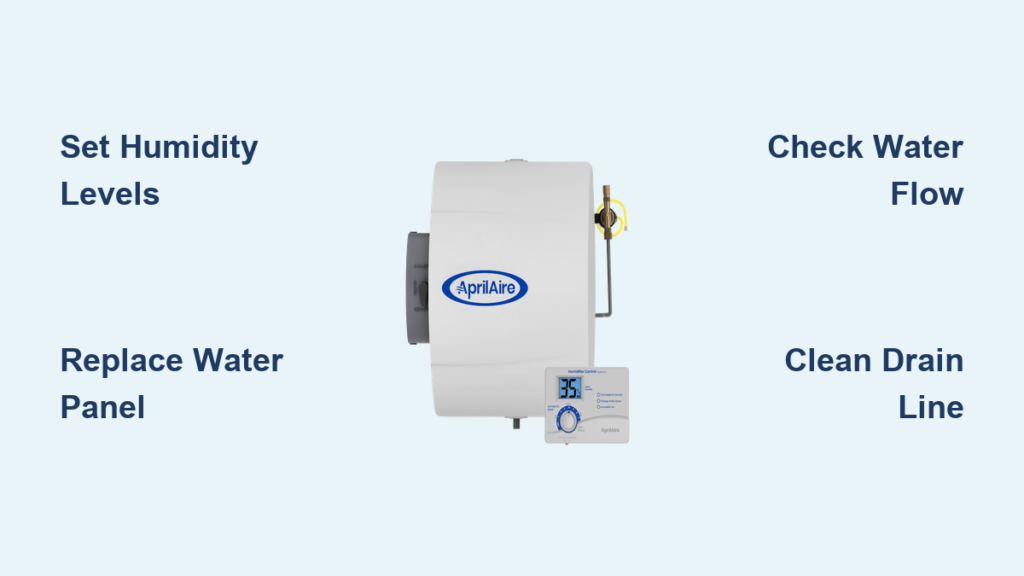
Dry winter air wreaks havoc on your home and health—causing cracked wood floors, itchy skin, and relentless static shocks. Your Aprilaire humidifier solves these problems by delivering precise moisture control throughout your home, but only when properly set up and maintained. This guide cuts through the confusion to show you exactly how to use Aprilaire humidifier systems for maximum comfort and efficiency. Whether you own a basic Model 400 or advanced Wi-Fi-enabled 8910W, you’ll learn the specific settings, seasonal adjustments, and maintenance routines that keep your system running flawlessly for years.
Pre-Installation Verification Checklist
Before you unpack your Aprilaire humidifier, confirm your HVAC system meets critical requirements. Forced-air heating systems only work with Aprilaire units—no exceptions. Verify you have access to a cold water line (never hot water, which accelerates mineral buildup), 24V AC power from your furnace control board, and either a floor drain or condensate pump nearby. Measure your furnace space: bypass models need 10″ clearance above the unit, while fan-powered 700 Series requires just 6″. Gather essential tools including an adjustable wrench, drill with 1/2″ and 3/4″ bits, tubing cutter, and level—skipping any of these risks improper installation that leads to leaks or poor performance.
Model-Specific Installation Essentials

Bypass Humidifier Setup (400-600 Series)
Mount your bypass unit 6-12 inches above the furnace on either the supply or return duct. Use the template to cut precise openings: 7.25″ x 7.25″ for Model 400, 9.5″ x 9.5″ for 500, and 10″ x 10″ for 600. Connect the 6″ bypass duct to the opposite air stream—this airflow path carries moisture through your home. Install a saddle valve on your cold water line and run 1/4″ copper tubing to the solenoid valve. Critical mistake to avoid: Never connect to hot water, as this causes rapid mineral clogging that destroys your unit within months.
Fan-Powered Model Installation (700 Series)
The 700 Series requires cutting a larger 15.5″ x 14.5″ duct opening but delivers superior moisture distribution thanks to its built-in fan. Unlike bypass models, these units need 120V electrical connection—either via power cord or hardwiring to an electrical junction box. Route the water line to the top inlet and ensure the drain line slopes downward for proper drainage. Pro tip: Mount the unit slightly tilted toward the drain to prevent water pooling that causes mold.
Steam Model Requirements (800 Series)
Steam humidifiers demand professional installation due to 240V electrical requirements and water quality constraints. Your water hardness must stay below 7 grains per gallon—test first or face replacing steam cylinders every few months instead of annually. Install the dispersion tube at least 6 feet from your furnace in the supply duct to ensure even moisture distribution. Warning: Never install steam models without softened water; scale buildup will destroy the system within one heating season.
First-Time Calibration Steps
Humidistat Placement and Settings
Install your humidistat 4-5 feet high on an interior wall away from drafts, sunlight, or heat sources—incorrect placement causes inaccurate readings that trigger over- or under-humidification. Connect R and C terminals to your furnace’s 24V supply and H terminals to the humidifier. For models with outdoor sensors, mount them on a north-facing exterior wall for accurate temperature readings. Begin with a conservative 35% humidity setting to prevent window condensation during initial operation.
Water Flow Verification
After opening the water supply, inspect every connection for leaks—a single drip today becomes a flood tomorrow. Confirm proper flow rates: 3 gallons per hour for bypass models, 6 GPH for fan-powered units. Test solenoid operation by listening for the distinctive “click” when your furnace runs and the humidistat calls for moisture. Critical check: Place a bucket under the drain line for 10 minutes—if it collects more than 0.5 gallons, your flow rate is too high and needs adjustment via the inline needle valve.
Daily Operation by Model Type
Manual Control Models (400, 500, 600)
Adjust humidity settings daily based on outdoor temperature using this essential chart:
– 40°F outside: Set to 45%
– 30°F outside: Set to 40%
– 20°F outside: Set to 35%
– 10°F outside: Set to 30%
– 0°F outside: Set to 25%
– Below 0°F: Reduce to 15-25% to prevent window condensation
Winter emergency rule: When temperatures plummet below -10°F, immediately lower settings to 15%—ignoring this causes water droplets on windows that lead to mold growth within days.
Automatic Control Models (600A, 700A, 800)
Set your desired humidity level (typically 35-45%) and let the system adjust automatically based on outdoor temperature. Press MODE to switch between AUTO and MANUAL when you need temporary overrides. These models activate your furnace blower independently to distribute moisture even when heating isn’t required—this feature prevents uneven humidity distribution throughout your home.
Digital Control Models (8620, 8620W, 8910W)
Access MENU → HUMIDITY → SETTINGS to program different levels for occupied and unoccupied periods. Wi-Fi models require connecting to 2.4GHz networks (5GHz won’t work)—download the Aprilaire app, scan the QR code on your humidistat, and create your account within minutes. Time-saving shortcut: Enable geofencing to automatically lower humidity when you leave home and restore comfortable levels before your return.
Critical Maintenance Schedule
Fall Preparation Must-Dos
Before winter hits, replace these key components:
– Install new water panel (evaporator pad)
– Clean or replace inline water filter
– Inspect drain line for clogs with a shop vac
– Test all connections for leaks
Use a calibrated hygrometer to verify your humidistat accuracy—replace if readings drift more than 5% from actual humidity levels. Skipping this step causes improper operation that wastes water and energy.
Water Panel Replacement Walkthrough

- Power Down: Turn off furnace power and water supply
- Access Panel: Remove front cover
- Remove Old Panel: Slide out by pulling plastic frame
- Clean Frame: Rinse with warm water, use vinegar for mineral deposits
- Install New Panel: Insert with colored mark facing up
- Reassemble: Replace cover and restore power
Pro tip: Mark your calendar for replacement every 6-12 months—hard water areas need twice-yearly changes to maintain performance.
Troubleshooting Top 3 Emergencies
No Humidity Production Fix
Check these in order:
– Verify water supply valve is fully open
– Test saddle valve for clogs (common after 5+ years)
– Confirm 24V at solenoid valve during furnace operation
– Listen for solenoid “click” when activated
When to call a pro: If the solenoid doesn’t click when directly connected to 24V, replacement is needed—don’t attempt electrical repairs unless certified.
Excessive Water Flow Solution
Constant water flow indicates either a stuck solenoid valve or clogged drain line. First inspect the drain—proper operation shows intermittent flow, not continuous. Adjust flow rates using the inline needle valve: 3 GPH for bypass models, 6 GPH for fan-powered units. Warning: Ignoring this issue can cause water damage to your furnace or basement within hours.
White Dust Elimination
This mineral residue comes from hard water—not your humidifier. Immediate solutions:
– Install a water softener before the humidifier
– Use demineralization cartridges
– Switch to a steam model (800 series) for distilled moisture
Critical step: Clean affected surfaces with a damp microfiber cloth—dry dusting just redistributes minerals into the air you breathe.
Winter Humidity Optimization Chart
Follow this precise temperature-based guide to prevent window condensation while maintaining comfort:
| Outdoor Temperature | Indoor Humidity Setting |
|---|---|
| 40°F | 45% |
| 30°F | 40% |
| 20°F | 35% |
| 10°F | 30% |
| 0°F | 25% |
| -10°F | 20% |
| -20°F | 15% |
Pro tip: Install a separate digital hygrometer to verify actual humidity levels—your humidistat may drift over time, causing inaccurate readings that damage your home.
Spring Shutdown Protocol
When temperatures consistently stay above 60°F:
1. Turn off water supply using saddle valve
2. Switch humidistat to OFF position
3. Close bypass damper on seasonal models
4. Replace water panel with a dry one
5. Clean entire unit with vinegar solution
Critical mistake: Leaving a wet water panel in the unit all summer guarantees mold growth that contaminates your air when you restart in fall. Store the dry panel in a sealed plastic bag for reuse next season.
Your Aprilaire humidifier delivers 15-20 years of reliable service when properly maintained. Replace water panels annually (twice yearly in hard water areas), clean components each fall, and monitor humidity levels throughout winter using a separate hygrometer. This disciplined approach prevents costly repairs, protects your home from moisture damage, and ensures optimal comfort and air quality. Remember: humidity control isn’t just about comfort—it’s essential for preserving your home’s structure, protecting your health, and reducing heating costs by up to 10%. Start implementing these precise settings and maintenance routines today for worry-free operation through every winter season.