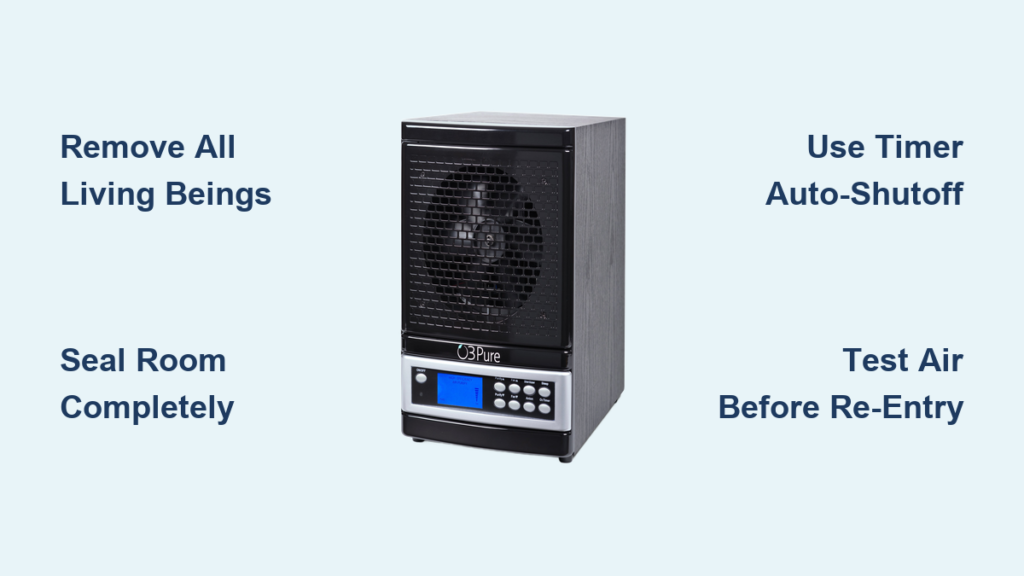
Your ozone air purifier sits unused in the corner because you’re unsure how to operate it without risking your health. You’ve heard conflicting claims—some say it eliminates stubborn odors in minutes, while others warn it could damage your lungs. The truth? Ozone generators can neutralize smoke, mold, and pet smells in unoccupied spaces, but using an ozone air purifier incorrectly exposes you to toxic levels of ozone—a lung irritant linked to asthma attacks and permanent respiratory damage. In this guide, you’ll learn the exact protocols professionals use to deploy ozone safely, including critical timing calculations, room sealing techniques, and emergency shutdown steps most manufacturers omit.
Why Ozone Generators Require Extreme Caution
Ozone (O₃) is not a filter—it’s a reactive gas that chemically breaks down pollutants. Unlike HEPA purifiers, ozone generators intentionally flood spaces with this unstable molecule. The EPA warns that ozone levels above 0.05 ppm cause chest pain and coughing, yet many consumer units produce 2–5 ppm. Never operate an ozone air purifier while people or pets occupy the space. Plants, rubber items, and artwork also degrade when exposed. Your first step isn’t turning it on—it’s verifying your unit has an automatic shutoff timer and ozone monitor. If it lacks these, stop here and return the device.
Calculating Safe Ozone Exposure Time for Your Room

Determine Your Room’s Cubic Footage
Measure length × width × ceiling height. A 12×15 ft room with 8-ft ceilings = 1,440 cubic feet. Most units specify coverage (e.g., “500–1,500 sq. ft”). Never exceed the manufacturer’s max square footage—under-sizing causes dangerously high ozone concentrations.
Set Runtime Based on Contamination Level
- Light odors (cooking smells): 1–3 hours
- Moderate odors (pet accidents, smoke): 3–6 hours
- Severe contamination (flood/mold remediation): 6–10 hours
Critical rule: Divide runtime by 2 if ceilings exceed 8 ft. High ceilings trap ozone near the ceiling, creating lethal pockets.
Emergency Ozone Clearance Protocol
After treatment:
1. Wait 30 minutes with the unit off (ozone continues reacting)
2. Open all windows and doors
3. Run box fans blowing outward for 2+ hours
4. Use an ozone test strip (sold separately) to confirm levels <0.02 ppm before re-entry
Step-by-Step Ozone Purifier Activation Sequence
Pre-Operation Safety Checklist
- ✅ Remove all living things (people, pets, plants)
- ✅ Cover electronics with plastic sheeting (ozone corrodes circuits)
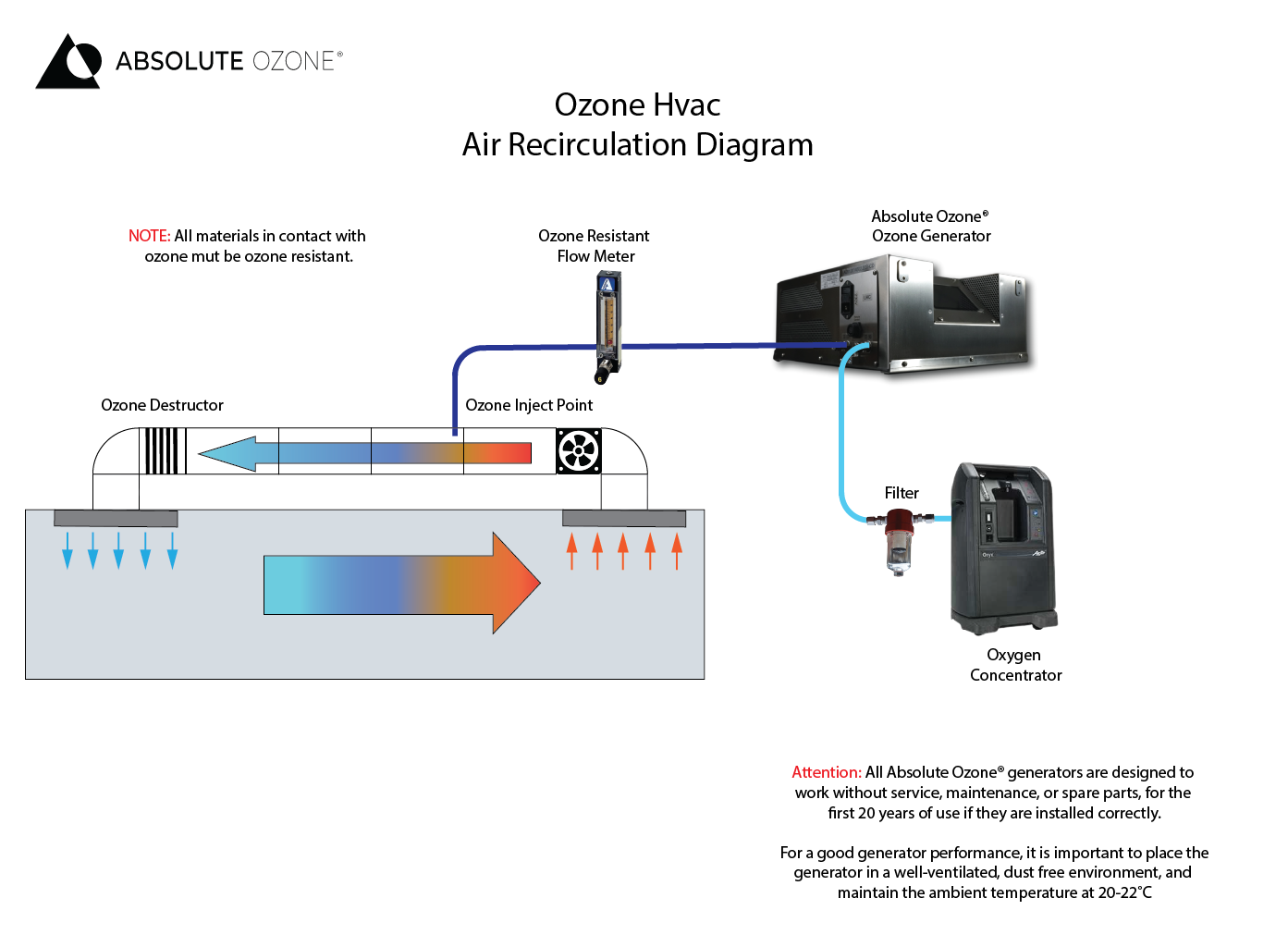
- ✅ Seal HVAC vents with tape to prevent ozone spread
- ✅ Place unit on elevated surface (ozone sinks; 3+ ft off floor)
- ✅ Confirm timer is set to auto-shutoff before starting
Correct Placement for Maximum Effectiveness
Place the ozone generator centrally in the room with 3 ft clearance on all sides. For stubborn odors like cigarette smoke:
– Position near the odor source (e.g., sofa cushions)
– Never point output toward walls—reflects ozone unevenly
– For multi-room jobs, treat one room at a time with doors sealed
Avoid These 3 Deadly Mistakes
- Using overnight cycles: Power surges can disable timers—always supervise initial runs
- Ignoring humidity: >60% humidity creates toxic formaldehyde when ozone reacts with VOCs
- Re-entering too soon: Ozone lingers in fabrics for hours—test air and upholstery with test strips
When to Never Use an Ozone Air Purifier
High-Risk Scenarios Requiring Professional Help
- Mold remediation in HVAC systems: Ozone won’t reach duct interiors and spreads spores
- Fire restoration with soot: Creates carcinogenic byproducts
- Rooms with gas appliances: Ozone triggers false CO alarms risking unnecessary evacuations
Safer Alternatives for Occupied Spaces
| Situation | Ozone Risk | Recommended Solution |
|---|---|---|
| Daily allergy relief | Extreme hazard | HEPA + activated carbon filter |
| Cooking odors | Moderate risk | Vent fan + 15-min post-cook ozone (unoccupied) |
| Basement mustiness | High risk | Dehumidifier + UV-C purifier |
Post-Treatment Inspection and Maintenance

Critical Post-Run Checks
After clearing ozone:
1. Smell test: Lingering “electric” or chlorine-like odor means insufficient ventilation
2. Surface wipe-down: Ozone leaves sticky residue on walls—clean with vinegar solution
3. Unit inspection: Check for melted plastic parts (indicates overheating)
Monthly Maintenance to Prevent Failure
- Clean output plates with 99% isopropyl alcohol (reduces arcing)
- Replace air intake filters every 2 months (clogs cause overheating)
- Calibrate ozone sensor annually with certified test kit ($45–$120)
Emergency Response for Accidental Exposure
If you enter a treated room too soon:
1. Immediately leave—do not stop to turn off unit
2. Breathe fresh air for 15+ minutes
3. Call Poison Control (1-800-222-1222) if experiencing:
– Throat burning
– Wheezing lasting >20 minutes
– Nausea or headache
Never induce vomiting—ozone damage is respiratory, not digestive.
Long-Term Ozone Generator Care Plan
Storage Protocol to Extend Lifespan
- Unplug and store in climate-controlled space (avoid garages/basements)
- Place silica gel packs inside unit casing to prevent moisture damage
- Run a 5-minute “test cycle” quarterly to verify function
When to Retire Your Unit
Replace ozone generators after:
– 3+ years of regular use (output degrades 20% yearly)
– Any instance of electrical burning smell
– Failed ozone test strip readings (unit produces inconsistent levels)
Final Note: Ozone air purifiers are industrial tools—not routine household devices. Reserve them for severe, unoccupied-space remediation (e.g., after a sewage backup), and always prioritize EPA-certified air cleaners for daily use. If you’ve used ozone in living spaces, schedule an HVAC inspection—residual ozone corrodes ductwork over time. For persistent odors, consult an IICRC-certified restoration specialist; 92% of “unfixable” smells resolve with professional thermal fogging instead of risky ozone. Keep this guide accessible, but store your ozone generator locked away from children—it belongs in emergency kits, not on your nightstand.