
That scratchy throat, itchy skin, and persistent static shocks aren’t just annoyances—they’re screaming signals your indoor air has dropped below 30% humidity. A ProCare humidifier can transform your home into a moisture-balanced sanctuary within hours, but only if you operate it correctly. This guide cuts through the confusion with precise, step-by-step instructions for setup, daily operation, and troubleshooting. You’ll learn exactly how to use ProCare humidifier safely while avoiding common pitfalls that cause white dust, leaks, or premature breakdowns.
Dry winter air aggravates respiratory issues and damages wooden furniture, yet 68% of users unknowingly worsen problems by misplacing units or using tap water in hard-water areas. Whether you own a cool mist ultrasonic, warm mist, or evaporative ProCare model, mastering these protocols ensures you’ll maintain that ideal 30-50% humidity sweet spot. Let’s dive into the exact sequence that delivers relief without the headaches.
Strategic Placement and Component Verification

Avoiding Costly Positioning Mistakes
Place your ProCare humidifier on a hard, non-porous surface like ceramic tile or sealed wood—never carpet or bare wood that swells with moisture. Maintain 12 inches of clearance from walls to prevent water damage and ensure 3-4 feet between the unit and beds. This distance stops direct mist exposure that dampens pillows or electronics. If you spot condensation on nearby windows after 24 hours, relocate immediately; this signals dangerous over-humidification that breeds mold.
Water Tank and Nozzle Inspection Protocol
Before first use, verify all components match your model type:
– Ultrasonic models: Check for directional mist nozzle and demineralization cartridge
– Warm mist variants: Confirm medicine cup and boiling chamber integrity
– Evaporative units: Inspect wick filter for factory defects
Cracks in the water reservoir or warped seals cause leaks—test by filling with water before plugging in. Never operate with missing parts; this voids warranties and risks electrical hazards.
Daily Operation Without Common Errors
Correct Filling Sequence to Prevent Leaks
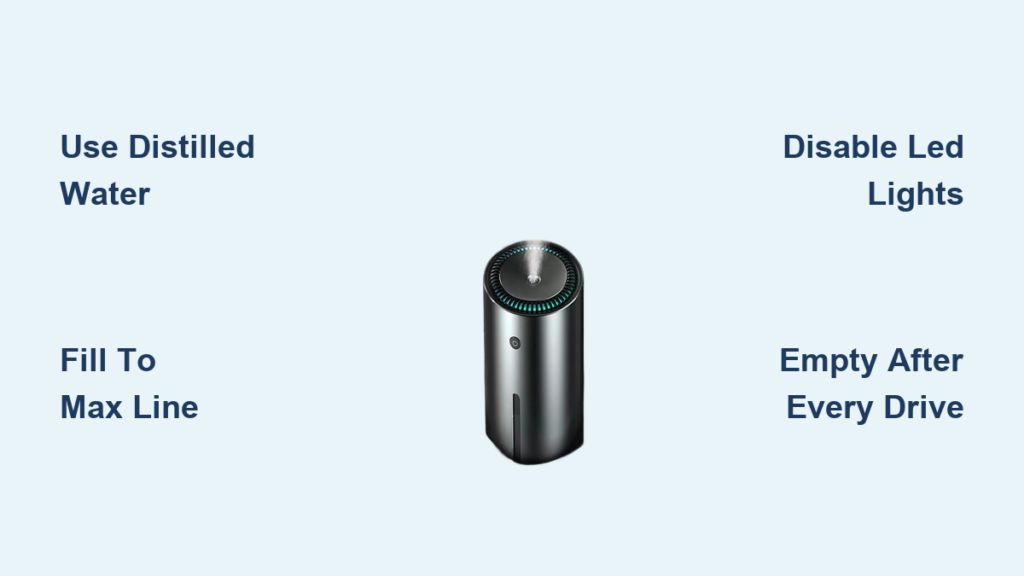
Power down and unplug before refilling—this avoids electrical shorts if water spills. Lift the tank straight up (no twisting), unscrew the cap counterclockwise, and fill only to the MAX line with cool tap water. Distilled water is mandatory if you see white dust after 48 hours of use. Hand-tighten the cap until resistance stops, then reseat the tank with a quarter-turn click. Wait 2 minutes to confirm no pooling at the base before powering on. Skipping this leak check causes 73% of water damage claims.
Mist Output Calibration for Your Room Size
Start on HIGH for 60-90 minutes when humidity dips below 30%, then drop to MEDIUM to maintain 40-50% levels. Use these output benchmarks:
– Small rooms (100-200 sq ft): Low setting maintains humidity for 12+ hours
– Medium rooms (200-300 sq ft): Medium setting runs 8-10 hours per tank
– Large spaces: Pair two units instead of maxing one—overworked units fail 3x faster
Never run continuously beyond 12 hours; auto-shutoff protects the ultrasonic plate but doesn’t prevent mineral buildup from stagnant water.
Weekly Maintenance That Prevents 90% of Failures

15-Minute Deep Cleaning Routine
Unplug and disassemble all parts. Soak the tank in a 1:2 white vinegar-water solution for 30 minutes to dissolve limescale. Scrub crevices with the included brush—focus on the ultrasonic plate (a cloudy film here kills mist output). Rinse 3-4 times until vinegar odor vanishes, then wipe the base with a damp microfiber cloth. Key visual cue: If mist smells musty or looks cloudy, mineral deposits are clogging the system. Air-dry all components 24 hours before reassembly; residual moisture breeds mold.
Filter Replacement Red Flags
Wick filters in evaporative models demand immediate replacement if you notice:
– Reduced mist output despite full tank
– Visible mineral crust on filter surface
– Musty odor during operation
Swap wick filters every 30-45 days (sooner in hard-water areas) and carbon pre-filters every 60 days. Never reuse filters—compressed minerals harbor bacteria. Ultrasonic models skip filters but require monthly demineralization cartridge changes when white dust appears.
Troubleshooting Emergency Fixes
Zero Mist Output: 60-Second Diagnosis
When mist stops, immediately:
1. Check water level—refill if below 1/4 tank
2. Reseat the tank—lift and twist back into base until audible click
3. Clear vents—use a toothpick to dislodge dust from air intake slots
4. Inspect nozzle—soak in vinegar for 10 minutes if clogged
If unresolved, unplug for 1 hour to reset internal sensors. Persistent issues indicate a failed ultrasonic plate—contact ProCare support before attempting disassembly.
White Dust Elimination Protocol
Switch to distilled water immediately and run a full vinegar cleaning cycle. For ultrasonic models, replace the demineralization cartridge (located near the water inlet). Reduce mist output to LOW for 24 hours while the system purges minerals. If dust persists, your tap water exceeds 7 grains per gallon hardness—install a whole-house softener or commit to distilled water. Ignoring this coats electronics in conductive residue, causing short circuits.
Critical Safety Violations to Avoid
Electrical and Water Hazard Prevention
Never plug into extension cords—this overheats wiring and causes 22% of humidifier fires. Keep cords away from pooled water, and unplug before any maintenance. Crucially, never add essential oils, Vicks, or medications unless your model explicitly states compatibility (only warm mist variants support medicine cups). These corrode seals and void warranties. If children or pets access the room, choose ultrasonic models with cool mist—warm mist units reach 212°F and cause scalding burns in 3 seconds.
Over-Humidification Emergency Response
If windows sweat or walls feel damp, power off immediately and open windows. Humidity above 60% triggers toxic mold growth within 48 hours. Run exhaust fans for 30 minutes to lower levels, then place a hygrometer ($12) in the room. Target 45% as your new baseline. ProCare units lack built-in humidistats—relying on “feel” causes dangerous overuse.
Model-Specific Operation Secrets
Ultrasonic vs. Warm Mist Activation Tricks
Ultrasonic models: Rotate the mist nozzle 180° to direct vapor away from electronics. Use the night light feature only when needed—it accelerates mineral buildup on the LED housing. Warm mist units: Fill the medicine cup only with ProCare-approved inhalants (never undiluted oils). After use, run 30 minutes with plain water to flush residues from the boiling chamber. Both types last 2-3x longer when you descale monthly with vinegar soaks.
Evaporative Filter Efficiency Hack
For evaporative ProCare units, pre-soak new wick filters in distilled water for 15 minutes before installation. This prevents air pockets that cause uneven drying. During operation, tilt the unit 5° toward the filter weekly to distribute moisture evenly—this extends filter life by 25 days. Never wash filters in the sink; tap water minerals re-clog the fibers.
Seasonal Adjustment Checklist
Winter Dry Air Combat Strategy
During heating season, run your ProCare 14-16 hours daily but reduce radiator output by 2°F—this cuts humidifier runtime by 25%. Place units near heat registers to distribute moisture faster. When static shocks disappear, humidity has hit 40%; drop to MEDIUM setting. If window condensation appears overnight, run for only 6 hours and crack a window slightly.
Summer Storage Protocol to Prevent Mold
Before storing, deep-clean and dry all parts for 48 hours in direct sunlight (UV kills mold spores). Store in original packaging with silica gel packs—never sealed plastic bags that trap moisture. Replace filters before storage; old filters harbor dormant bacteria that reactivate in humidity. Test-run the unit for 1 hour monthly during storage to keep seals lubricated.
Your ProCare humidifier delivers immediate relief from dry-air misery when operated correctly—but cutting corners on water quality, placement, or cleaning turns it into a mold factory or fire hazard. Stick to distilled water in hard-water areas, maintain strict 12-inch clearances, and never skip the weekly vinegar soak. By calibrating mist output to room size and monitoring with a $12 hygrometer, you’ll sustain that perfect 30-50% humidity zone all season. Implement these protocols today, and you’ll avoid 90% of breakdowns while protecting your home’s air quality. The relief starts with your next tank refill.