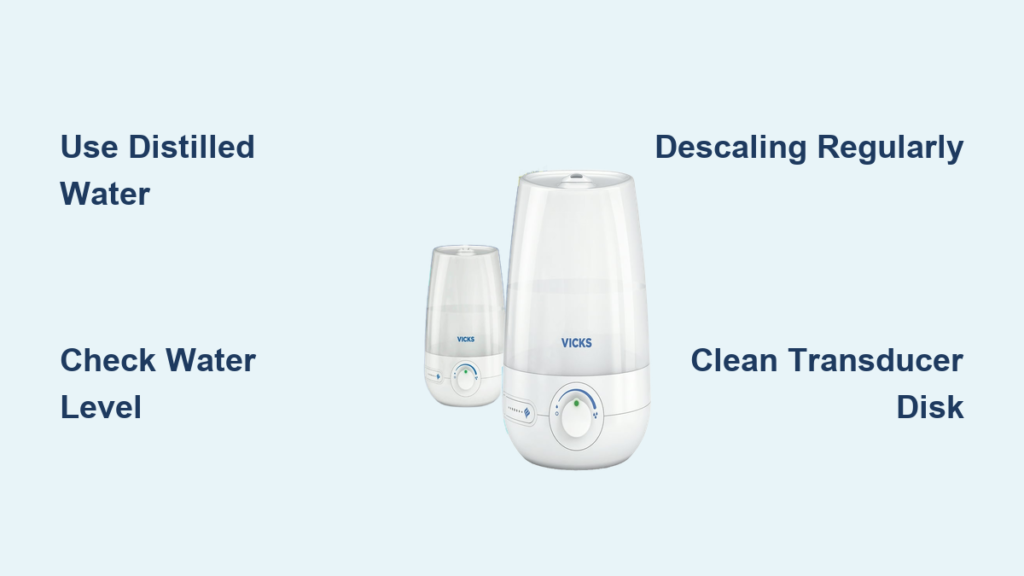
Your Vicks humidifier should be creating a soothing mist to ease dry winter air, not shooting water droplets across your bedroom like a malfunctioning sprinkler. When your unit suddenly starts spitting water instead of producing gentle vapor, it creates slippery hazards on floors, damages furniture, and defeats the entire purpose of adding moisture to your air. This frustrating issue most commonly strikes warm mist models but can plague ultrasonic and evaporative units too—especially if you’ve noticed increased sputtering after using tap water or skipping routine maintenance. Let’s pinpoint exactly why your Vicks humidifier spits water and implement proven fixes that restore quiet, effective operation within hours.
Water-spitting problems typically stem from three preventable culprits: mineral buildup from hard water, incorrect water levels, or worn internal components. The good news? Over 80% of cases resolve with simple cleaning or adjustments—no replacement needed. You’ll learn to diagnose your specific spitting pattern, perform targeted descaling, and implement foolproof prevention strategies that keep your humidifier running smoothly all season long.
Diagnose Your Humidifier’s Spitting Pattern
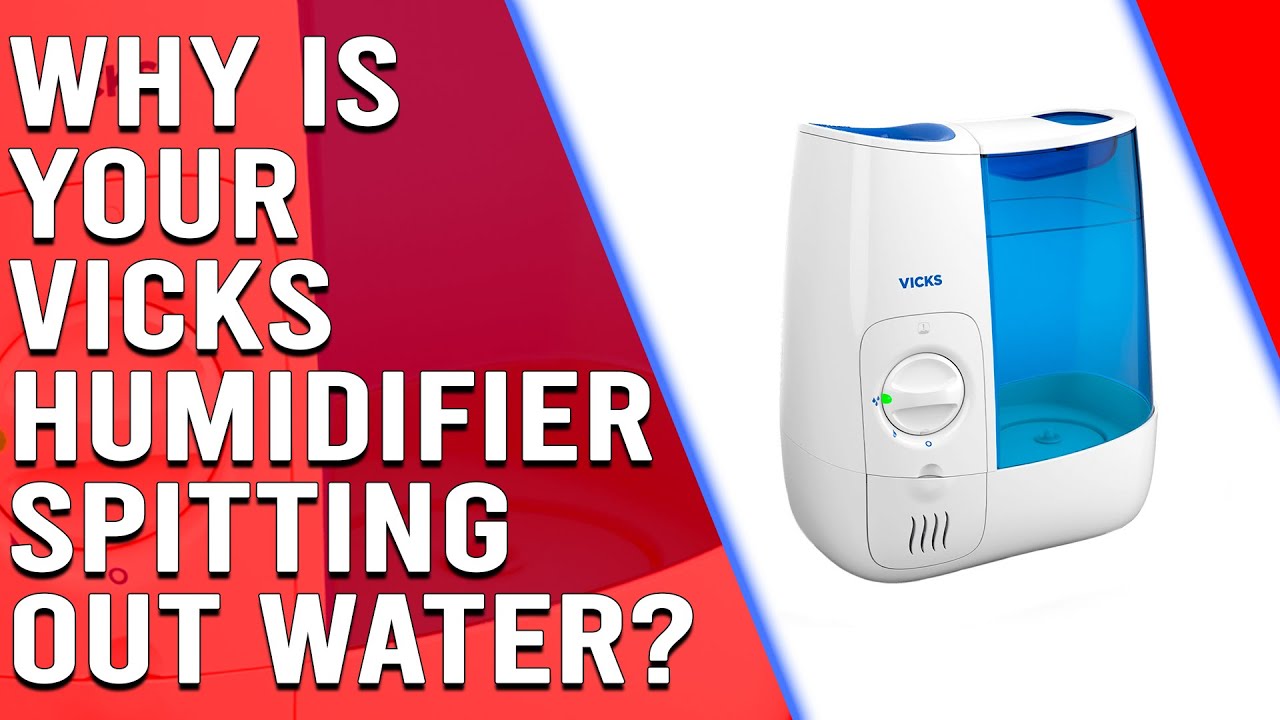
Warm Mist Models Shooting Water Droplets
If your Vicks warm mist humidifier violently sputters water instead of producing steady steam, mineral scale has likely coated the heating element. Hard water leaves calcium and lime deposits that insulate the heating plate, causing water to boil unevenly and erupt in bursts. This worsens dramatically if you haven’t descaled in three months or more—especially with well water or municipal sources over 100 ppm hardness. You’ll hear loud popping sounds and see visible white crust on the element during inspection.
Ultrasonic Units Creating Water Splashes
Ultrasonic humidifiers that spit water often have a dirty transducer disk or incorrect water levels. When mineral deposits accumulate on the vibrating metal disk, it generates coarse droplets instead of fine mist. This appears as water shooting from the outlet, accompanied by an unusually loud, high-pitched hum. Crucially, ultrasonic models require water levels precisely between the MIN and MAX lines—too low causes splashing, while overfilling triggers overflow during operation.
Evaporative Wick Overflow Symptoms
Evaporative Vicks humidifiers that spit water typically suffer from oversaturated wicks or float mechanism failures. If the wick filter can’t absorb water fast enough due to clogging or age, excess liquid gets blown through the fan vents. Listen for a distinctive “sloshing” sound before water appears on surfaces. This often happens when the wick hasn’t been replaced in 60+ days or if hard water has crystallized on the float assembly, preventing it from shutting off water flow.
Perform Critical Visual Inspections

Verify Correct Water Level Position
Immediately check your humidifier’s water level window before attempting complex repairs. Overfilling past the MAX line is the single most common cause of spitting across all Vicks models. Water contacting internal components like the heating element or transducer creates violent sputtering. If the level exceeds the indicator, carefully pour out 1-2 cups of water. Always fill to the MIN/MAX line—not above—and retest operation on a towel to catch residual drips.
Inspect Mist Outlet and Base Integrity
Examine the mist outlet nozzle for mineral blockages that force water sideways instead of upward. Use a soft-bristled toothbrush dipped in vinegar to gently scrub deposits from the vent. Simultaneously, turn off and unplug the unit, then empty the tank to inspect the base for hairline cracks. Even microscopic fractures near the water channel can leak into electrical components, causing erratic spitting. Discard units with any visible damage to prevent electrical hazards.
Execute Targeted Deep Cleaning Procedures
Descale Heating Elements Properly
For warm mist models, prepare a 50/50 white vinegar and water solution. Fill the tank halfway with this mixture and let it sit for 30 minutes to dissolve mineral scale. Run the humidifier for 10 minutes on high setting, then empty completely. Rinse thoroughly with fresh water and repeat if crust remains visible on the heating plate. Never use harsh chemicals or abrasive tools that could scratch the element surface.
Clean Ultrasonic Transducer Disks Safely
Unplug your ultrasonic humidifier and remove the water tank. Locate the small silver or gold transducer disk at the base unit’s bottom. Dip a soft toothbrush in undiluted white vinegar and gently scrub the disk surface in circular motions—avoiding excessive pressure. Rinse meticulously with distilled water to prevent immediate re-scaling. This critical step restores proper vibration frequency for fine mist production.
Replace Clogged Wick Filters Immediately
Evaporative models require fresh wick filters every 1-3 months. Pull out the old filter and check for: hardened mineral crust, mold growth, or physical disintegration. Install a new Vicks-specific wick ensuring it sits flat in the water channel without bunching. A properly seated wick absorbs water evenly, preventing the oversaturation that causes spitting.
Optimize Water Type and Fill Levels
Switch to Distilled Water Exclusively
Tap water minerals directly cause 90% of spitting issues. Switching to distilled water eliminates scale buildup at the source, resolving most spitting problems within 48 hours. Though slightly more expensive upfront, this single change extends your humidifier’s lifespan by years and reduces cleaning frequency by 70%. Always use room-temperature distilled water to prevent thermal shock to components.
Adjust Fill Volume Precisely
Fill tanks only to ¾ capacity instead of MAX line. This prevents water from reaching internal mechanisms during operation. Monitor performance for 24 hours—if spitting stops, maintain this fill level permanently. For evaporative models, also check the float mechanism: remove the tank and ensure the float moves freely up/down. Clean any mineral deposits from the float stem with warm water if stuck.
Replace Critical Faulty Components

Install New Heating Elements
When descaling fails to stop warm mist spitting, replace the heating element. Order the exact Vicks model-specific part (typically $20-$25) and follow manufacturer diagrams. This 15-minute repair involves disconnecting wires and swapping the element—restore proper steam generation without unit replacement.
Swap Damaged Ultrasonic Transducers
Pitted or cracked transducer disks create large water droplets instead of mist. Match replacement disks to your model’s frequency rating (1.7MHz or 2.4MHz) and install with basic screwdrivers. Proper transducer function ensures high-frequency vibrations produce consistent fine mist.
Prevent Future Spitting Through Maintenance
Implement Weekly Cleaning Rituals
Empty and rinse your tank every 3-4 days during active use. Perform deep vinegar descaling monthly even without visible buildup. This prevents mineral accumulation that causes spitting and doubles your humidifier’s operational life. Always dry components completely before reassembly to inhibit mold.
Use Demineralization Tablets Proactively
Add one Vicks-approved demineralization tablet per tank fill. These dissolve minerals before they deposit on components, reducing cleaning frequency by half. At pennies per use, they’re more cost-effective than distilled water for continuous operation in hard water areas.
Monitor Humidity with External Hygrometers
Spitting often occurs when room humidity exceeds 50%. Place a separate hygrometer in the room and adjust your humidifier’s output accordingly. Most spitting resolves by switching from high to low settings once optimal humidity is reached—never run units above 50% relative humidity.
Validate Your Repairs Effectively
Conduct 30-Minute Observation Test
After cleaning or part replacement, run your humidifier on a folded towel for 30 minutes. Watch for water accumulation—only normal condensation should appear. If spitting persists, revisit descaling with extended vinegar soaks (up to 1 hour). Uneven surfaces cause erratic water pooling; ensure the unit sits perfectly level during testing.
Document Successful Fixes
Photograph components before/after repairs to track what works. Note which solution resolved your spitting issue—most users find vinegar descaling fixes 80% of cases. Bookmark this guide for future reference since consistent maintenance prevents 95% of humidifier failures.
Your Vicks humidifier should now deliver silent, consistent mist without stray water droplets. The core solution combines distilled water use, precise ¾-tank fills, and monthly vinegar descaling. If spitting continues after replacing the heating element or transducer, consult Vicks’ warranty support—most units fail due to neglected maintenance rather than permanent defects. Remember: five minutes of daily care prevents hours of troubleshooting, keeping your air comfortable and your floors dry all winter long.