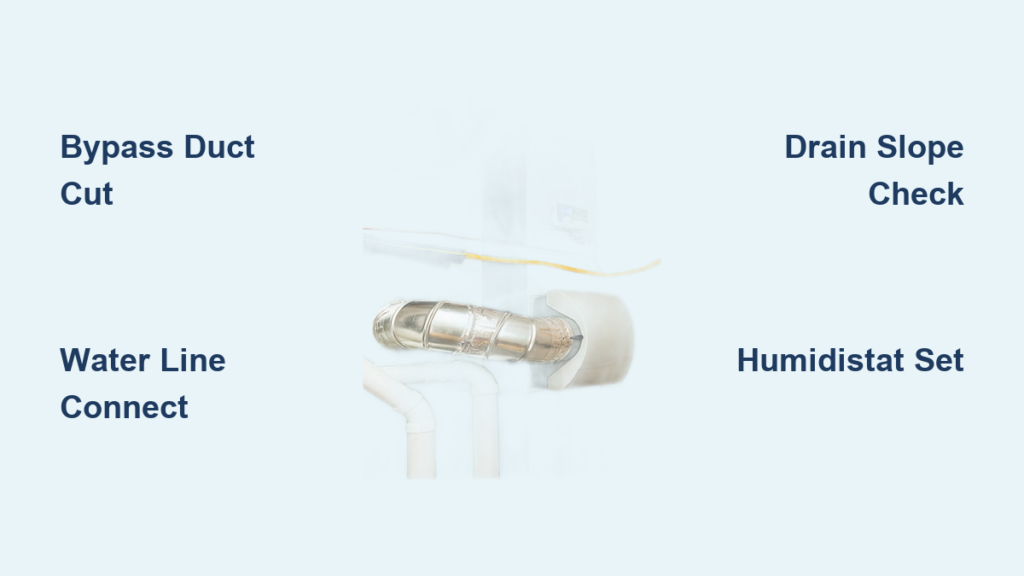
Dry winter air causes cracked wood floors, irritating static shocks, and uncomfortable respiratory issues throughout your home. Installing a whole house humidifier directly into your HVAC system solves these problems by maintaining optimal 35-45% relative humidity levels automatically. This comprehensive guide walks you through selecting the right system type, preparing your space, and completing a professional-quality whole house humidifier installation that delivers balanced moisture throughout every room.
Match Your Humidifier Type to Home Requirements

Bypass vs Fan-Powered vs Steam System Selection
Bypass humidifiers connect between supply and return ducts using a dedicated bypass duct. These systems operate using your furnace’s existing blower motor to push air through the water panel, requiring only 24V humidistat control wiring—no additional electrical circuit needed. They represent the most cost-effective solution for standard forced-air systems and work best when installed on the return air duct upstream of your air filter.
Fan-powered units include an integrated blower motor that operates independently of your furnace cycle. This capability allows them to humidify your home even when heating isn’t active, but requires a dedicated 110V/120V electrical circuit. Installation typically positions these units directly on the supply ductwork in the return air plenum, making them ideal for homes where bypass duct routing proves difficult.
Steam humidifiers generate moisture independently and inject it directly into your air stream. These premium systems require significant infrastructure including a 220V/240V dedicated circuit, direct water connection, and specialized drainage. While offering precise humidity control for larger homes, steam units almost always require professional installation due to their electrical and plumbing complexity.
Calculate Your Exact Humidification Needs
Selecting the right capacity prevents under-humidification or wasteful over-humidification. Match your unit’s output to your home’s specific requirements by considering:
- Total heated square footage – Larger homes need higher capacity units
- Local climate conditions – Colder regions require more humidification
- Ductwork configuration – Complex layouts may need supplemental units
- Occupant count – More people increase moisture demands
Most manufacturers provide sizing charts based on these factors—never guess when selecting your system capacity.
Verify Your HVAC System Compatibility Before Purchasing

Critical Ductwork Assessment Steps
Before buying any humidifier, examine your existing duct configuration for proper installation feasibility. Bypass systems require accessible supply and return ducts within 6-10 feet of each other, while fan-powered units need sufficient clearance on the supply duct for mounting. Measure these critical dimensions:
- Available space between furnace and first ductwork obstruction
- Clear wall area near the return air plenum for unit mounting
- Straight path for water line routing from nearest cold water source
- Distance to floor drain or condensate pump location
Pro Tip: Take photos of your furnace area with measurements noted—this helps when consulting with sales staff or reviewing installation manuals.
Electrical and Plumbing Verification Checklist
Confirm your home has the necessary utilities before installation day. Bypass systems need only 24V control wiring, while fan-powered units require accessible 110V outlets. Steam systems demand professional electrical work for 220V circuits. Check water pressure at your intended connection point—most humidifiers require 20-125 PSI. If pressure exceeds limits, plan to install a regulator during setup.
Gather Essential Tools Before Starting Installation
Must-Have Installation Equipment
Avoid mid-project delays by assembling these tools beforehand:
- Sheet metal tools: Aviation snips, crimping tool, metal hole punch
- Electrical supplies: Voltage tester, wire strippers, fish tape
- Plumbing basics: Pipe cutter, Teflon tape, adjustable wrenches
- Safety gear: Safety glasses, work gloves, dust mask
Critical Warning: Never attempt electrical work beyond your skill level. If installing a steam unit or adding circuits, hire a licensed electrician—improper wiring risks fire or system damage.
Install Bypass Humidifier in 5 Critical Steps
Precise Ductwork Cutting Procedure
Use the manufacturer’s template to mark cut lines on both supply and return ducts. Start with smaller openings—you can always enlarge them but can’t undo oversize cuts. Make straight, clean cuts with aviation snips, creating openings that match your unit’s specifications exactly. Improperly sized openings cause air leaks and reduce system efficiency.
Bypass Duct Installation with Proper Slope
Connect the bypass duct between supply and return air ducts with 1/4 inch per foot downward slope toward the humidifier. This slope ensures proper drainage and prevents water accumulation. Secure all connections with sheet metal screws and seal thoroughly with aluminum foil tape—never use standard duct tape as it deteriorates in humid conditions.
Complete Fan-Powered Unit Installation Correctly

Electrical Circuit Connection Protocol
If installing a new 110V circuit, follow these safety steps:
1. Turn off main electrical panel
2. Run NM-B cable from panel to furnace area
3. Install GFCI-protected outlet near unit location
4. Connect circuit to dedicated breaker
5. Test circuit with multimeter before connecting humidifier
Never tap into your furnace’s electrical box without verifying local code compliance—this practice voids many equipment warranties.
Water Panel Housing Mounting Technique
Position the unit on the return air duct with the access door facing an unobstructed direction for maintenance. Ensure mounting brackets securely attach to solid duct metal—not insulation or thin sheet metal. Verify the water panel slides in and out smoothly before proceeding—tight clearances cause premature wear during operation.
Avoid Steam Humidifier Installation Pitfalls
220V Electrical Connection Requirements
Steam systems demand professional electrical work due to high voltage requirements. The circuit must include:
– Dedicated breaker sized per unit specifications
– Proper grounding per National Electrical Code
– GFCI protection for safety
– Conduit protection where exposed
Attempting DIY installation on these systems frequently results in electrical damage and voids manufacturer warranties.
Steam Distribution Manifold Placement
Mount the steam distribution manifold within your ductwork 6-12 inches downstream from the furnace. Position it away from direct heat exposure to prevent thermal stress on components. Ensure proper clearance around the manifold for even steam distribution—improper placement causes uneven humidity levels throughout your home.
Connect Water Supply Without Leaks
Proper Saddle Valve Installation Sequence
Follow this leak-proof installation method:
1. Shut off main water supply
2. Drain pipe section by opening lowest faucet
3. Clean pipe surface thoroughly with emery cloth
4. Position saddle valve at high point on horizontal pipe
5. Tighten mounting screws evenly in diagonal pattern
6. Connect 1/4-inch supply line to humidifier
7. Turn water back on slowly and check for leaks
Critical Step: Install an inline filter between the saddle valve and humidifier to prevent mineral buildup in the water panel.
Establish Reliable Drainage for Long-Term Operation
Condensate Drain Slope Requirements
Create a drainage path with minimum 1/4 inch per foot downward slope toward your drain point. Use rigid PVC piping rather than flexible tubing for reliable long-term performance. Install an air gap fitting where local plumbing codes require it—typically 1 inch above the drain rim—to prevent backflow contamination of your water supply.
Condensate Pump Installation Tips
When floor drains aren’t accessible, install a condensate pump with:
– Secondary overflow switch for safety
– Clear reservoir for easy monitoring
– Vibration isolation pads to reduce noise
– Electrical connection to GFCI outlet
Test pump operation by filling reservoir manually before connecting to humidifier.
Wire Control System for Accurate Humidity Management
Humidistat Placement Guidelines
Install your humidity control away from direct sunlight, kitchen heat sources, exterior walls, and supply air registers. The optimal location provides accurate whole-house readings while remaining accessible for adjustments. Mount on interior wall at breathing height (4-5 feet) for most reliable measurements.
Low-Voltage Wiring Connection Process
Connect 24V control wiring between humidifier, humidistat, and furnace control board according to manufacturer diagrams. Use color-coded wire for easy future identification and secure connections with wire nuts—not electrical tape. Test continuity with a multimeter before powering up the system.
Verify Proper Operation Before Seasonal Use
Comprehensive Startup Testing Protocol
Activate your system and monitor for:
– Consistent water flow without leaks
– Correct electrical operation across all components
– Adequate drainage without pooling
– No unusual noises or vibrations
Run the system through multiple heating cycles to verify consistent performance under varying conditions.
Humidity Calibration Verification
Set your humidistat to 35-45% relative humidity and verify accuracy with a separate hygrometer. Adjust calibration if readings differ by more than 5%—many digital humidistats include fine-tuning options in their settings menus. Test operation at different outdoor temperatures to ensure proper adjustment throughout the heating season.
Prevent Costly Installation Mistakes
Avoid Common Water Damage Scenarios
Never skip these critical protection steps:
– Install water hammer arrestors near connections
– Use Teflon tape on all threaded plumbing fittings
– Test every connection under full pressure
– Position drip pans under units in finished basements
Improper drainage installation accounts for over 60% of service calls during the first year—don’t rush this critical step.
Ensure Proper Airflow Through System
Verify bypass ducts match manufacturer specifications—typically 6 inches for residential systems. Confirm adequate clearance around the unit for proper air circulation and maintenance access. Blocked airflow reduces humidification efficiency by up to 40% and strains your furnace blower motor.
Plan for Future Maintenance During Installation
Design Service-Friendly Access Points
Install service valves and unions at every connection point to allow component replacement without destructive modifications. Clearly label all valves and electrical connections with waterproof tags—future you (or your technician) will thank you during seasonal maintenance.
Create Seasonal Transition System
Include bypass damper controls for summer deactivation and drain-down valves for winterization in cold climates. Mount operating instructions near the unit with seasonal adjustment recommendations—this simple step prevents system damage during off-seasons.
Final Safety Verification Before Seasonal Use
Code Compliance Checklist
Verify your installation meets local requirements for:
– Electrical grounding and GFCI protection
– Plumbing air gaps and backflow prevention
– Combustion air requirements
– Permitted modifications to HVAC system
Many municipalities require permits for electrical circuit additions and major ductwork changes—check your local requirements before starting.
Emergency Shut-Off Testing
Confirm proper operation of all safety features:
– Water supply shut-off valves
– Overflow protection mechanisms
– Electrical disconnect switches
– Emergency shut-down procedures
Test each safety feature individually before relying on the system during cold weather.
Final Note: After completing your whole house humidifier installation, schedule annual maintenance including water panel replacement and system cleaning. Monitor humidity levels throughout your first heating season, adjusting settings as needed based on comfort and visible results. With proper installation and maintenance, your whole house humidifier will provide comfortable, healthy air for years while protecting your home’s wood surfaces and improving indoor air quality. If you encounter persistent issues or feel uncertain about any installation step, consult a qualified HVAC professional—proper installation ensures optimal performance and protects your system warranty.