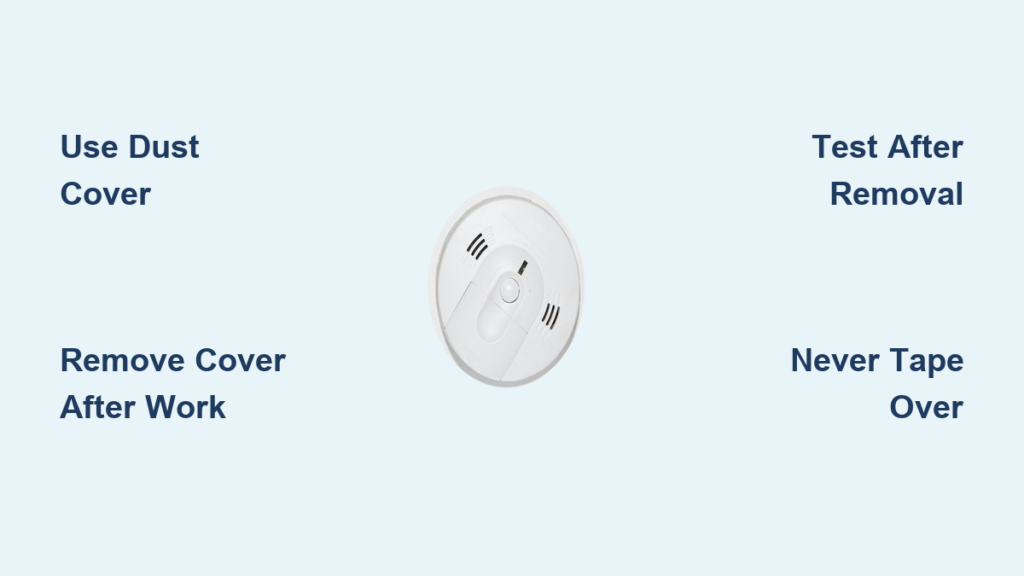
You might be searching for how to cover a smoke detector to stop false alarms, silence chirping, or protect the unit during painting. But here is the critical truth: covering an active smoke detector can disable it entirely, turning a life-saving device into a silent plastic disc. A covered alarm may look functional while completely failing to detect smoke in a real emergency.
This guide explains the only safe, code-compliant ways to handle a smoke detector when you need it out of the way, plus what to do instead of covering it. You will learn which methods violate fire codes, which are approved for short-term construction use, and how to fix the real problems that make people want to cover their alarms in the first place.
Why Covering a Smoke Detector Is Dangerous
Blocked Sensors Cannot Detect Smoke
Smoke detectors work by drawing air into a sensing chamber to detect particles. When you place tape, plastic, or fabric over the unit, airflow stops and the sensor goes blind. Even a single layer of tape can reduce smoke entry by more than 70 percent, delaying the alarm by critical seconds when every moment counts.
Violates NFPA 72 Fire Safety Codes
NFPA 72 Chapter 14 requires that smoke detectors remain free of obstructions and fully exposed to the surrounding air. Covering a detector with non-approved materials breaks these rules. In rental properties, this can result in failed inspections, fines, or legal liability if a fire occurs.
Common Covering Methods That Disable Alarms
People frequently use items like electrical tape, plastic wrap, toilet paper, or fabric to block alarms. These materials may stop a chirping noise briefly, but they disconnect the device from its life-saving function. Partial coverage is just as dangerous, because smoke can still fail to reach the sensor through tiny gaps or filtered material.
When It Is Safe to Cover a Smoke Detector
There is only one acceptable scenario: during construction, renovation, or painting, and only with manufacturer-approved dust covers.
Use Only Approved Dust Covers

Manufacturers design temporary plastic caps, usually orange, red, or yellow, that snap over the detector during building work. These covers seal the sensor from dust and paint, are clearly labeled with a warning that the alarm will not operate, and remove easily when work is finished. Do not substitute tape, bags, or homemade shields for these official products.
Follow NFPA 72 Construction Guidelines
NFPA 72 Chapter 17 requires that smoke alarms be protected from contamination during installation, that temporary covers be removed immediately after work ends, and that devices be tested before occupancy. Leaving a cover on after construction is a code violation that puts everyone in the building at risk.
How to Protect Smoke Detectors During Painting
Paint fumes and overspray can trigger false alarms or permanently damage sensors. Instead of covering the detector, try one of these safer methods.
Option 1: Remove and Reinstall the Alarm
This is the safest approach for homeowners.
- Turn off power at the breaker for hardwired units.
- Unscrew the alarm from its mounting base.
- Disconnect the battery to fully disable the unit.
- Store it in a clean, dry location away from paint fumes.
- Reinstall and test the alarm when painting is complete.
Option 2: Use a Factory Dust Cover
If your alarm came with an approved plastic cap, follow these steps.
- Snap the cover on before painting begins.
- Keep it loose enough to avoid sealing vents.
- Remove the cover immediately after painting.
- Press the test button to confirm the alarm sounds.
Option 3: Shield with a Plastic Bag as a Last Resort
If you cannot remove the alarm and no approved cover exists, this short-term method works for small jobs.
- Use a clean plastic bag such as a sandwich bag.
- Wrap loosely around the alarm body.
- Secure with a rubber band, but never seal tightly.
- Verify the vents remain open for airflow.
- Remove and test the unit the moment painting ends.
What to Do Instead of Covering a Smoke Detector
Most people cover an alarm because of false triggers or chirping. Solving the real problem is safer and more effective.
Fix Nuisance Alarms at the Source
Common triggers include shower steam, cooking fumes, dust buildup, and insects inside the chamber. You can relocate the alarm at least 10 feet from kitchens or bathrooms, switch to photoelectric models in steam-heavy areas, clean the detector monthly with a vacuum brush, and seal attic gaps that let cooking smoke drift into living spaces.
Replace Old or Chirping Detectors
Smoke alarms last 8 to 10 years. If yours chirps at random intervals, check the battery first, look for the expiration date stamped on the back, and replace the entire unit if it is older than a decade. A chirping sound is the device telling you it is time for retirement, not a signal to cover it up.
How to Check for Forgotten Dust Covers
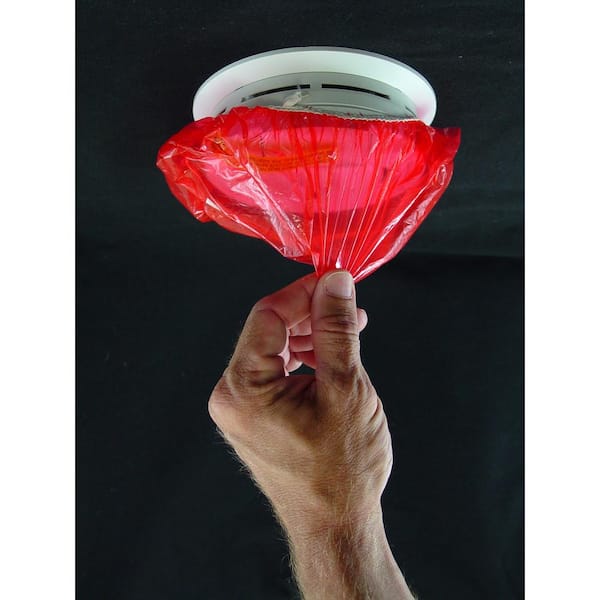
Many new homeowners do not realize construction covers exist. A single forgotten cap can disable your entire fire safety system.
60-Second Home Check
- Walk through every room with ceilings.
- Look closely at each smoke detector.
- Check for colored plastic caps in red, orange, or yellow.
- Remove any cover you find.
- Press the test button to confirm the alarm sounds.
What to Do If You Find a Cover
Remove it right away, test the alarm, and report the issue to your landlord, builder, or property manager if applicable. In new construction, builders sometimes miss this step during final walkthroughs, so verifying on move-in day can prevent a silent failure later.
Can Landlords or Tenants Cover Detectors Legally
No. Covering a smoke detector in a rental property is illegal in most jurisdictions, a violation of fire codes, and a criminal liability if a tenant dies because the alarm failed. Better solutions include upgrading to smart detectors with hush buttons, educating tenants on proper use, and installing alarms away from kitchens to reduce false triggers.
How to Temporarily Silence a Smoke Detector the Right Way

When an alarm goes off, covering it is the wrong response. Use the built-in silence feature instead.
Use the Hush Button
Most modern alarms include a hush button that you press and hold for 3 to 5 seconds. Smart models may offer remote silencing through an app. This quiets the alarm for 5 to 15 minutes, enough time to ventilate steam or smoke from the room.
Remove the Battery Only as a Last Resort
If no hush button exists, briefly remove the battery, clear the air by opening windows, reinstall the battery, and test the unit. Never leave the battery out for extended periods, because a disabled alarm offers zero protection.
Do Not Forget Fire Sprinkler Covers
Fire sprinkler heads often arrive with small plastic caps that protect the glass bulb during installation. If left in place after construction, these caps prevent water discharge during a fire. Check attic and ceiling sprinklers during your home inspection, because a single covered head can allow flames to spread unchecked.
Final Safety Checklist
Do:
– Use only manufacturer dust covers during construction
– Remove all covers immediately after work ends
– Test every alarm monthly
– Replace alarms every 10 years
– Clean detectors regularly with a vacuum brush
Do not:
– Tape over smoke alarms
– Use plastic bags or fabric to cover sensors
– Leave dust covers on after renovation
– Ignore chirping or false alarms
– Assume all alarms are working without testing
Frequently Asked Questions About Covering a Smoke Detector
Is it ever safe to put tape over a smoke detector?
No. Tape blocks airflow to the sensor and can reduce smoke detection by more than 70 percent. Even temporary tape use violates NFPA 72 Chapter 14, which requires unobstructed detectors at all times. Use a manufacturer-approved dust cover during construction instead, and remove it the moment work ends.
Can I cover a smoke detector with a plastic bag during painting?
A loose plastic bag is acceptable only as a last resort for short painting jobs. Wrap the bag loosely, secure it with a rubber band, and confirm the vents remain open. Remove the bag immediately after painting and test the alarm. The safer option is to remove the alarm entirely or use an approved dust cover.
How do I know if my smoke detector has a forgotten dust cover?
Look for a colored plastic cap in red, orange, or yellow snapped over the sensor. These caps usually include a printed warning label. Walk through every room, inspect each unit, and press the test button after removing any cover you find. Builders often miss these during final walkthroughs, so new homeowners should check on move-in day.
Will covering a smoke detector stop the chirping?
Covering the alarm does not address the cause of chirping, which usually points to a low battery, dust buildup, or an expired unit older than 10 years. Replace the battery first, then test the alarm. If chirping continues, replace the entire detector. A covered alarm is a silent alarm, which is far more dangerous than a chirping one.
Are there legal consequences for covering a smoke detector in a rental?
Yes. Most jurisdictions treat covered detectors in rental units as code violations that can result in fines, failed inspections, or criminal liability if a fire causes injury or death. Landlords should upgrade to smart alarms with hush features and educate tenants instead of allowing covers.
Key Takeaways for Covering a Smoke Detector Safely
Your smoke detector is your first line of defense in a fire, and covering it with tape, plastic, or fabric turns it into a useless shell. The only safe time to cover a detector is during construction with a manufacturer-approved dust cover, and that cover must come off the moment work ends. When false alarms or chirping tempt you to disable the unit, clean the sensor, replace the battery, upgrade the model, or relocate the device instead. Take 60 seconds today to walk through your home, remove any forgotten covers, and test every alarm so your family is protected when it matters most.