That chalky white crust coating your humidifier’s heating element isn’t just unsightly—it’s silently killing your device’s efficiency. Every night you run your humidifier, hard water minerals are quietly forming rock-solid deposits that can cut your unit’s lifespan in half. If you’ve noticed reduced mist output, strange noises, or that persistent white dust on your furniture, you’re dealing with scale buildup that needs immediate attention.
This guide delivers the exact process to dissolve stubborn mineral deposits and restore your humidifier to peak performance. Whether you own a warm mist, ultrasonic, or evaporative model, you’ll learn how to descale a humidifier safely and effectively using just white vinegar and basic household tools—no special chemicals required.
Why Scale Buildup Cripples Your Humidifier’s Performance
Hard water minerals like calcium separate from water during the humidification process, forming deposits so solid you can’t cut them with a knife. Your humidifier essentially becomes a mineral deposit factory—running it overnight creates significantly more scale than daytime use, and if you live in an area with hard water, the damage accelerates rapidly.
Scale attacks your humidifier’s critical components differently depending on the model. In warm-mist units, it insulates the heating element, forcing your device to work harder while producing less steam. Ultrasonic models suffer when scale prevents the nebulizer disc from vibrating properly, creating that annoying buzzing sound and reduced mist output. For evaporative humidifiers, scale clogs the wicking filter, blocking proper water absorption and distribution.
Allowing scale to accumulate for just 2-3 months creates exponentially harder cleaning challenges compared to monthly maintenance. The difference between removing fresh deposits and battling hardened crust means the difference between a 15-minute cleaning session and hours of frustrating scrubbing.
Critical Safety Steps Before Descaling Your Humidifier
Never skip these essential precautions. Before touching any cleaning solution:
- Turn off and unplug your humidifier completely—never work on a plugged-in unit
- Work in your kitchen or bathroom on water-resistant surfaces near a faucet
- Never submerge the entire base unless your manual specifically allows it
- Never power on the unit while cleaning or with solution inside
Always check your manufacturer’s manual first—some models have specific cleaning procedures that override general advice. Your humidifier’s warranty could be voided by improper cleaning methods, so this step isn’t optional. If you’ve misplaced your manual, search online using your exact model number before proceeding.
White Vinegar: Your Most Effective Descaling Solution
Undiluted white vinegar (5-6% acetic acid) remains the gold standard for how to descale a humidifier effectively. For regular maintenance, you can dilute it 1:1 with water. For severe buildup, cleaning vinegar (6-7% acetic acid) works faster with its stronger concentration.
Gather these essential supplies:
– Soft-bristled brush or microfiber cloth (never use abrasive pads)
– Cotton swabs for tight spaces around nebulizer discs
– Measuring cup for precise vinegar amounts
– Clean water for thorough final rinsing
– Small bowl for tilting technique (optional but recommended)
Warm Mist Humidifier Descaling Procedure

Step 1: Disassembly and Assessment
Remove the water tank, cooling chamber, and any removable trays. Examine the heating element closely—thick crust indicates extended soaking time needed. Note any particularly stubborn areas that will require extra attention during the cleaning process.
Step 2: Targeted Vinegar Soak
Fill the base with undiluted white vinegar until it completely covers the heating element. Do not submerge the entire base unit. Watch for tiny bubbles forming as the vinegar reacts with mineral deposits—this visual confirmation means the descaling process has begun immediately.
Step 3: Strategic Positioning for Maximum Effect
Tilt the base upward and place a bowl under the lower end. This concentrates vinegar only on the heating element while protecting sensitive components like springs and locking mechanisms from unnecessary exposure. This simple technique prevents damage to electrical components while maximizing cleaning power where it’s needed most.
Step 4: Scrubbing and Reassessment
After a minimum 20-minute soak (overnight for severe cases), gently scrub with your soft brush using circular motions. Replace with fresh vinegar if deposits remain stubborn. Rinse thoroughly until all vinegar smell disappears—this step is crucial to prevent vinegar residue from affecting your next use.
Ultrasonic Cool Mist Humidifier Cleaning Protocol
Nebulizer Disc Focus
The round nebulizer disc requires precise attention. Fill the base with just enough vinegar to cover this disc—typically ½ to 1 cup. Let it soak 20+ minutes, using cotton swabs to clean around the edges where scale accumulates most heavily. The nebulizer’s delicate surface can be permanently damaged by aggressive scraping, so use only the softest touch with your cotton swabs.
Critical Rinse Step
Empty vinegar completely and rinse until the base smells neutral. Any remaining vinegar can corrode the nebulizer when you restart the unit. Ultrasonic models are particularly sensitive to residual cleaning solutions, so perform at least three thorough rinse cycles to ensure complete removal.
Evaporative Humidifier Maintenance Specifics
Filter Reality Check
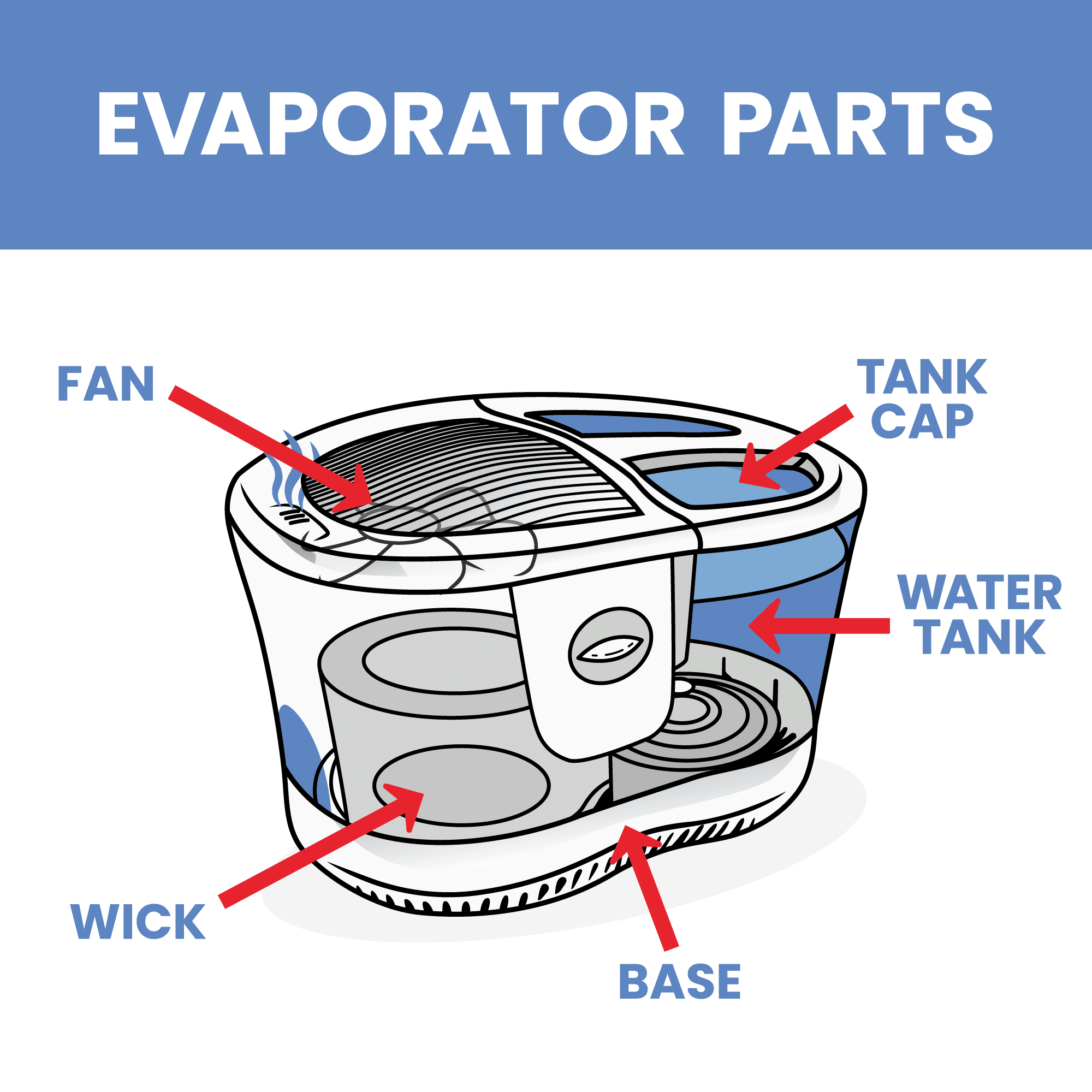
Most evaporative humidifiers use wicking filters that require replacement every 30-60 days—not cleaning. If your filter looks gray or crusty, replace it instead of attempting to descale. Trying to clean a spent filter wastes time and reduces your humidifier’s effectiveness.
Tank and Base Protocol
Follow the vinegar soaking procedure for your water tank and base components, but never attempt to descale the actual wicking filter. For the tank, fill partially with vinegar, swish to coat all interior surfaces, and let sit for 20 minutes before thorough rinsing.
Creating an Effective Descaling Schedule
Daily: Quick rinse and refill with fresh water prevents mineral concentration. This simple habit dramatically reduces scale formation.
Weekly: Complete descaling and disinfecting keeps buildup minimal. This 10-15 minute routine prevents the need for intensive cleaning sessions later. Consistent weekly maintenance transforms what could be a difficult chore into a simple habit.
Monthly: Deep descale even if buildup appears minimal. Preventing hard crust formation saves hours of scrubbing later. Monthly maintenance catches deposits before they harden into stubborn scale.
End-of-season: Always descale before storage. Mineral deposits harden during off-season storage, making next year’s startup miserable without this critical step.
Emergency Protocol for Severe Mineral Deposits
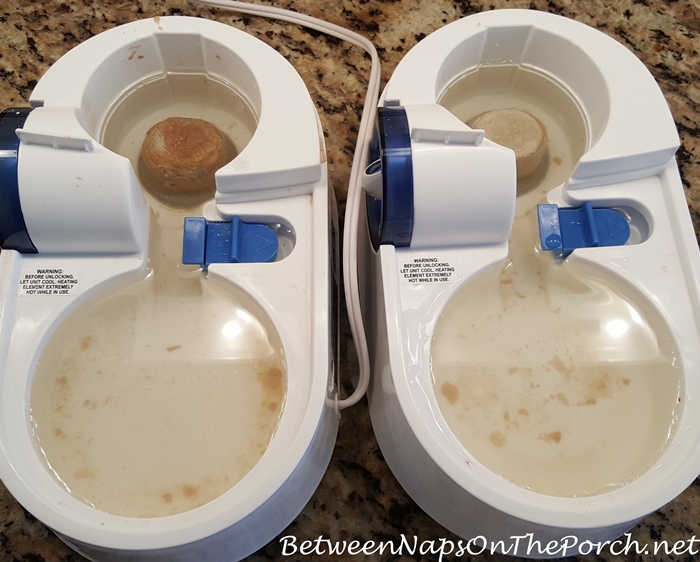
When facing thick, stubborn scale that won’t budge:
- Multiple treatments: Replace vinegar with fresh solution every 4-5 hours
- Extended soaking: Allow up to 24 hours for extreme cases (check periodically)
- Gentle scraping: Only use soft plastic tools to avoid damaging surfaces
- Stronger solution: Cleaning vinegar works faster than regular white vinegar
Warning: Never use metal tools or abrasive cleaners—they’ll permanently damage heating elements and nebulizer surfaces. If deposits remain after multiple treatments, consider replacement parts or a new humidifier.
Integrating Descaling into Complete Humidifier Care
Descaling works best as part of a three-step weekly routine:
- Descale (mineral removal) – detailed above
- Disinfect – ½ gallon water + ½ teaspoon bleach, 20-minute soak
- Rinse – until all cleaning odors disappear
This entire process takes 10-15 minutes when performed weekly. Skip this routine for months, and you’ll invest several hours battling rock-hard deposits. Never combine vinegar and bleach—they create dangerous fumes. Always complete the vinegar descaling first, then rinse thoroughly before disinfecting with bleach.
Proven Tactics to Prevent Future Scale Buildup
- Use distilled water for daily operation—eliminates mineral source entirely
- Empty tank daily instead of letting water sit stagnant
- Keep weekly cleaning appointments like medical checkups
- Replace filters on schedule, never stretching past 60 days
Your humidifier will reward consistent maintenance with years of quiet, efficient operation. The 15-minute weekly investment prevents the frustration—and expense—of premature replacement. Remember: regular descaling isn’t just cleaning—it’s preserving your humidifier’s performance, efficiency, and lifespan. By following this how to descale a humidifier guide consistently, you’ll enjoy cleaner air, better performance, and avoid the most common reason humidifiers fail prematurely.