Every 24 seconds, a home fire breaks out somewhere in the United States. Working smoke detectors cut the risk of dying in a fire nearly in half, yet millions of households operate with outdated or malfunctioning alarms. The question of how often to change smoke detector units and batteries is one of the most overlooked aspects of home safety. Even alarms that pass monthly tests become unreliable over time as sensors corrode and internal components degrade.
Understanding replacement schedules helps you stay ahead of failure. In this guide, you’ll learn the exact timelines for replacing both batteries and full units, how to identify aging alarms, and proven strategies to keep your entire detection system performing at its best. Whether you rent or own, this knowledge could be the most important safety information you read this year.
Replace the Entire Smoke Detector Every 10 Years
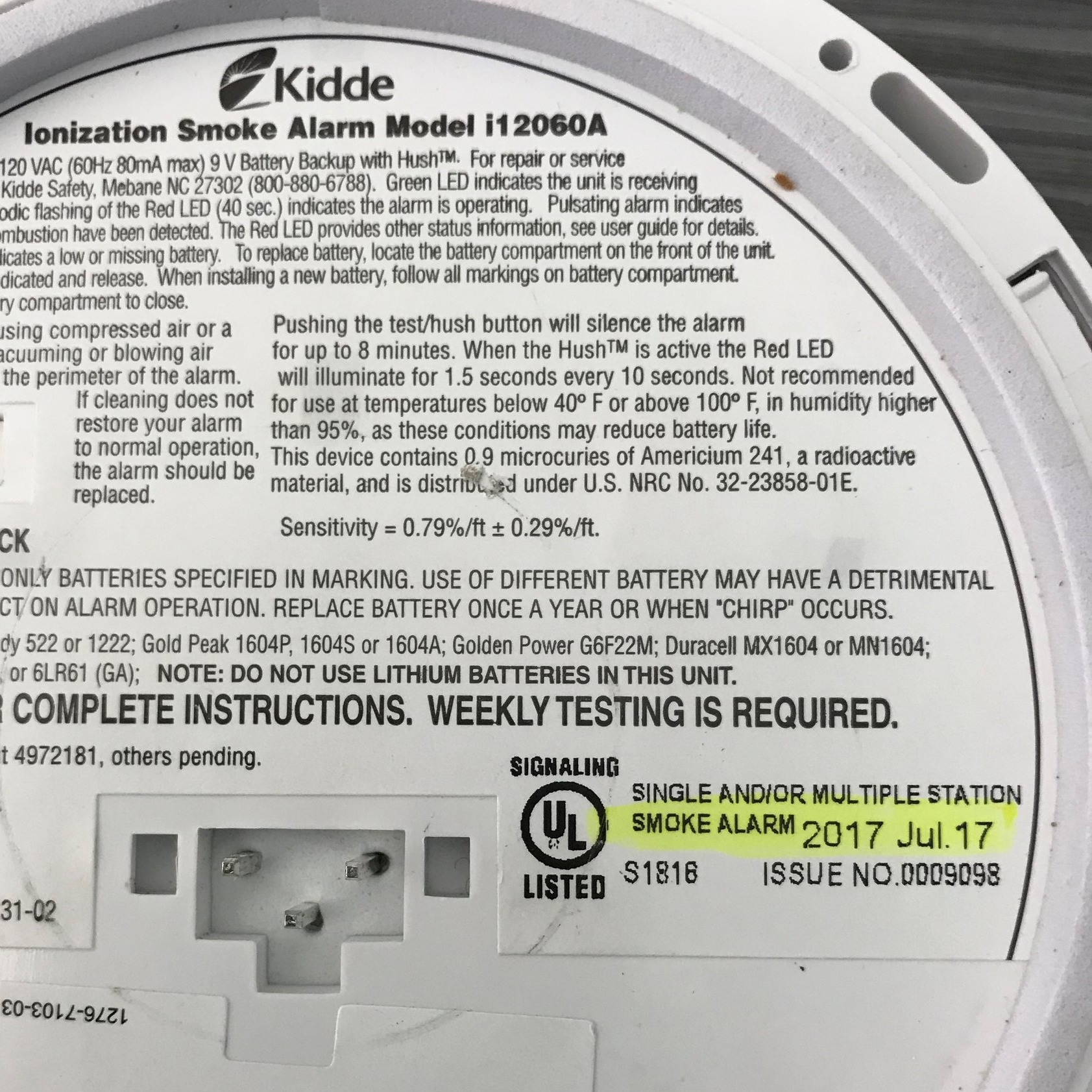
The single most important rule in smoke detector maintenance is replacing the full unit every 10 years from the manufacture date. This recommendation comes from the National Fire Protection Association and applies to ionization, photoelectric, and dual-sensor models alike. After a decade, sensor sensitivity drops significantly, even in alarms that appear fully functional during testing.
Locate the Manufacture Date on the Back
Flip each detector off its mounting bracket and look for a printed or stamped date on the back label. Most units show either a manufacture date or an explicit expiration date. Add 10 years to the manufacture date to find your exact replacement deadline. A unit built in June 2016 should be swapped out by June 2026.
If the label is missing, faded, or unreadable, treat the alarm as expired. Homes more than 10 years old often contain detectors that have never been replaced, making this one of the most common safety oversights in older properties.
Set Calendar Reminders for Each Unit
Once you know replacement dates, enter them into your phone or write them on a household calendar. Tie the task to daylight saving time changes for an easy annual checkpoint. Many homeowners pair detector replacements with other seasonal maintenance like HVAC filter changes, making the habit stick without extra effort.
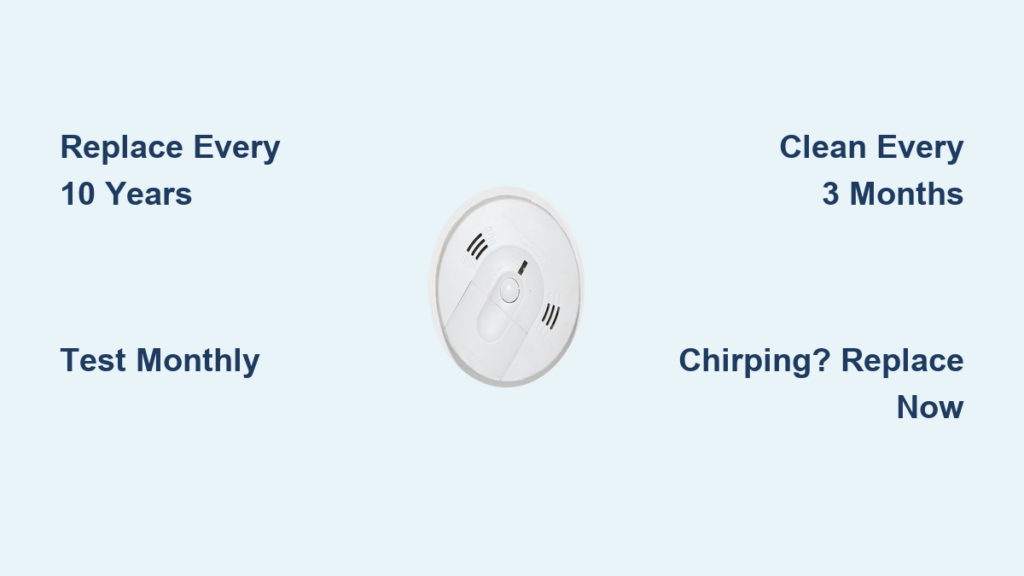
Test Monthly and Clean Every Three Months
Routine maintenance keeps detectors responsive and prevents false alarms, but it never extends the 10-year service life. Still, skipping these simple steps invites early failure and unreliable performance.
Press the Test Button on Every Alarm Monthly
Walk through your home once a month and press the test button on each unit until you hear the full alarm sound. This single action confirms the battery, circuitry, and speaker are all working together. If an alarm fails to sound, replace the battery first and test again. If it still doesn’t respond, replace the entire unit right away.
Never dismiss a weak or delayed test response. An alarm that barely chirps today may fail completely during a real emergency tomorrow.
Vacuum the Outer Vents Every Quarter
Dust, pet hair, and small insects gradually clog the sensor chamber through the outer vents. Use a vacuum cleaner with a soft brush attachment to gently clean around the outside of each unit every three months. Avoid sprays, cleaners, or water, which can damage internal electronics permanently.
For ceiling-mounted units, an extendable duster or vacuum wand makes the job easier. Turn off the breaker before cleaning hardwired models to eliminate any shock risk.
Change Standard Batteries Once a Year
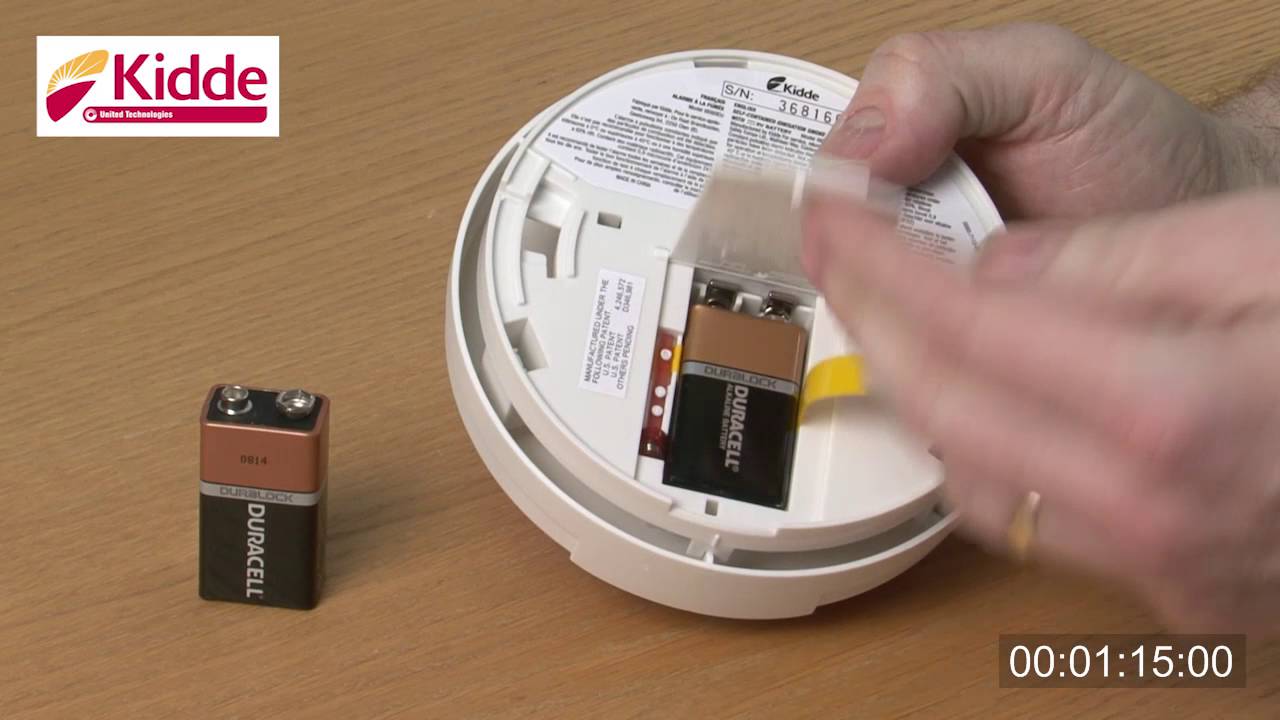
Battery-only units and battery backups in hardwired alarms need fresh power to function during outages. A dead backup battery renders a wired alarm useless the moment the power goes out.
Replace 9-Volt Batteries at Daylight Saving Time Changes
Swap standard 9-volt alkaline or lithium batteries every 12 months. Tying this task to the spring and fall clock changes makes it nearly impossible to forget. Quality batteries from trusted brands last longer and resist leakage that can corrode internal contacts.
Detectors with sealed 10-year lithium batteries cannot have their batteries replaced. When the low-battery chirp starts on these models, the entire unit must be discarded and replaced with a new one.
Respond to Chirping Within 24 Hours
A chirp every 30 to 60 seconds means the battery is critically low. Replace it immediately rather than waiting for a convenient time. If chirping continues after a fresh battery installation, the detector itself is failing and needs full replacement.
Never remove the battery to silence a chirping alarm and leave it out. An unprotected home is a vulnerable home.
Replace Sooner Than 10 Years If Warning Signs Appear
The 10-year rule is a maximum, not a guarantee. Some units need replacement well before their expiration date due to environmental factors, frequent false alarms, or physical damage.
Investigate Frequent False Alarms
Smoke detectors that regularly sound without an actual fire often signal aging sensors. As detectors pass the seven-year mark, their internal components become less stable, triggering false alarms from cooking smoke, bathroom steam, or minor dust. If cleaning and repositioning do not solve the problem, replace the unit early.
Repeated false alarms lead many people to disable detectors entirely, which is far more dangerous than the inconvenience. Upgrade to a newer model with a hush button or smart connectivity to eliminate this risky behavior.
Replace After Any Fire or Significant Smoke Event
Even a small kitchen fire or heavy smoke exposure can coat internal sensors with residue that cannot be fully cleaned. Replace any detector that experienced direct smoke or heat exposure, even if it still chirps during testing. Contamination from one event can cause failure during the next.
Check nearby detectors on the same floor and in adjacent rooms as well. Smoke travels through shared spaces and can affect units that were not directly involved in the incident.
Hardwired Detectors Follow the Same Replacement Schedule
A common myth suggests that hardwired smoke detectors last longer because they draw power from the home’s electrical system. In reality, the 10-year replacement rule applies to hardwired models exactly as it does to battery-only units.
Maintain the Battery Backup Annually
Every hardwired alarm contains a backup battery that activates during power outages. Replace this battery every 12 months using the same daylight saving time strategy. A hardwired detector with a dead backup battery provides zero protection during the exact moment it’s needed most.
Replace All Interconnected Units Together
Homes with interconnected alarms require all units to be replaced at the same time. When one detector reaches its 10-year mark, plan a complete system upgrade. Mixing old and new interconnected units can cause signaling delays, false alarms, or total system failure during emergencies.
Choose the Right Detector Type for Each Location

Not all smoke detectors respond to fires the same way. Matching the technology to the room improves detection speed and reduces nuisance alarms.
Install Photoelectric Detectors Near Living Areas
Photoelectric sensors detect smoldering fires faster than flaming fires. Place these units in living rooms, hallways, and near (but not inside) kitchens. They respond quickly to the slow, smoky burns caused by electrical faults and overheated wiring.
Place Ionization Detectors in Bedrooms and Garages
Ionization sensors react faster to fast-flaming fires involving paper, grease, or flammable liquids. Install them in bedrooms and attached garages. Keep ionization units at least 10 feet from cooking appliances to avoid steam-triggered false alarms.
Upgrade to Dual-Sensor Models for Whole-Home Coverage
Dual-sensor alarms combine both technologies in a single unit, offering the most complete protection. Modern dual-sensor models often include escape lights, smart home connectivity, and silence buttons for false alarms. Upgrading to dual-sensor throughout the home simplifies maintenance while improving response time.
Place Detectors According to NFPA Guidelines
:max_bytes(150000):strip_icc()/where-to-place-smoke-detectors-1152485_V2-3c5086adfaa646d69d312b45d342c621.png)
Proper placement determines whether your detectors can do their job. Even premium alarms fail when installed in dead air spaces or outside the paths smoke travels.
Install the Correct Number of Detectors
Every home needs a smoke detector inside each bedroom, one outside every sleeping area, and at least one on every level including basements. A two-story home with three bedrooms typically requires five to six properly placed units to meet these minimum standards.
Mount on the Ceiling Away from Drafts
Smoke rises, so ceiling mounting provides the fastest detection. When wall mounting is the only option, place the top of the alarm between 6 and 12 inches below the ceiling. Avoid corners, windows, doors, and HVAC vents where drafts can prevent smoke from reaching the sensor chamber.
Frequently Asked Questions About Smoke Detector Replacement
How do I find the expiration date on my smoke detector?
Remove the detector from its mounting bracket and look at the back label. Most units have the manufacture date printed or stamped directly on the housing. Add 10 years to that date to determine when replacement is due. Some newer models include a specific “replace by” date for added convenience.
Do hardwired smoke detectors need to be replaced every 10 years?
Yes, hardwired smoke detectors follow the same 10-year replacement schedule as battery-only models. The wiring does not extend sensor life, and internal components degrade at the same rate. Plan a full system replacement when interconnected units reach the 10-year mark.
What happens if I don’t replace my smoke detector?
Aging detectors become less sensitive to smoke and may fail to sound during an actual fire. Sensors corrode, batteries weaken, and electronic components wear out over time. A non-functional smoke detector offers no protection and provides a false sense of security to everyone in the home.
Can I just replace the battery instead of the whole unit?
You can replace the battery to keep the unit running, but the full detector must still be replaced every 10 years regardless of battery condition. No battery change can restore degraded sensors or worn circuitry. Once a unit reaches 10 years from its manufacture date, full replacement is the only safe option.
Why does my smoke detector keep chirping after I changed the battery?
Persistent chirping after a battery replacement usually means the detector itself has failed. Internal circuit damage, sensor degradation, or a manufacturing defect can cause this issue. Replace the entire unit immediately rather than waiting for it to stop on its own.
How long do 10-year sealed battery smoke detectors actually last?
Sealed 10-year lithium detectors last approximately 10 years from the manufacture date, not from installation. Once the low-battery chirp begins, the entire unit must be replaced since the battery cannot be changed. Always check the manufacture date before installing new sealed units.
Key Takeaways for Changing Your Smoke Detectors on Schedule
Replacing smoke detectors on a consistent schedule is one of the simplest and most impactful safety steps any homeowner can take. Replace every unit at the 10-year mark based on the manufacture date, test alarms monthly, clean the vents quarterly, and swap batteries annually. Upgrade any detector that false alarms repeatedly, has been exposed to smoke, or fails a monthly test even after a fresh battery.
Set a reminder this week to check the manufacture dates on every smoke detector in your home. Replace any unit older than 10 years immediately, and schedule the next round of replacements on your calendar. This small investment of time ensures your family has reliable early warning the moment it matters most.