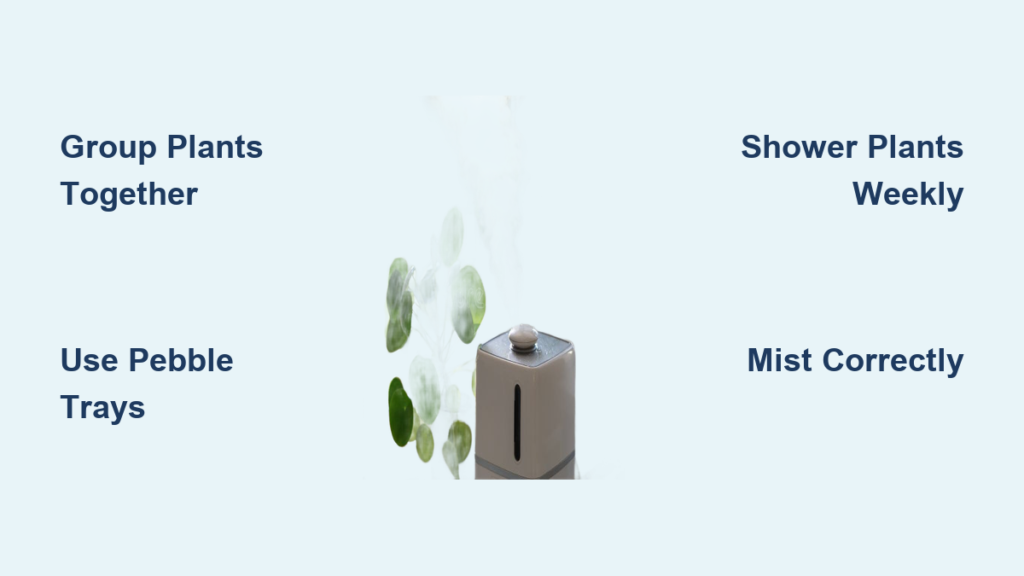
Your calathea’s leaves are crisping at the edges again, and that crispy fern looks more like tumbleweed than a tropical beauty. Before you rush out to buy an expensive humidifier, here’s the good news: you can boost humidity naturally using everyday items and simple techniques that cost little or nothing. Understanding how to increase humidity for plants without humidifier is essential for tropical species that evolved in rainforest environments where moisture in the air hovers between 40-60%. Your heated home drops to 30% or lower during winter, creating a desert-like atmosphere that stresses these moisture-loving species. This guide reveals proven methods to create the perfect humid environment your plants crave—no electrical devices required.
Why Your Tropical Plants Need Higher Humidity Levels
Most houseplants originated in rainforest environments where humidity naturally ranges between 40-60%. During winter months, your home’s heating system can drop indoor humidity to 30% or lower, creating conditions that directly contradict what your plants evolved to thrive in. This dramatic difference causes stress that manifests through visible symptoms, particularly in species with thin, papery leaves that lose moisture rapidly through transpiration.
Recognizing Humidity Stress in Your Houseplants
Brown leaf edges appear first when your plants suffer from dry air—this is the most common sign that you need to increase humidity for plants without humidifier. You’ll notice crispy, curling foliage that feels brittle to the touch, particularly on sensitive varieties like calatheas and ferns. Plants experiencing humidity stress often show slow or stunted growth as they conserve energy, and excessive leaf drop becomes common as plants shed their most vulnerable foliage. These symptoms intensify during winter when heating systems create exceptionally dry conditions and heating vents directly blow hot, dry air on your green companions.
Group Plants by Their Humidity Needs
Plants with thin, papery leaves lose moisture rapidly and require consistent humidity-boosting methods. Ferns, calatheas, orchids, and philodendrons fall into this high-maintenance category. Conversely, plants with thick, waxy leaves like snake plants and ZZ plants store moisture internally and tolerate dry air better. Group your humidity-sensitive plants together while keeping more resilient species in drier areas of your home. This strategic grouping prevents you from wasting effort on plants that don’t actually need the extra moisture while focusing your attention where it’s most needed.
Create a Mini Rainforest With Plant Grouping

Clustering your tropical plants together creates an instant microclimate that boosts humidity through natural transpiration. When plants release water vapor through their leaves, they collectively increase the moisture content in the surrounding air. This technique costs nothing yet can elevate local humidity by 10-15% immediately—making it one of the most effective ways to increase humidity for plants without humidifier.
Optimal Plant Arrangement for Maximum Humidity
Group 3-5 humidity-loving plants within 12 inches of each other for noticeable results. Position taller plants like monsteras or fiddle leaf figs as backdrops, with smaller specimens like calatheas and ferns in front. This creates both visual appeal and functional humidity zones where moisture circulates between plants. For best results, combine plants with similar care requirements—pairing ferns with pothos and philodendrons creates a synergistic effect that benefits all plants involved.
Leverage Naturally Humid Home Locations
Your bathroom becomes a natural humidity haven during and after showers—perfect for moisture-loving ferns and monsteras. Place these sensitive plants on the counter or floor (away from direct water spray) while you shower, and leave them there for at least an hour afterward. Kitchens provide elevated humidity during cooking and dishwashing, making them ideal spots for temporary plant placement. One Monstera Deliciosa permanently positioned in a bathroom produced five new leaves compared to its sister plant in dry conditions, demonstrating the dramatic impact of strategic placement.
Build Effective Pebble Trays for Individual Plants
:max_bytes(150000):strip_icc()/SPR-how-to-make-a-pebble-tray-7371481-Hero-C-5d303cbb85744594b59e9839a63d5abd.jpg)
The pebble tray method costs under $5 and delivers continuous humidity for individual plants without electricity. This simple technique prevents root rot while creating a localized humid zone around your plant—making it perfect for how to increase humidity for plants without humidifier in specific trouble spots.
Construct Your Own Pebble Tray System
Materials needed:
– Shallow waterproof tray (ceramic saucer or plastic tray)
– Small stones, pebbles, or LECA clay balls
– Water
Assembly steps:
1. Select a tray 2 inches wider than your plant’s pot
2. Add pebbles to create a 1-inch depth
3. Fill with water until pebbles are 75% submerged
4. Set your plant on top, ensuring the pot base stays above water level
This setup allows water to evaporate directly around your plant while keeping roots dry. Refill trays twice weekly as water evaporates, and clean pebbles monthly to prevent mineral buildup. One properly maintained pebble tray can increase local humidity by 15-20% around sensitive plants like calatheas and ferns.
Transform Your Shower Into a Plant Spa
Your bathroom shower creates a temporary greenhouse effect that provides immediate 100% humidity while simultaneously cleaning plant foliage. This technique delivers dramatic results with minimal effort—perfect for how to increase humidity for plants without humidifier during winter months.
Weekly Plant Shower Routine
Schedule 15-minute plant sessions during your regular shower time. Use lukewarm water—never hot, which can shock plants. Position plants on the tub floor or shower shelf, away from direct spray. Crucially, skip the exhaust fan to trap steam inside the bathroom. One pro tip: group your humidity-sensitive plants in the shower, then take your regular shower. The combined steam creates a mini rainforest that benefits both you and your plants. Afterward, leave plants in the bathroom for at least an hour to maximize humidity exposure.
Utilize Sphagnum Moss for Continuous Moisture
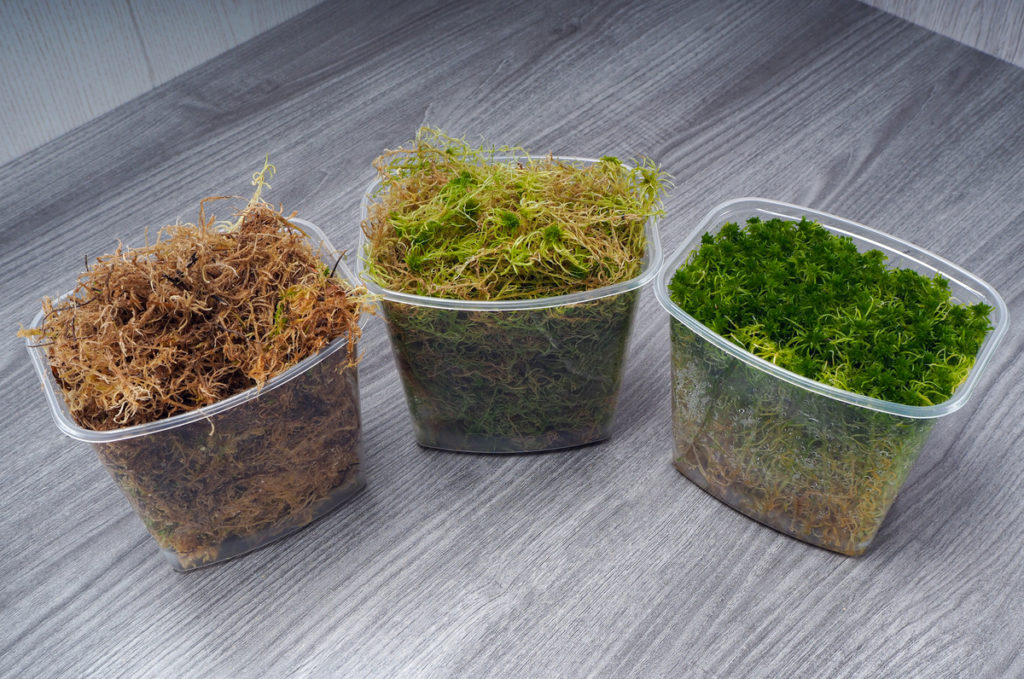
Sphagnum moss acts like a natural humidifier, slowly releasing moisture while preventing soil from drying out. This versatile material provides consistent humidity benefits without electricity—ideal for how to increase humidity for plants without humidifier.
Soil Top Dressing Technique
Apply a ½-inch layer of damp sphagnum moss across the soil surface of your potted plants. The moss retains substantial water while slowly releasing moisture through evaporation. Refresh moss weekly by misting or adding small amounts of water. This method prevents rapid soil drying and creates consistent humidity around leaf bases, particularly benefiting philodendrons and calatheas.
Double-Potting Method for Enhanced Results
Place your potted plant inside a container 2-3 inches larger in diameter. Fill the gap between pots with moist sphagnum moss. This creates a humid barrier around the entire root zone while providing moisture through evaporation. Check moss moisture every 3-4 days, adding water as needed. This technique works exceptionally well for sensitive specimens like Stephania Erecta, which showed 80% higher sprouting success with this method.
Avoid Common Misting Mistakes
While misting provides temporary relief, its effects last only 15-30 minutes—making it insufficient as a standalone solution for how to increase humidity for plants without humidifier. This method works best as a supplement to other humidity-boosting techniques.
Proper Misting Technique for Limited Success
Use a fine-mist spray bottle for gentle application. Focus on leaf undersides and surrounding air rather than soaking foliage directly. Mist 2-3 times daily during winter months, particularly for thin-leafed varieties. Always mist in the morning so water has time to evaporate before evening, preventing fungal issues from prolonged moisture.
Plants That Absolutely Shouldn’t Be Misted
Never mist plants with fuzzy or hairy leaves—these trap water droplets, creating perfect conditions for disease. African Violets, Purple Heart Plants, and Philodendron Micans Velvet develop leaf spotting and fungal issues when water sits on their delicate surfaces. For these plants, rely on pebble trays, plant grouping, or bathroom placement instead of misting.
Maintain Proper Humidity Balance
Excessive humidity without proper ventilation creates perfect conditions for mold and disease. Learning to recognize when your humidity-boosting efforts need adjustment prevents more problems than it solves.
Signs You’ve Gone Too Far
Yellowing leaves without other stress factors indicate excessive moisture. Mold on soil surfaces appears as fuzzy white or green growth. Stunted growth despite adequate care suggests poor air circulation. Fungal spots on leaves require immediate intervention through improved ventilation and reduced humidity.
Essential Airflow Techniques
Position plants 6-12 inches from windows to prevent cold drafts while ensuring air circulation. Use small fans on low settings for 2-3 hours daily in high-humidity plant areas. Open windows briefly weekly to refresh air, even during winter months. This balance between humidity and airflow creates the ideal environment for tropical plants without causing secondary problems.
Seasonal Humidity Management Strategies
Humidity needs fluctuate dramatically with seasonal changes. Master these adjustments to maintain optimal plant health year-round as part of your how to increase humidity for plants without humidifier approach.
Winter Intensive Care Protocol
September marks the beginning of increased humidity needs as heating systems activate. Double your efforts during December through February when forced-air heating creates the driest conditions. Combine pebble trays, plant grouping, and weekly shower sessions for cumulative effects. Monitor plants closely for early signs of stress—brown tips often appear before you notice other symptoms.
Summer Natural Benefits
Natural humidity often increases during summer months, reducing intervention needs. Monitor outdoor conditions and adjust methods accordingly. Reduce pebble tray refills and misting frequency when humidity naturally exceeds 40%. Use this seasonal break to clean and maintain your humidity-boosting tools so they’re ready when dry conditions return.
Your tropical plants don’t need expensive equipment to thrive—they need consistent, appropriate humidity levels. Start with one technique that fits your lifestyle, like plant grouping or pebble trays, then expand your approach based on your plants’ responses. Within weeks, you’ll notice healthier foliage, increased growth, and the satisfaction of creating an optimal environment using simple, natural methods. The key to successfully increasing humidity for plants without humidifier lies in understanding your specific plants’ needs and implementing consistent, appropriate techniques that work with your living situation rather than against it.