You’ve purchased an air purifier to improve your home’s air quality, but simply plugging it in won’t guarantee cleaner air—knowing how to use air purifier correctly makes all the difference between mediocre results and genuinely healthier indoor environments. These mechanical devices work by drawing indoor air through filter media that captures particles and absorbs gaseous pollutants, yet their performance entirely depends on proper selection, placement, and operation. Whether you’re trying to reduce allergy symptoms, eliminate cooking odors, or minimize dust accumulation, understanding the correct way to use air purifier ensures you maximize the benefits from your investment. This guide walks you through every critical aspect of air purifier operation, from calculating the right size for your space to maintaining filters and setting realistic expectations for the results you’ll achieve.
The quality of indoor air affects nearly every aspect of daily life, since most people spend approximately 90% of their time indoors, with the majority occurring within their homes. Indoor pollutants originate from multiple sources including cooking, cleaning products, building materials, and outdoor air that seeps in through ventilation. These contaminants exist as either particles or gases, and different filtration technologies address different pollutant categories. No single air purifier can eliminate all indoor air pollutants simultaneously, which is why matching your device to your specific air quality challenges matters so much. By following the recommendations in this guide, you’ll learn how to use air purifier technology correctly to address your particular indoor environment needs.
Choose Right Size for Your Room

Selecting an appropriately sized air purifier represents the foundation of effective air cleaning, as undersized units cannot adequately filter the air in larger spaces while oversized units waste energy in smaller rooms. To determine the appropriate capacity for any space, first calculate the room area by multiplying the length by the width, then compare this figure against the maximum recommended room size specifications on potential units. For rooms with ceilings higher than standard 8-foot height, select an air purifier rated for a larger area than the floor space suggests, since increased air volume requires more powerful filtration capacity.
Calculate Your Room’s CADR Requirements
The clean air delivery rate (CADR) provides the standardized measurement for evaluating how effectively a portable air cleaner removes particles from your indoor environment. This rating evaluates performance across three pollutant types: tobacco smoke (smallest particles), dust (medium-sized particles), and pollen (largest particles). When selecting a particle-focused air purifier, prioritize units with CADR ratings appropriate for your room size—higher CADR values indicate greater particle removal capacity.
Follow these CADR guidelines for effective particle removal:
– 100 sq ft rooms require minimum CADR of 65 cfm
– 200 sq ft spaces need at least 130 cfm CADR
– 300 sq ft rooms necessitate 195 cfm CADR or higher
– 400 sq ft areas demand minimum 260 cfm CADR
– 500 sq ft spaces need units delivering 325 cfm or more
These calculations assume standard 8-foot ceiling heights. For open floor plans, running multiple air cleaners simultaneously provides comprehensive coverage when your desired area exceeds a single unit’s capacity.
Position for Maximum Airflow Effectiveness
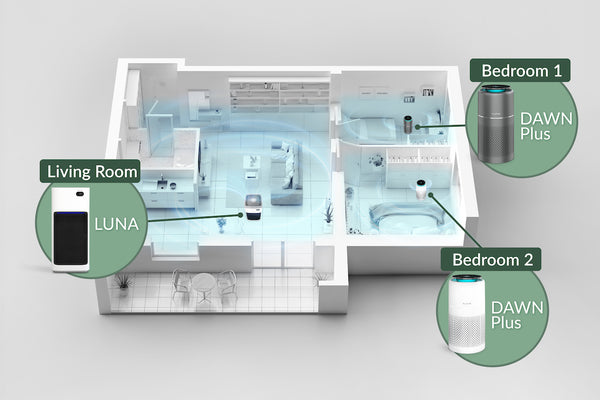
Where you place your air purifier directly impacts how well it cleans the air throughout your room, making placement strategy just as important as the unit itself. Position air purifiers in rooms where you spend the most time, recognizing that the greatest health benefits accrue from consistent exposure to cleaned air during your typical occupancy periods. Most portable air cleaners are designed for floor placement, though some models work better on tabletops depending on your room layout.
Avoid Common Placement Mistakes That Reduce Performance
Critical airflow considerations:
– Maintain at least 12-18 inches of clearance from walls, furniture, and curtains
– Never place behind doors or in corners where airflow becomes restricted
– Keep away from direct sunlight which can affect sensor accuracy
– Position away from heating/cooling vents that create competing air currents
For bedrooms, place your air purifier near the head of the bed but not directly in the airflow path for optimal sleep comfort. In living areas, central placement typically delivers the most even distribution of cleaned air, though electrical outlet locations may require strategic positioning. Remember that blocked airflow forces the unit to work harder while processing less air, diminishing overall cleaning effectiveness.
Select Proper Filter Type for Your Needs

Understanding filter types ensures you address the specific pollutants present in your indoor environment rather than spending money on filtration technology that doesn’t match your air quality challenges. HEPA filters represent the gold standard for particle removal, capturing at least 99.97% of particles measuring 0.3 micrometers in diameter. These filters effectively remove dust, pollen, pet dander, and mold spores, making them ideal for allergy sufferers.
Match Filters to Your Specific Air Quality Challenges
For particle problems (dust, pollen, pet dander):
– Choose units with true HEPA filters (not “HEPA-type”)
– Prioritize higher CADR ratings for your room size
– Check if the unit has pre-filters to extend main filter life
For gas and odor problems (cooking smells, VOCs, chemicals):
– Select models with substantial activated carbon filters (1-2+ lbs)
– Look for thick carbon beds rather than thin mesh layers
– Verify carbon weight specifications rather than relying on marketing claims
No air cleaning device eliminates all pollutants simultaneously. If your home has multiple pollutant types, invest in a unit with both HEPA and substantial activated carbon filtration rather than separate devices.
Configure Speed and Run Time Settings
The operational settings of your air purifier directly influence both air cleaning effectiveness and energy consumption. Higher fan speeds increase air volume processed per minute, enhancing particle and gas removal rates to achieve the unit’s rated CADR performance. However, higher speeds also generate more noise and consume more electricity, which may affect suitability for certain environments.
Optimize Runtime for Maximum Efficiency
Effective operation strategies:
– Run continuously at lower speeds for consistent air quality
– Use higher speeds temporarily during pollutant spikes (cooking, cleaning)
– Set medium speeds during daytime hours and lower speeds at night
– Consider automatic mode if your unit has air quality sensors
Extended operation at lower speeds often provides comparable overall performance to brief operation at maximum speeds while generating less noise disruption. Remember that both higher fan speeds and longer run times increase the total amount of air filtered—customize based on your specific priorities.
Replace Filters on Regular Schedule
Regular filter replacement stands as the essential maintenance task for maintaining air purifier effectiveness. Filters accumulate captured particles and absorbed gases over time, gradually reducing airflow and diminishing cleaning performance as the filter media becomes saturated. Manufacturer recommendations typically suggest replacement every 60-90 days under normal conditions, though actual frequency depends on indoor air quality levels, pets, and local environmental conditions.
Recognize When Filters Need Replacement
Signs your filter needs changing:
– Visible dust accumulation on filter surface
– Increased operational noise from the unit
– Reduced airflow compared to when new
– Lingering odors that previously were eliminated
– Filter indicator light (if equipped) turns on
When replacing filters, always verify that new filters match your model’s specifications. Using incorrect filters may allow unfiltered air to bypass the system or potentially damage internal components.
Address Specific Pollutant Challenges
Different indoor air quality challenges require different approaches to air purification. For households primarily concerned with particulate matter, prioritizing appropriate CADR ratings provides the most reliable selection criterion. Run the unit at higher speeds when particulate levels spike, such as during cooking or when windows are open, and maintain continuous operation at lower speeds for ongoing particle control.
Targeted Solutions for Common Air Quality Problems
For allergy and asthma sufferers:
– Place units in bedrooms where you spend 8+ hours nightly
– Run continuously, not just when symptoms appear
– Combine with other measures like allergen-proof bedding
For VOC and chemical sensitivity concerns:
– Choose units with heavy carbon filters (minimum 2-3 lbs)
– Place near pollutant sources like new furniture or renovations
– Ventilate spaces first before relying solely on air purification
Air purifiers cannot resolve mold problems—they only remove some airborne spores. Address mold by identifying and eliminating moisture sources first, then use air purifiers as supplemental measures after professional remediation.
Maintain Peak Performance Over Time
Proper maintenance extends both effectiveness and operational lifespan of your air purifier. Beyond filter replacement, periodic cleaning of the unit’s exterior and intake grilles prevents dust accumulation from restricting airflow. Unplug the unit before cleaning, then use a damp cloth for exterior surfaces and a vacuum attachment for grilles.
Create a Maintenance Schedule for Long-Term Reliability
Weekly: Wipe exterior surfaces and vacuum intake grilles
Monthly: Check filter condition and reset indicators if applicable
As needed: Clean pre-filters according to manufacturer instructions
Every 60-90 days: Replace primary filters based on usage and visual inspection
Monitor performance by paying attention to airflow volume and noise levels. A noticeable reduction in airflow typically signals that filters need attention. By integrating these maintenance practices into your routine, your air purifier will continue providing reliable air quality improvement for years.
Final Note: To maximize how to use air purifier effectively, remember that proper sizing, strategic placement, correct filter selection, and consistent maintenance transform your device from a simple appliance into a powerful tool for healthier indoor air. While air purifiers significantly reduce airborne pollutants, they work best as part of a comprehensive approach that includes source control and proper ventilation. By following these guidelines, you’ll ensure your air purifier delivers the cleanest possible air for you and your family—every day, all year round.