A small beep pierces the silence of your home at 2 a.m. There is no smoke, no flames, just a faint burning smell from the hallway outlet. In moments, a smoke detector on the ceiling sounds a shrill alarm, waking your family in time to escape. This is the power of early fire detection. But how does a smoke detector work? It relies on proven science to sense invisible danger before it becomes deadly. According to the National Fire Protection Association, working smoke alarms reduce the risk of dying in a home fire by nearly 50%. In this guide, you will learn the two main detection technologies, how each responds to different fires, and how to keep your alarms reliable for years.
Ionization vs Photoelectric Detection
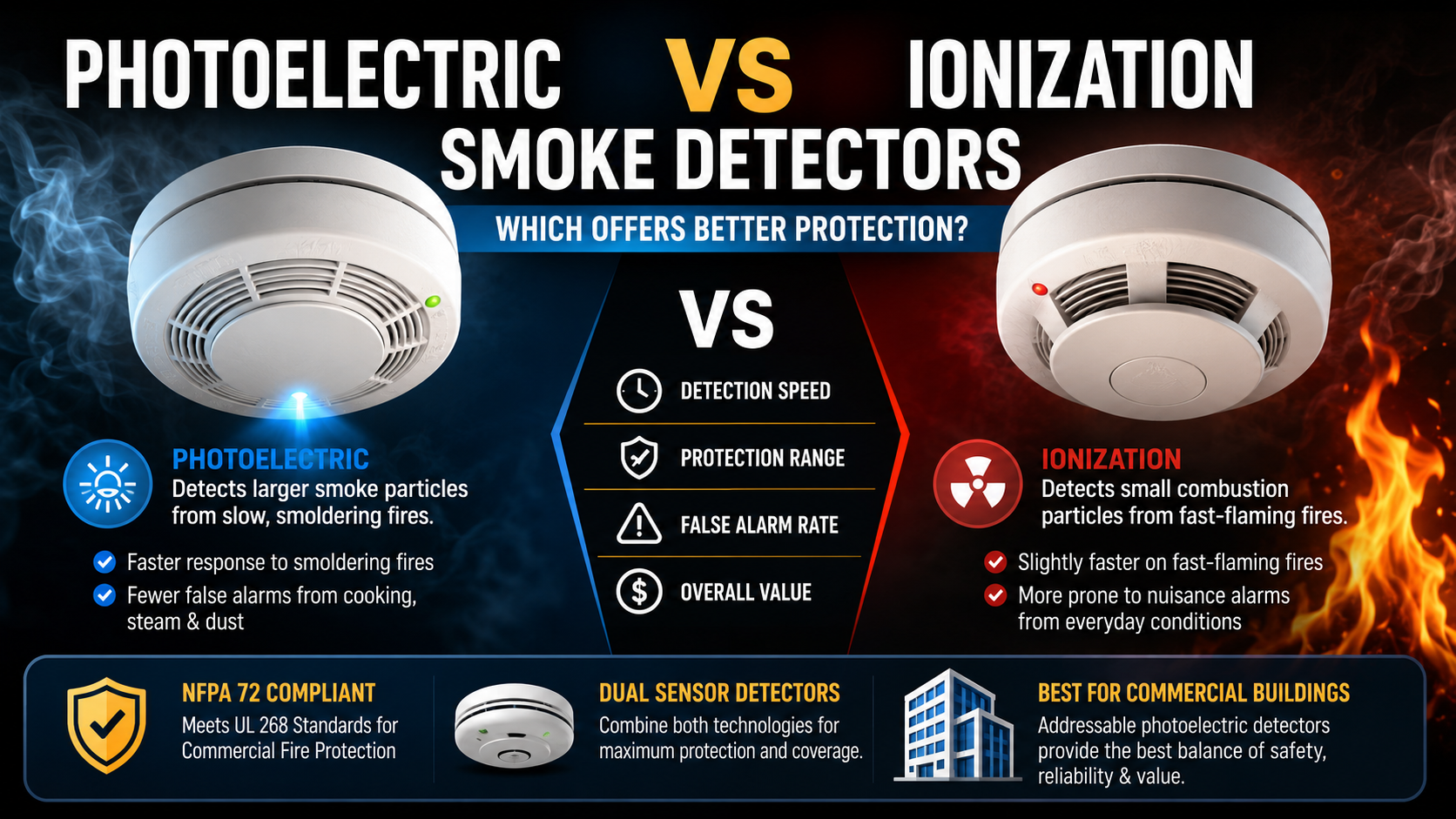
How Ionization Detectors Sense Fire
Ionization smoke detectors contain a tiny amount of radioactive material called americium-241, sealed safely inside a sensing chamber. This material ionizes the air between two electrically charged metal plates, creating a small but steady electric current. When smoke particles enter the chamber, they attach to the ions and disrupt that current. Once the drop in current crosses a preset threshold, the alarm triggers. These units respond quickly to fast-flaming fires like burning paper or grease.
Why Ionization Reacts Faster to Flames
Flaming fires release large amounts of tiny, invisible soot particles. Because ionization detectors measure changes in electrical current caused by these particles, they often respond within seconds. The more particles that enter the chamber, the greater the disruption to the ion flow. This makes ionization technology especially effective for sudden, high-intensity fires.
Are Ionization Detectors Safe?
Yes. The americium-241 is shielded and emits very low radiation. You receive more radiation during a short flight than from living with an ionization alarm for years. However, always dispose of old units according to manufacturer instructions.
How Photoelectric Detectors Use Light
Photoelectric smoke detectors use a simple design built around an LED and a light sensor inside a dark chamber. Under normal conditions, the light beam does not reach the sensor. When smoke enters, particles scatter the beam. Once enough scattered light hits the photosensitive receiver, the alarm sounds.
Why Photoelectric Detects Smoldering Fires First
Smoldering fires, such as overheated wiring or a cigarette in a couch, burn slowly and produce large, light-colored particles before flames appear. These particles are highly reflective, which makes them ideal for scattering light inside a photoelectric chamber. As a result, photoelectric alarms typically respond significantly earlier than ionization models in smoldering scenarios.
Real-World Smoldering Fire Examples
Common sources of slow-burning fires include:
– Cigarettes igniting upholstery
– Electrical faults behind walls
– Overheated appliances or cords
– Burning insulation
Because these fires often start at night and release toxic gases before visible flames, early detection is critical for survival.
Which Technology Is Better?
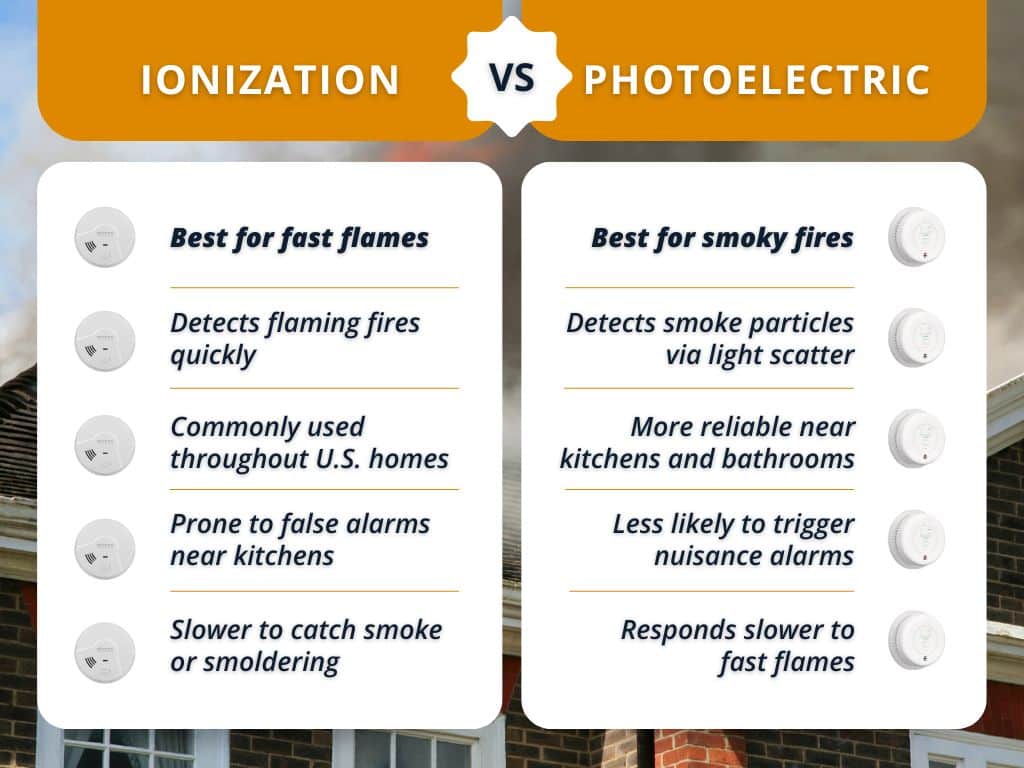
Fast Flames: Ionization Wins
For flaming fires like kitchen grease igniting or paper catching fire, ionization detectors respond faster. They sense the high concentration of fine soot particles produced during rapid combustion. Homes with open cooking areas or wood-burning stoves benefit from ionization sensors.
Smoldering Fires: Photoelectric Leads
For slow, smoky fires, photoelectric detectors outperform ionization models. Most fatal home fires begin as smoldering events, often at night. Since photoelectric alarms trigger earlier in these cases, they offer superior protection where people sleep.
NFPA Recommendation: Use Both
The National Fire Protection Association recommends installing both ionization and photoelectric alarms, or using dual-sensor models that combine both technologies. Homes with only one type may experience dangerous detection delays.
| Fire Type | Best Detector | Reason |
|---|---|---|
| Fast-flaming (paper, grease) | Ionization | Detects tiny soot particles quickly |
| Smoldering (wiring, upholstery) | Photoelectric | Responds to large, reflective particles |
Avoiding Nuisance Alarms
The Sensitivity Dilemma
Smoke detectors must balance sensitivity with reliability. A detector that is too sensitive will trigger from cooking steam or dust. A detector that is not sensitive enough may fail during a real fire. Unfortunately, many homeowners disable alarms after repeated false triggers, creating serious safety risks.
Common Causes of False Alarms
- Cooking fumes, even from unburnt food
- Steam from bathrooms, which mimics smoke density
- Dust buildup inside older units
- Insects entering the chamber and scattering light or blocking sensors
Smart Solutions: Hush Buttons and Placement
Many modern detectors include a hush button that silences nuisance alarms for several minutes without disabling the unit. This allows you to clear the air while maintaining protection. You can also reduce false triggers by placing alarms at least 10 feet from cooking appliances and away from bathrooms or vents.
Power Options and Alarm Features
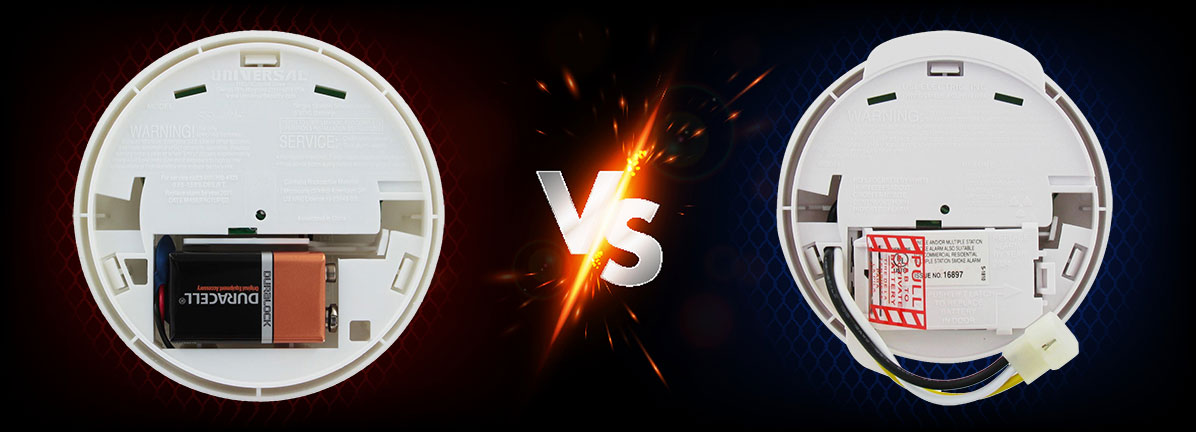
Battery vs Hardwired Systems
Most smoke detectors run on standard 9V or AA batteries, while others connect to household wiring with a battery backup. Hardwired systems offer more reliable operation during power outages, which often occur alongside fires. Regardless of type, a battery backup is essential.
How Loud Are Smoke Alarms?
Smoke alarms emit sound between 85 and 110 decibels, roughly as loud as a lawnmower or rock concert. This volume ensures even deep sleepers wake up. Some models also include strobe lights or bed shakers for individuals with hearing impairments.
Test Button: Monthly Check Required
Press the test button once a month to confirm the alarm sounds and the power source works. A weak or silent response means it is time to replace the batteries or the entire unit.
Smart Detectors and Home Integration
Real-Time Alerts to Your Phone
Smart smoke detectors connect to Wi-Fi and send instant notifications to your smartphone. Whether you are at work or on vacation, you will know immediately if smoke is detected. Some systems identify which specific alarm triggered, helping you locate the danger faster.
Integration With Smart Home Systems
Many smart detectors work with:
– Amazon Alexa
– Google Home
– Apple HomeKit
You can check alarm status using voice commands or receive spoken alerts throughout your home. During emergencies, smart detectors can:
– Turn on hallway lights
– Unlock smart door locks
– Notify emergency contacts
Automatic Emergency Response
High-end systems with monitoring subscriptions can automatically contact emergency services. This feature is especially valuable for unoccupied homes or elderly residents who may need rapid assistance.
Where to Install Smoke Detectors
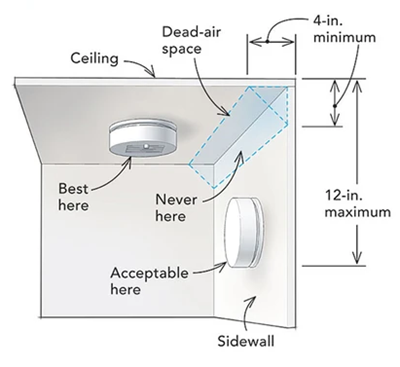
Ceiling vs Wall Placement
Install detectors on ceilings whenever possible, since smoke rises and accumulates at the highest point first. If you must mount on a wall, place the unit no more than 12 inches from the ceiling. Avoid corners, where stagnant airflow can create dead zones.
Key Locations for Maximum Coverage
- Inside every bedroom
- Outside each sleeping area
- On every level, including basements
- Near stairways, where smoke travels upward
Places to Avoid
- Within 10 feet of kitchens to prevent cooking-related false alarms
- Inside bathrooms due to steam interference
- Near HVAC vents, ceiling fans, or windows, where airflow dilutes smoke
Maintenance for Long-Term Reliability
Test Monthly, Every Month
Press the test button to verify operation. A full alarm tone means the circuit, sensor, and sounder are functional. Make monthly testing part of your routine by pairing it with bill payments or the first day of each month.
Replace Batteries Annually
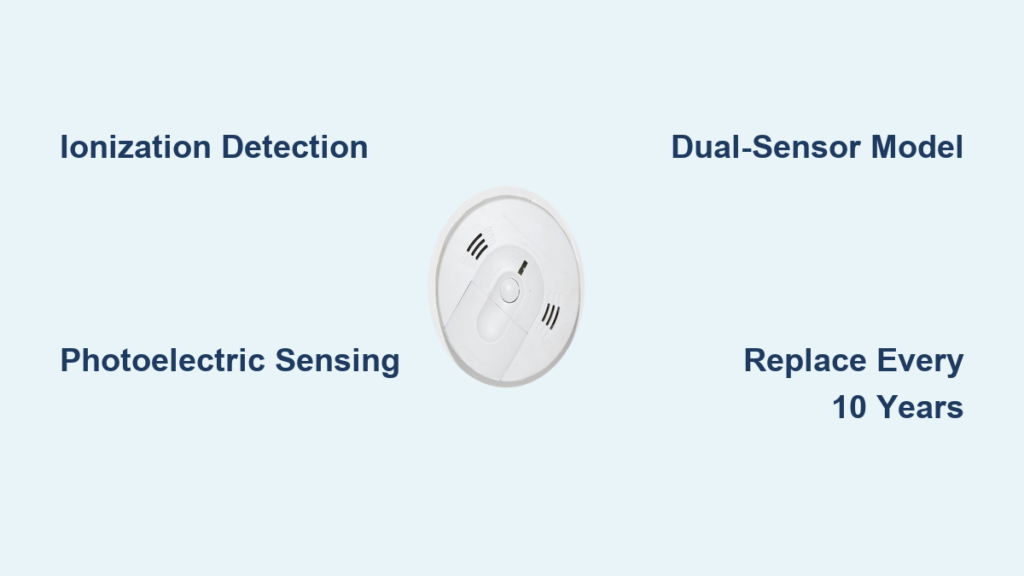
Change batteries at least once per year, even if the low-battery chirp has not started. A simple reminder is to replace them when clocks change for daylight saving time. For 10-year sealed battery models, you do not need to swap batteries, but you must replace the entire unit after a decade.
Clean Every Six Months
Dust and debris can clog sensors. Vacuum the exterior vents gently with a brush attachment every six months. Avoid using cleaners or compressed air, which can damage sensitive internal components.
Replace Entire Unit Every 10 Years
All smoke detectors expire. Sensors degrade, electronics fail, and responsiveness declines over time. Check the manufacture date on the back of the unit. If it is older than 10 years, replace it immediately.
Dual-Sensor Alarms: The Best of Both Worlds
How Combination Detectors Work
Dual-sensor smoke alarms integrate ionization and photoelectric technologies into a single unit. They monitor for both small soot particles and large smoke droplets, offering faster response across fire types. Fire safety experts increasingly recommend these combination models.
Why Choose a Dual-Sensor Model?
- Broader detection range
- Reduced risk of delayed alerts
- Fewer units needed for full coverage
- Often include smart features and interconnectivity
Interconnected detectors, whether hardwired or wireless, ensure that when one alarm sounds, they all sound. This is essential in multi-story homes where distant alarms might not be heard.
Frequently Asked Questions About Smoke Detectors
How does a smoke detector work in simple terms?
A smoke detector senses tiny particles in the air using either ionization or photoelectric technology. Once particles reach a set threshold, the device triggers a loud alarm to warn occupants of a potential fire.
What is the difference between ionization and photoelectric smoke detectors?
Ionization detectors use radioactive material to sense small soot particles from fast-flaming fires. Photoelectric detectors use a light beam and sensor to detect larger particles from smoldering fires. Each technology excels at detecting different fire types.
How often should you test your smoke detector?
You should test your smoke detector once every month using the test button. This confirms the alarm, sensor, and power source are all working correctly.
How long do smoke detectors last before replacement?
Smoke detectors should be replaced every 10 years. Sensors degrade over time, and older units may fail to detect smoke reliably even if they still produce a sound during testing.
Can steam from a bathroom set off a smoke alarm?
Yes. Steam contains dense water particles that can scatter light in photoelectric detectors or disrupt current in ionization detectors. To avoid false alarms, install bathroom detectors at least 10 feet away from showers.
Are ionization smoke detectors safe to have in the home?
Yes. The radioactive material inside ionization detectors is safely shielded and emits very low radiation. You receive more natural background radiation daily than from an ionization alarm over its lifetime.
Key Takeaways for Understanding Smoke Detector Technology
So, how does a smoke detector work? It uses either ionization or photoelectric science to sense invisible particles and trigger a life-saving alarm. Ionization models respond fastest to flaming fires, while photoelectric ones catch smoldering fires earlier. For complete protection, install both types or choose a dual-sensor unit. Place detectors on every level, inside and outside bedrooms, and away from kitchens and bathrooms. Test monthly, clean twice a year, replace batteries annually, and swap out the entire unit every 10 years. A silent detector saves no one. A working one could save your life. Walk through your home today, check each alarm, and replace any unit over a decade old.